In an era where Artificial Intelligence (AI) is no longer a futuristic vision but a daily reality reshaping labor, communication, and the very concept of truth, the Vatican has intervened with a move of historic significance. The new encyclical by Pope Leo, hailed by bishops worldwide as 'crystal clear' guidance, attempts to bridge the gap between ancient spiritual wisdom and meteoric technological progress. The document does not limit itself to vague platitudes but introduces the concept of 'algorethics' as an essential component of global governance.
The Human-Centric Approach and 'Algorethics'
The encyclical emphasizes that technology must always serve humanity and not the other way around. Pope Leo, using language that combines theological depth with scientific precision, warns of the danger of a 'technocratic tyranny' where decisions concerning life, health, and individual freedom are outsourced to opaque algorithms. The concept of algorethics, which the Vatican has systematically promoted in recent years, now takes on an official and binding character for Church teaching.
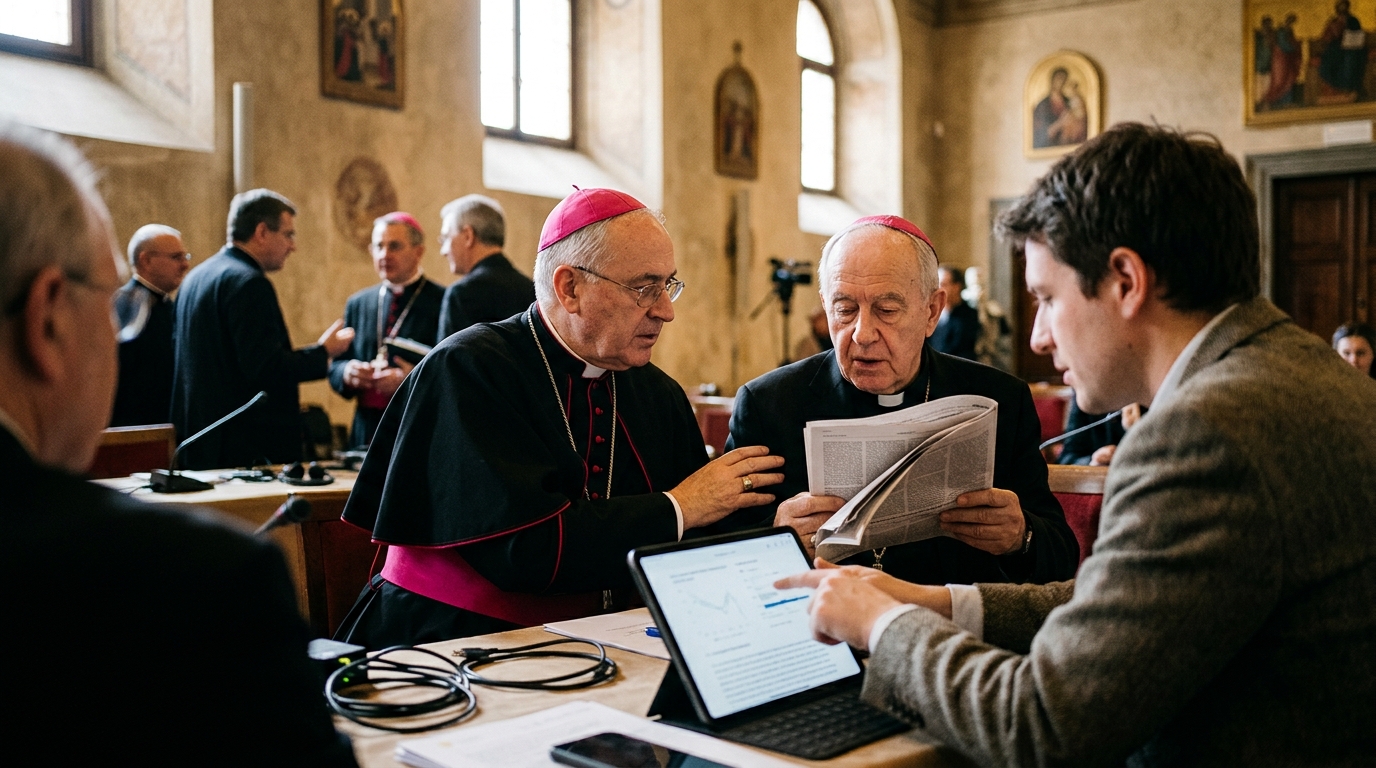
Bishops, reacting to the text, noted that the Pope's clarity is refreshing. In a world where Big Tech often hides behind complex terms of service, the encyclical demands transparency, accountability, and, above all, 'human-in-the-loop' oversight for every critical decision. This is not a rejection of progress, but a demand that such progress possesses a moral anchor.
Social Justice and the Digital Divide
One of the most potent sections of the encyclical concerns the social implications of AI. Pope Leo focuses on the risk of widening inequalities, both within societies and between nations. AI, if left solely to market forces, risks becoming a tool of exclusion for the poor and marginalized, who lack the access or skills to navigate the new digital landscape.
- The necessity for universal access to AI education and literacy.
- The protection of labor rights in the face of widespread automation.
- The avoidance of algorithmic biases that reinforce racial and social discrimination.
- Ensuring that AI is not weaponized for the suppression of human rights through mass surveillance.
The Church calls upon legislators to adopt regulatory frameworks that protect the vulnerable, stressing that innovation cannot serve as an excuse for exploitation. The encyclical proposes the creation of an international AI oversight body, inspired by the principles of the common good and solidarity.
The Challenge of Conscience and the Spiritual Dimension
Beyond social and economic issues, Pope Leo grapples with the profound question of human conscience. Can a machine possess morality? The encyclical’s answer is categorically negative. Moral judgment requires consciousness, empathy, and a spiritual dimension—qualities that are inherently human and cannot be simulated by any code, no matter how advanced.
"Artificial Intelligence can process data, but only the human heart can process meaning," the text poignantly states.
This distinction is crucial for preventing a culture where humans are treated as mere data sets. Bishops highlighted that this guidance helps the faithful understand that, despite the power of technology, spiritual sovereignty remains with the human person. The encyclical concludes with a call for a 'new humanism,' where digital and spiritual lives coexist harmoniously, ensuring that our future remains profoundly human.