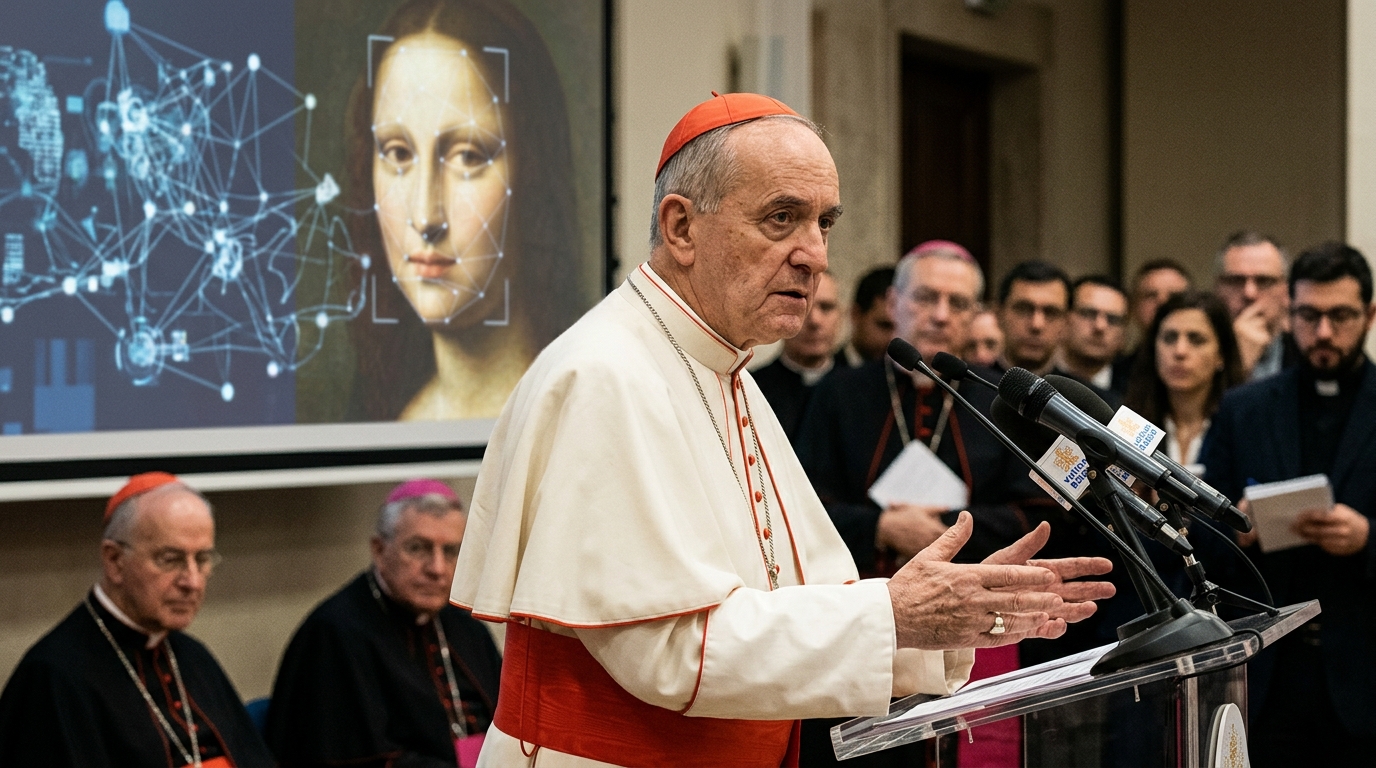
In a historic move that defines the early days of his papacy with a sharp focus on contemporary crises, Pope Leo has released his first major papal text, centered entirely on the ethical and existential threats posed by Artificial Intelligence (AI). The document, analyzed in depth by Time Magazine, is not merely a theological treatise; it is a political and social manifesto calling on humanity to reclaim agency from algorithms before the very concept of 'humanity' is irreparably altered.
The Pontiff, using language that balances spiritual wisdom with technical literacy, introduces the concept of 'algor-ethics.' This refers to the urgent need to embed moral values into the very code of machines. Leo argues that AI is not a neutral tool but a force that carries the biases and ambitions of its creators, often at the expense of the most vulnerable members of society.
The Theological Challenge to the 'Silicon Soul'
At the heart of the Pope's argument is the uniqueness of human consciousness. Leo warns that equating human intelligence with computational power is a "great error of our age." According to the text, decisions concerning life, death, justice, and freedom can never be delegated solely to machines, as they lack the 'heart'—the capacity for mercy, empathy, and moral judgment that stems from the spiritual nature of the human person.
The Pope specifically addresses autonomous weapon systems and the use of AI in the judiciary, characterizing the idea of an 'algorithmic judge' or a 'digital executioner' as an affront to divine creation. "Technology must serve the human person, not replace them in making the most critical moral choices," he emphasizes, calling for a global ban on weapons that operate without human intervention.
The Digital Divide and the New 'Data Proletariat'
Beyond philosophical concerns, Pope Leo focuses on the socioeconomic implications. He expresses deep concern that AI could widen the gap between wealthy and poor nations. He describes a new form of colonialism, 'digital colonialism,' where a few technological powers control the data and resources of the entire planet, turning citizens of the developing world into mere 'data providers' without rights or a share in the profits.
The text calls on governments and international organizations to ensure that AI is used to eliminate poverty and protect the environment, rather than becoming a tool for the further concentration of wealth and power. Leo proposes the creation of an international regulatory framework, similar to those for nuclear energy, which would ensure that technological development is governed by the principles of solidarity and the common good.
The Threat of Misinformation and Spiritual Isolation
Another significant aspect of the papal text is the impact of AI on human communication. The Pope warns against the 'tyranny of algorithms' in social media, which trap people in echo chambers, amplifying hatred and polarization. The ability of AI to create false realities (deepfakes) threatens, according to Leo, the foundation of truth itself, which is essential for healthy social coexistence.
In closing, Pope Leo issues a plea to scientists and developers: "Do not forget the human person." He calls on them to become "prophets of a new humanity" that uses its intelligence to heal and unite, rather than to control and divide. This first intervention by Pope Leo places the Vatican at the forefront of the global conversation on AI, reminding us that progress without ethics is merely a journey into the void.