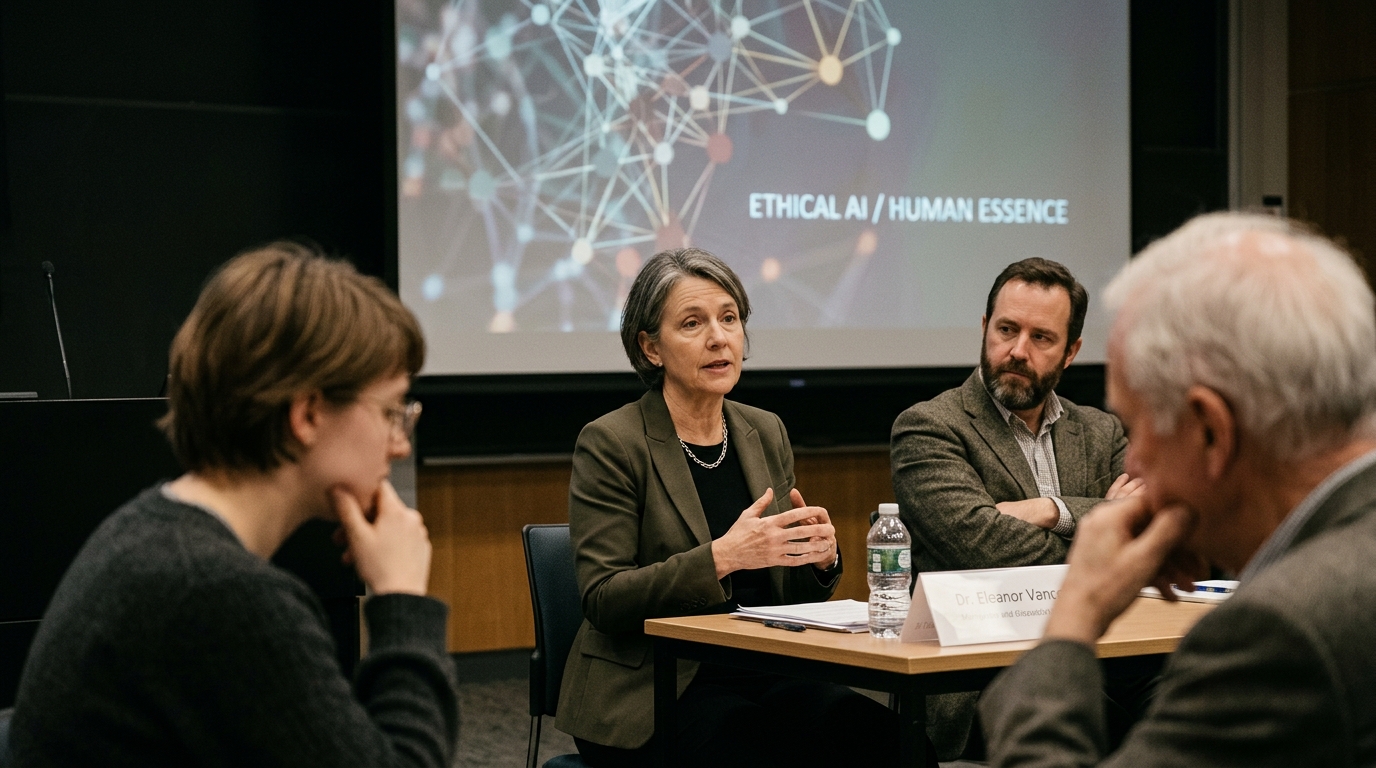
As we navigate the middle of 2026, humanity stands at a definitive crossroads. Artificial Intelligence is no longer a tool we merely employ; it has become the very atmosphere in which we breathe, work, and communicate. The 'Magnifica Humanitas' initiative, which has recently gained traction among circles of philosophers, theologians, and ethicists, proposes a radical shift: the 'disarming' of Artificial Intelligence. This is not a luddite call for the abolition of technology, but a demand to strip algorithms of the 'weaponized' qualities that threaten human autonomy and social cohesion.
Algorithmic Disarmament: Prioritizing Ethics over Efficiency
The concept of 'disarming' in this context is both metaphorical and profoundly practical. It refers to stripping AI systems of their capacity to make life-altering decisions without meaningful human intervention. At the heart of Magnifica Humanitas lies the conviction that technological progress has far outpaced our ethical readiness. Algorithms, optimized for peak efficiency, often overlook the subtle nuances of human experience, justice, and mercy.
This 'disarmament' is built upon three fundamental pillars. First, the transparency of 'black boxes,' ensuring that any decision affecting human life is explainable and contestable. Second, a moratorium on AI in sectors involving final judgments on an individual's freedom or dignity—such as the judiciary or policing—without strict human oversight. Third, the decoupling of AI from psychological manipulation mechanisms used to steer public opinion and consumer behavior under the guise of personalization.
The Geopolitics of Human Dignity
The Magnifica Humanitas initiative is not confined to academic ivory towers. It carries clear geopolitical weight, particularly in Asia, where the balance between rapid technological adoption and traditional values is exceptionally delicate. In regions where state surveillance is increasingly augmented by AI, 'disarming' these systems becomes an act of resistance and a safeguard for fundamental human rights.
Analysts suggest this movement correlates with previous efforts like the 'Rome Call for AI Ethics,' but it goes a significant step further. It advocates for international treaties that treat 'aggressive' AI with the same gravity the international community treats chemical weapons or landmines. The underlying logic is that an algorithm capable of destroying an individual's social reputation or denying them access to essential services via 'social scoring' is as lethal to the fabric of society as any physical weapon.
Reclaiming the Human-Centric Model
The question posed by Magnifica Humanitas is simple yet haunting: What remains of the human being when an algorithm can predict, direct, and ultimately supersede their will? The initiative’s response is a reinvestment in 'human exceptionalism'—those facets of creativity, empathy, and moral judgment that cannot be reduced to binary code.
- Bolstering education in the humanities as a necessary counterweight to pure technocracy.
- Establishing a 'right to human contact' in essential health and welfare services.
- Creating regulatory 'sandboxes' where the social impact of new technologies is audited before public deployment.
In a world accelerating at the speed of silicon, Magnifica Humanitas invites us to slow down. It reminds us that the magnificence of humanity lies not in the tools it creates, but in its capacity to set boundaries on their power for the sake of the common good. Disarming Artificial Intelligence is, in the end, the rearming of the human conscience. We are entering an era where the most sophisticated technology must be the one that knows when to step back and let the human spirit lead.