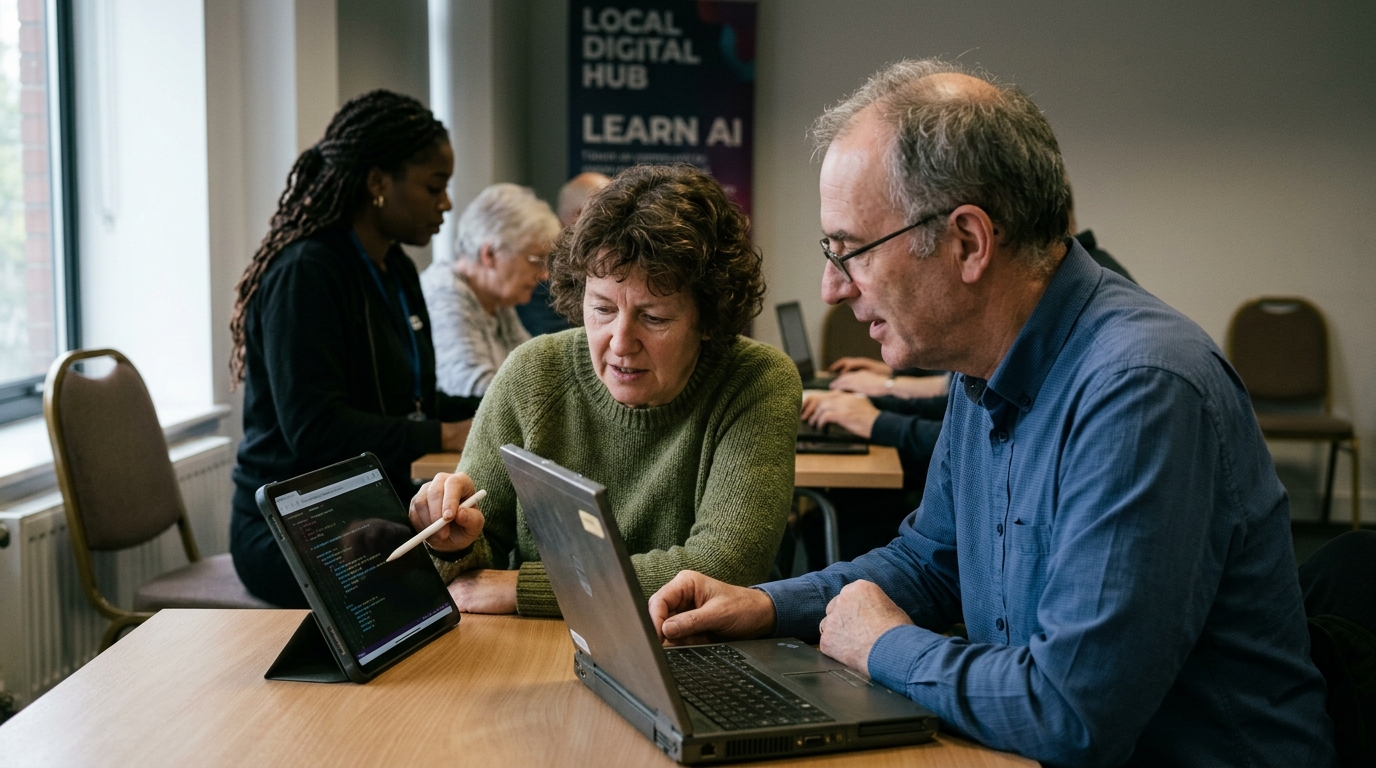
At the dawn of the AI era, the conversation often revolves around corporate productivity, the risks of automation, or the existential threat of super-intelligent systems. However, for a significant portion of the global population—people with disabilities—AI is not merely an optimization tool; it is a gateway to autonomy. As highlighted by a recent analysis in Tech Policy Press, AI has the capacity to "unlock" the world, offering access where previously only barriers existed. But this promise comes with a critical caveat: if access to these tools is not secured as a universal right, we risk creating a new, deeper digital divide.
The Multimodal Revolution
The greatest contribution of modern AI to accessibility is multimodality. The models released by 2026 no longer just process text; they perceive space, sound, and imagery in real-time with unprecedented precision. For a visually impaired person, AI acts as a "digital eye," describing not only the content of a page but also the social nuances of a meeting or the obstacles on an unfamiliar street. For neurodivergent individuals, AI tools can simplify complex instructions or help manage cognitive load, acting as an external memory and organizer.
The difference from the past is stark. Previously, assistive technologies were expensive, specialized, and often cumbersome. Today, intelligence is embedded in everyday devices. This "democratization of functionality" means a user no longer needs a $5,000 machine to read text; they simply need access to an advanced large language model. However, this is precisely where the political and ethical problem lies: the quality of this access is increasingly dependent on the user's financial standing.
The Specter of the Digital Divide
As tech companies move toward subscription-based models for their most powerful AI iterations, the question arises: what happens to those who rely on these tools for survival but cannot afford the cost? If your ability to "see" via an app or communicate via a speech synthesizer depends on a $20 or $30 monthly subscription, then accessibility ceases to be a right and becomes a commodity. Tech Policy Press emphasizes that AI policy must account for this "disability tax."
- Economic Access: The need for subsidized or free access to advanced models for individuals with documented disabilities.
- Data and Inclusion: AI models are often trained on data reflecting "typical" behavior, ignoring the unique speech patterns or movements of people with disabilities, leading to biased outputs.
- Infrastructure: The necessity for low latency and stable connectivity, which remains a challenge in many regions—even within developed nations.
Toward a New Social Contract for Technology
The solution cannot be left solely to the goodwill of Silicon Valley. Regulatory intervention is required to define accessibility as a structural component of AI development. The EU AI Act takes some steps, but the speed of evolution demands bolder action. "Universal Design" standards must be established, where every new model is evaluated for how it helps or hinders access for vulnerable groups.
"Technology that is not accessible to everyone is not progress; it is simply a new way of exclusion," the analysis poignantly notes.
In the global landscape, the challenge is also linguistic and cultural. If accessibility tools work perfectly in English but lag in other languages, then non-English speaking citizens with disabilities face a double exclusion. Investing in localized AI infrastructure and pressuring tech giants for full support of diverse languages at all accessibility levels is an imperative need.
In conclusion, Artificial Intelligence has given us the keys to a fairer world. Whether we choose to open the door for everyone or keep it locked behind paywalls and technical limitations is a decision that will define the ethical character of the 21st century. Access is not a favor; it is the essential prerequisite for a society of equals.