In the rapidly evolving landscape of artificial intelligence, NVIDIA is no longer content with being the mere blacksmith providing the tools for the revolution. With the announcement of Nemotron-3 Super's performance metrics, the American tech giant has demonstrated that its dominance now extends deep into the realms of software and Large Language Models (LLMs). Nemotron-3 Super has successfully dethroned established open-source players like China’s DeepSeek and GPT-OSS, sending ripples through the global research community.
The Strategy of Vertical Integration
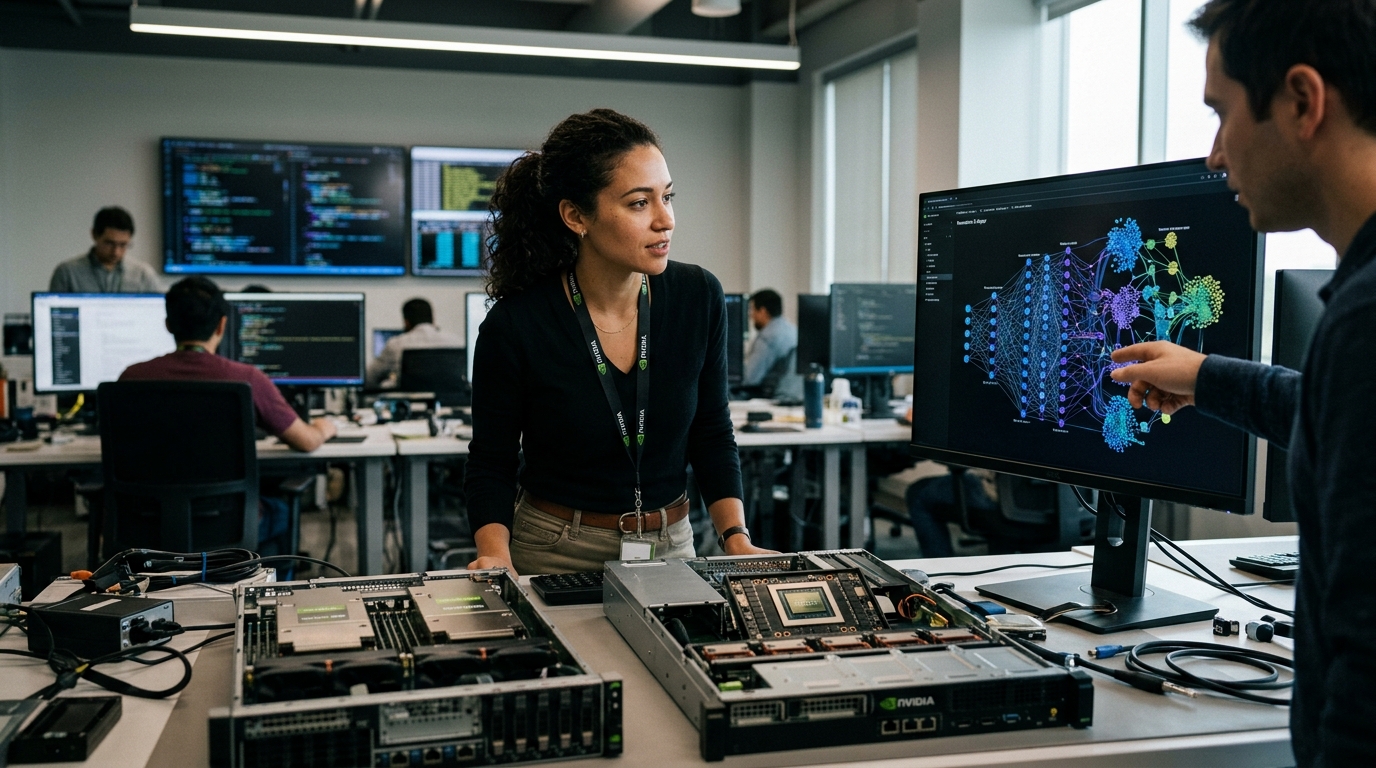
NVIDIA’s move to develop a model that directly competes with the market's top offerings is far from accidental. It is a masterclass in vertical integration. By developing models optimized to run with maximum efficiency on its own architectures—such as the H100 and the newer Blackwell series—NVIDIA is creating an ecosystem that is increasingly difficult to leave. Nemotron-3 Super isn't just a "smart" model; it is a showcase of how superior hardware performs when paired with perfectly tuned software.
Analysts note that Nemotron-3 Super exhibits exceptional performance in areas such as logical reasoning, code generation, and complex instruction following. Unlike previous iterations, this model appears to bridge the gap between closed-source giants like GPT-4 and the open-weights community, offering enterprises the ability to run cutting-edge AI on their own infrastructure without relying on external APIs.
The Battle with DeepSeek and Geopolitical Undercurrents
Surpassing DeepSeek carries significant geopolitical weight. DeepSeek, hailing from China, had gained substantial traction due to its incredible efficiency relative to training costs. NVIDIA’s response with Nemotron-3 Super reasserts American leadership, at least within the open-weights sector. This clash highlights the importance of benchmark dominance: it is not just about technical superiority, but about the power to define industry standards.
- Benchmark Excellence: Nemotron-3 Super achieved top scores in MMLU and HumanEval tests.
- Optimization: The model is built to leverage NVIDIA’s TensorRT-LLM for unprecedented inference speeds.
- Accessibility: Despite its power, it remains accessible to the community, bolstering NVIDIA’s image as an open-source patron.
Beyond the Numbers: What It Means for the End User
But what does this mean for the broader market? The availability of models like Nemotron-3 Super allows smaller companies and research institutions to access state-of-the-art technology without the astronomical costs associated with closed-system subscriptions. However, there is a catch: to get the most out of Nemotron-3 Super, one essentially needs NVIDIA hardware. In this sense, the company is "gifting" the software to guarantee long-term demand for its hardware.
"NVIDIA is no longer just selling chips. It is selling the intelligence that runs on them, making itself indispensable at every layer of the AI stack," industry experts remark.
In conclusion, Nemotron-3 Super is proof that NVIDIA is not resting on the laurels of its GPU monopoly. Instead, it is attacking every front, offering solutions that combine the freedom of open source with the power of the world’s leading technological infrastructure. The future of AI, it seems, once again leads directly through Santa Clara.