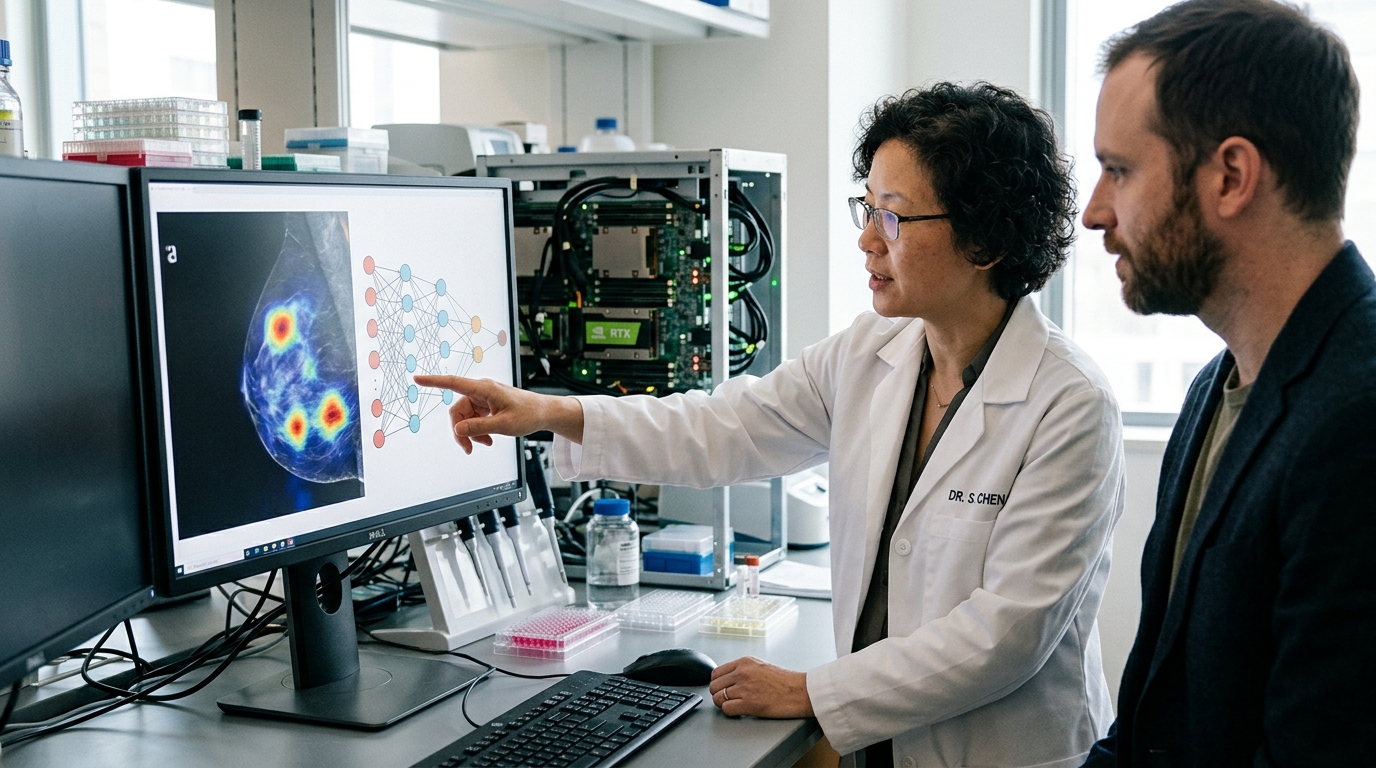
June 7, 2026, will likely be recorded in medical history as the moment biology ceased to be an observational science and became an information science. The announcement of clinical trial results for the first vaccine designed entirely by Artificial Intelligence (AI) is not merely a scientific success; it is a fundamental paradigm shift in how humanity protects itself against disease.
For decades, vaccine development relied on a painstaking process of trial and error. Scientists grew viruses, weakened them, or isolated their proteins, hoping that the human immune system's reaction would be the desired one. This process could take anywhere from five to ten years. Today, thanks to algorithms capable of simulating billions of chemical interactions in seconds, this timeframe has been decimated, and precision has reached levels the human brain alone could never achieve.
The Technology Behind the Digital Blueprint
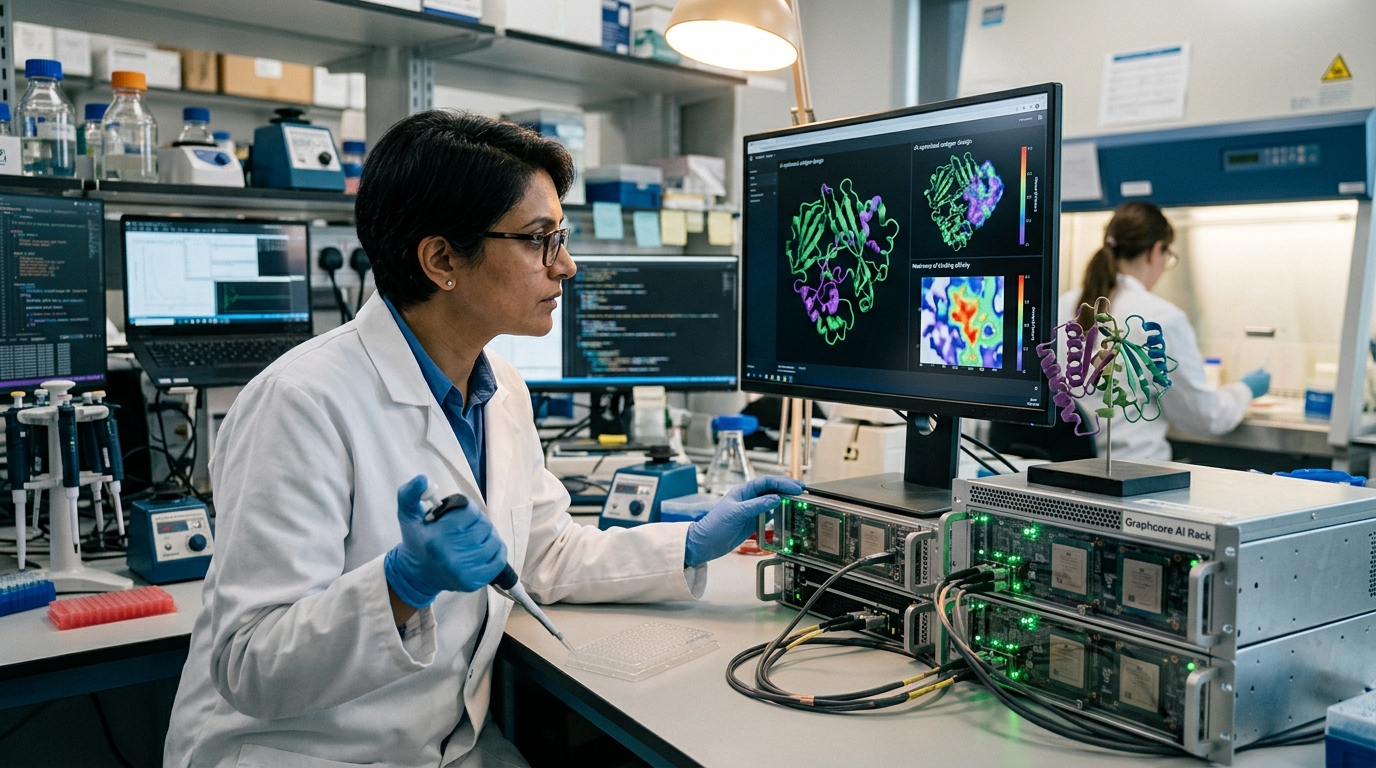
The vaccine, developed using an advanced AI system known as SAM (Search Algorithm for Ligands), focused on enhancing immune response by creating optimized adjuvants. The algorithms did not stop at identifying which parts of the virus are most vulnerable; they designed entirely new molecular structures from scratch—structures that do not exist in nature—to 'teach' the immune system how to attack the pathogen with maximum efficiency.
According to researchers at Flinders University in Australia, who pioneered this approach, AI functioned as a 'super-scientist.' While a human researcher would need years to analyze the potential configurations of a protein, the AI utilized deep learning techniques to predict which structure would produce the strongest protection with the fewest side effects. The result was a vaccine that not only passed safety tests but demonstrated superior efficacy compared to traditional formulations.
Clinical Trials and Human Safety
The transition from computer model to human subject was the most critical stage. Phase I and II trials, recently concluded, showed that the AI-designed vaccine is completely safe. Concerns that an algorithm might create something 'alien' to human biology were debunked by the data. On the contrary, the precision of the design reduced the inflammatory reactions that often accompany vaccines, as the AI managed to isolate only the essential elements for immunity, removing 'biological noise' that typically causes side effects.
- Reduction of development time from years to weeks.
- Precise targeting of specific mutations before they become dominant.
- Potential for creating personalized vaccines for vulnerable populations.
- Minimization of side effects through molecular optimization.
This evolution is particularly crucial in a world constantly threatened by climate change and zoonotic spillovers. The ability to 'print' vaccines just days after the emergence of a new pathogen could prevent future pandemics before they even begin.
Ethical and Social Implications
Despite the excitement, the use of AI in pharmacology raises serious questions. Who owns the intellectual property of a molecule designed by an algorithm? How can we ensure these algorithms are not used to create biological weapons? Data transparency and oversight by international health organizations are now more imperative than ever.
"We are not just designing vaccines; we are reprogramming the defenses of life. Artificial Intelligence gives us the key to solve puzzles that evolution took millions of years to create," stated one of the lead researchers.
In conclusion, the first AI-designed vaccine is proof that technology can become the greatest ally of public health. The challenge is no longer technical, but political and economic: ensuring that these achievements are accessible to all of humanity and not just to those who possess the computational power.