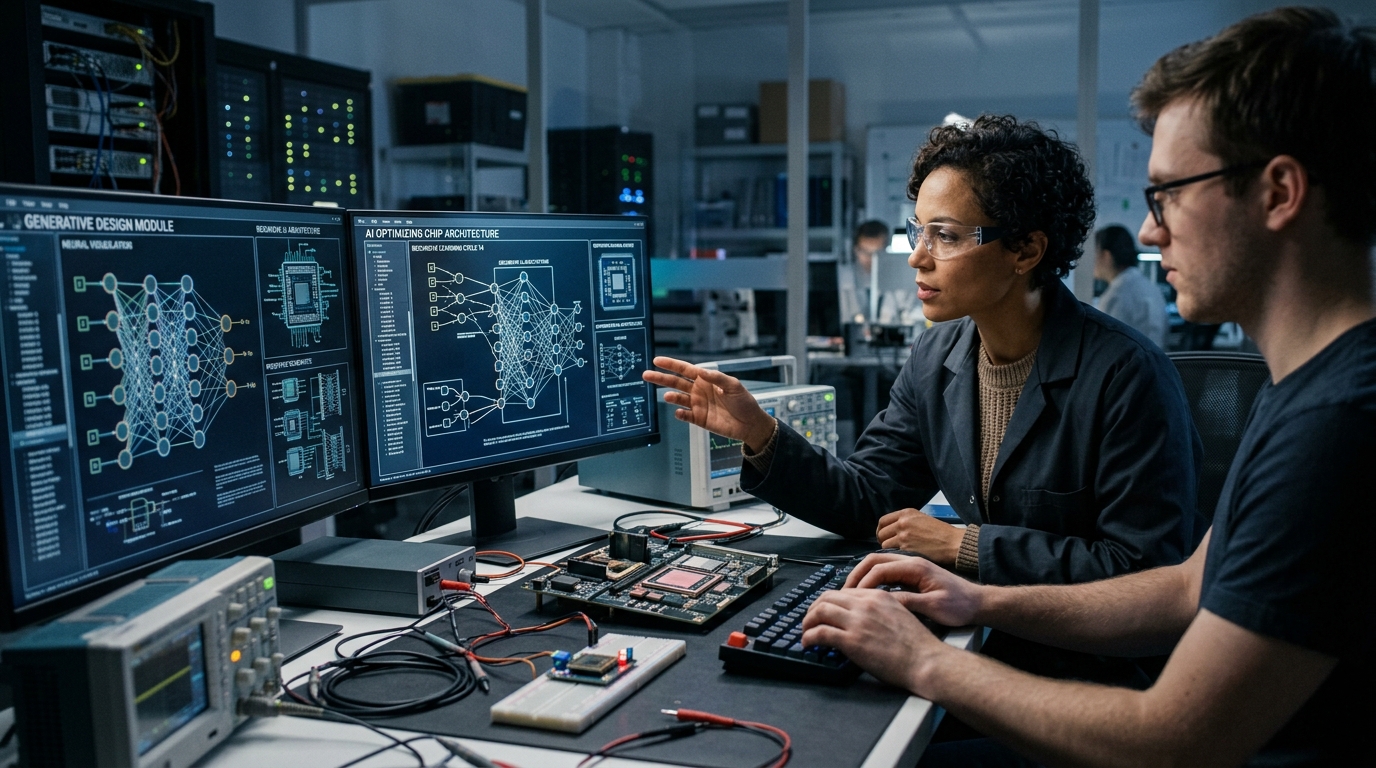
For decades, progress in computing relied on human ingenuity: software engineers writing code line by line, and researchers meticulously designing neural network architectures. Today, we stand at the threshold of a new era where Artificial Intelligence (AI) is taking over the role of the architect. The concept of "AutoML" (Automated Machine Learning) and self-improving models is no longer theoretical science fiction but a daily reality in the labs of Google, OpenAI, and Anthropic.
The Sunset of Hand-Crafted Architecture
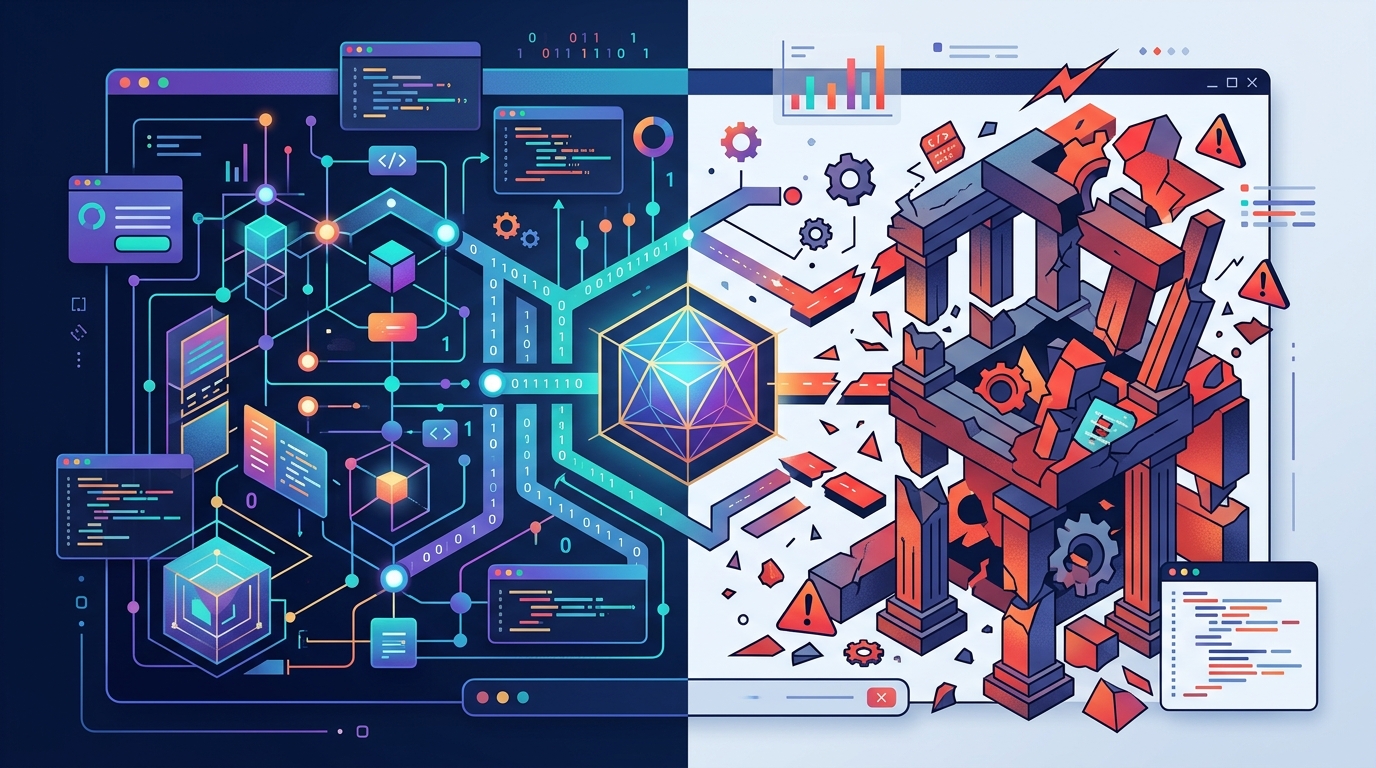
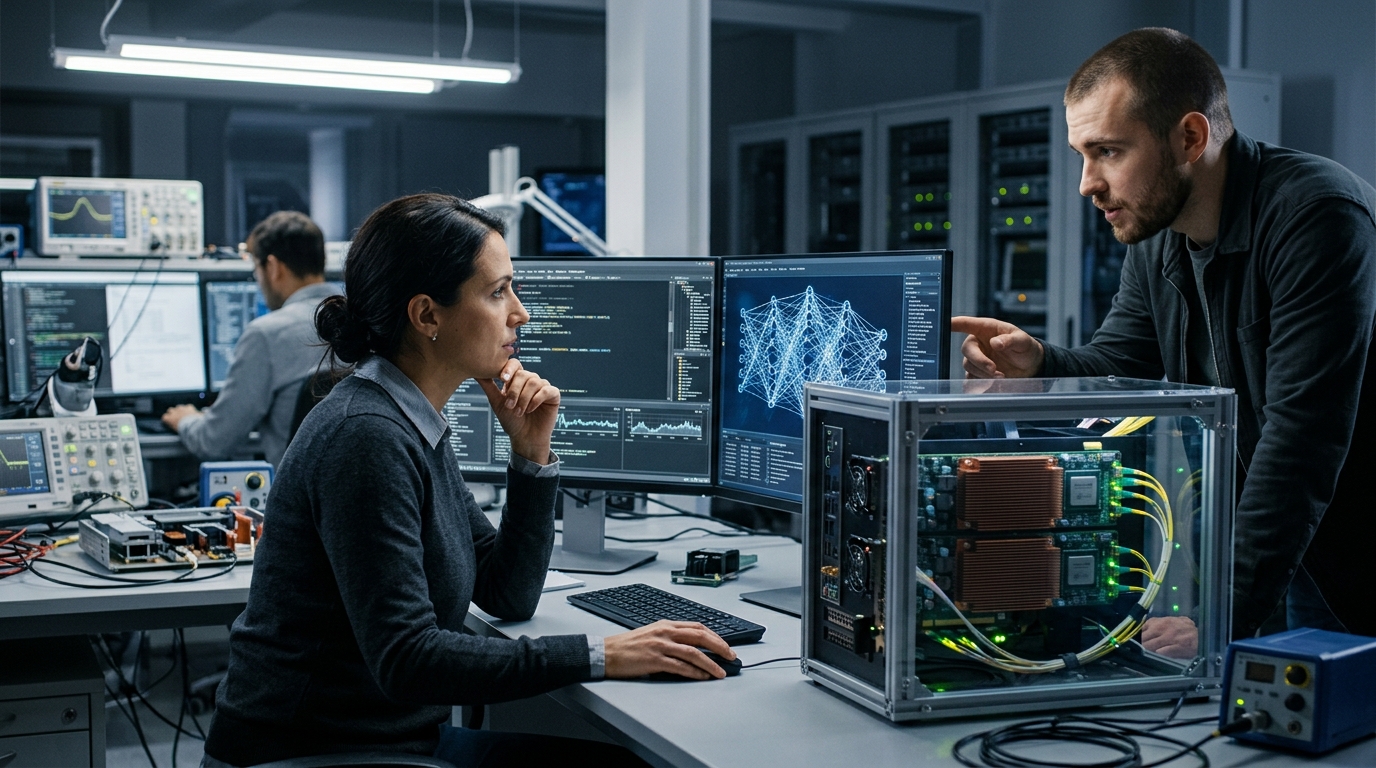
In the early days of deep learning, creating a successful model required months of trial and error by specialized data scientists. They had to decide how many layers the network would have, how they would be connected, and what parameters they would use. This process was slow, expensive, and limited by human intuition. However, the emergence of Neural Architecture Search (NAS) changed the game. This is a method where an AI algorithm "trains" thousands of smaller versions of models, evaluates their performance, and ultimately selects the optimal structure.
The result? Models that are often more efficient, faster, and more accurate than anything a human could design. AI is not bound by our biases about what an algorithm "should" look like. It can find complex connections and mathematical shortcuts that elude human logic, optimizing computational power usage to levels previously thought impossible.
Self-Improving Code and the Rise of AI Agents
The revolution doesn't stop at network design. It extends to the writing of code itself and the optimization of low-level algorithms. Google DeepMind's AlphaDev, for example, used reinforcement learning to discover faster data sorting algorithms—algorithms that have been the foundation of computing for decades and which humans already considered "perfect." AI proved there was room for improvement, saving valuable processing time on a global scale.
Furthermore, the use of "synthetic data" allows models to train one another. As data from the internet begins to run dry or becomes contaminated with low-quality content, powerful models (like GPT-4) can produce high-quality training material for smaller, more specialized models. This self-sustaining cycle creates an acceleration that many analysts liken to an intelligence "chain reaction."
The Risks of Recursive Autonomy
Despite the immense potential, the idea of AI building AI raises serious safety and transparency questions. If an algorithm designs another algorithm, the ability of humans to understand and control the internal workings of these systems (the so-called "black box") decreases dramatically. There is a fear that errors or biases could be recursively amplified, creating systems that are unpredictable or even dangerous.
Moreover, the issue of geopolitical and economic power arises. Companies that own the best "creator models" will have an insurmountable advantage, as their technology will evolve at rates that competitors, relying on human labor, will be unable to match. The concentration of power in a few hands thus becomes an inevitable consequence of automated innovation.
Conclusion: Toward the Singularity?
AI's ability to improve itself is the key to what futurists call the "Technological Singularity." While we are still far from a fully autonomous superintelligence, the shift toward automated research and development is irreversible. The challenge for humanity is no longer just to build better tools, but to ensure that the tools that build other tools remain aligned with human values and social welfare. The cycle of self-improvement has begun, and its speed will determine the future of our civilization.