For decades, the medical community has relied on a simplistic mathematical tool to assess weight-related health: the Body Mass Index (BMI). However, BMI is a "blind" indicator. It cannot distinguish between muscle mass and fat, nor can it identify exactly where fat is stored in the body. Today, the convergence of advanced imaging and Artificial Intelligence (AI) promises to make this tool obsolete. New "body maps" generated by AI algorithms offer an unprecedented look inside the human organism, revealing damage caused by obesity long before the first clinical symptoms appear.
The Digital Mapping Revolution
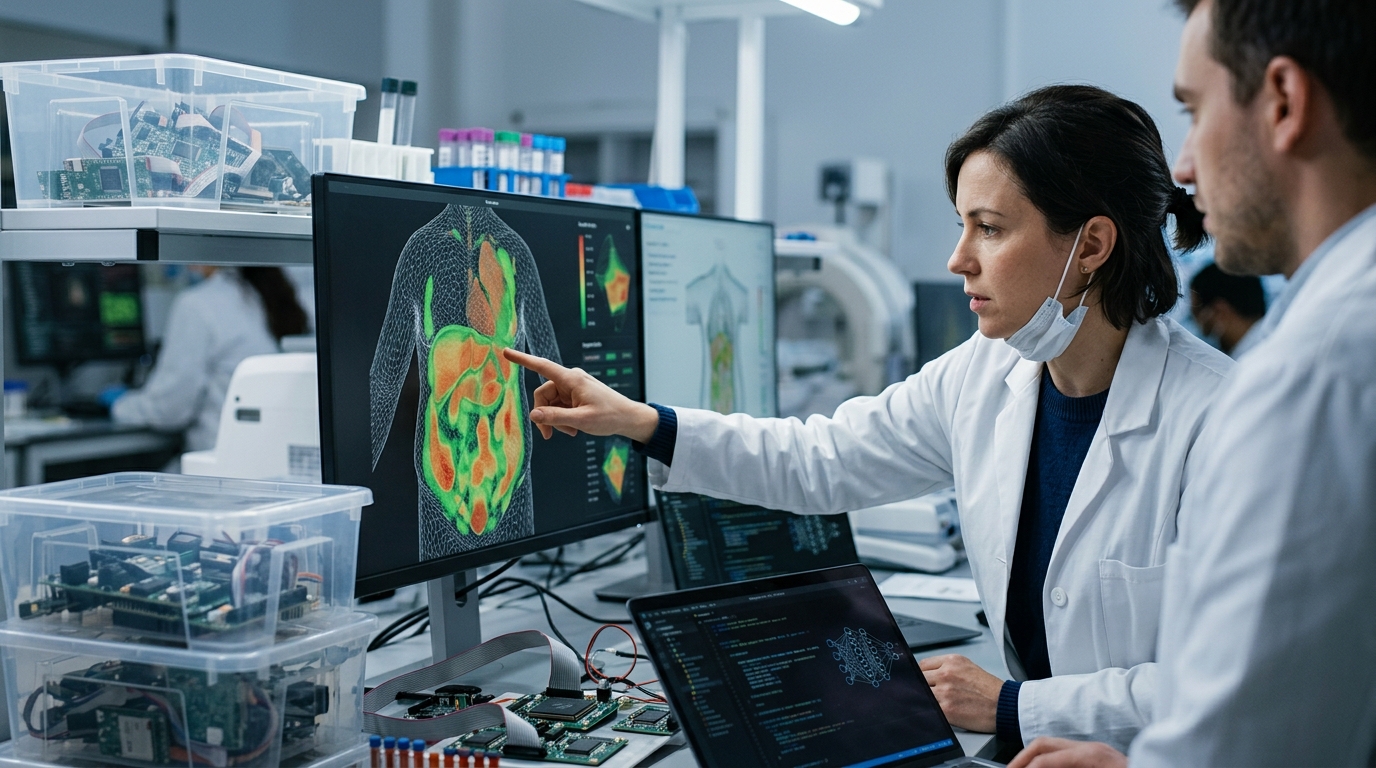
The technology, recently analyzed in international scientific forums and highlighted by sources such as Vietnam.vn, utilizes data from whole-body Magnetic Resonance Imaging (MRI). While a standard MRI produces thousands of images that a radiologist would take hours to analyze in detail, AI can process this data in seconds. The algorithms are trained to identify and quantify different tissue types with millimeter precision.
The key lies in identifying "ectopic fat"—fat stored where it shouldn't be, such as around the heart, inside the liver, or between muscle fibers. These digital maps create a three-dimensional representation of an individual's metabolic health, allowing doctors to see not only how much fat a patient has, but also how "toxic" it is for their vital organs. AI's ability to distinguish visceral fat (the dangerous fat surrounding organs) from subcutaneous fat is fundamentally changing how we assess risk for type 2 diabetes and cardiovascular disease.
Revealing "Hidden" Damage
One of the most impressive findings of this technology is its ability to detect early signs of inflammation and fibrosis in organs. For example, non-alcoholic fatty liver disease (NAFLD) often progresses silently. AI body maps can identify the microscopic changes in liver tissue composition that indicate the onset of damage, allowing for interventions before the condition becomes irreversible.
- Cardiovascular Risk: AI analyzes pericardial fat, which is directly linked to atherosclerosis.
- Muscle Quality: Fat infiltration into muscles (myosteatosis) is an indicator of premature aging and metabolic dysfunction.
- Renal Function: Mapping reveals how pressure from perirenal fat affects kidney filtration.
This approach also deconstructs the paradox of the "healthy obese" or the "skinny-fat" individual. There are people with a normal BMI who, through AI mapping, are revealed to have dangerous fat deposits in their organs, while some individuals with increased weight may have a protective fat distribution. AI does not judge based on appearance, but based on the functional integrity of tissues.
Challenges and the Future of Preventive Medicine
Despite the vast potential, the widespread application of AI body maps faces hurdles. The primary issue is cost and accessibility to MRI scans. However, as technology evolves, faster and cheaper imaging protocols are being developed specifically for AI analysis, reducing time in the scanner to less than ten minutes.
"We are no longer treating a number on a scale, but a living, complex system of organs that communicate with each other," industry experts state.
In the future, these maps could become part of our annual check-up. They will allow patients to visually see their health progress—for example, how a change in diet or the use of new medications (like GLP-1 agonists) specifically reduces fat in the liver or heart. Visualizing internal health also serves as a powerful motivator for treatment compliance. Artificial Intelligence is transforming medicine from a science of treating symptoms into a science of precision and prevention, offering a digital mirror that shows the truth beneath the skin.