The global technology landscape is experiencing one of its most significant pivot points since the emergence of ChatGPT. The launch of DeepSeek V4 is not merely an addition to the roster of Large Language Models (LLMs); it is a fundamental challenge to the "brute force" dogma that has dominated the last three years. As DeepSeek V4 demonstrates that top-tier performance can be achieved with a fraction of the computational cost and energy required by its Western counterparts, Wall Street and international markets are being forced to undergo a radical reassessment of the entire AI value chain.
The Efficiency Revolution and the MoE Model
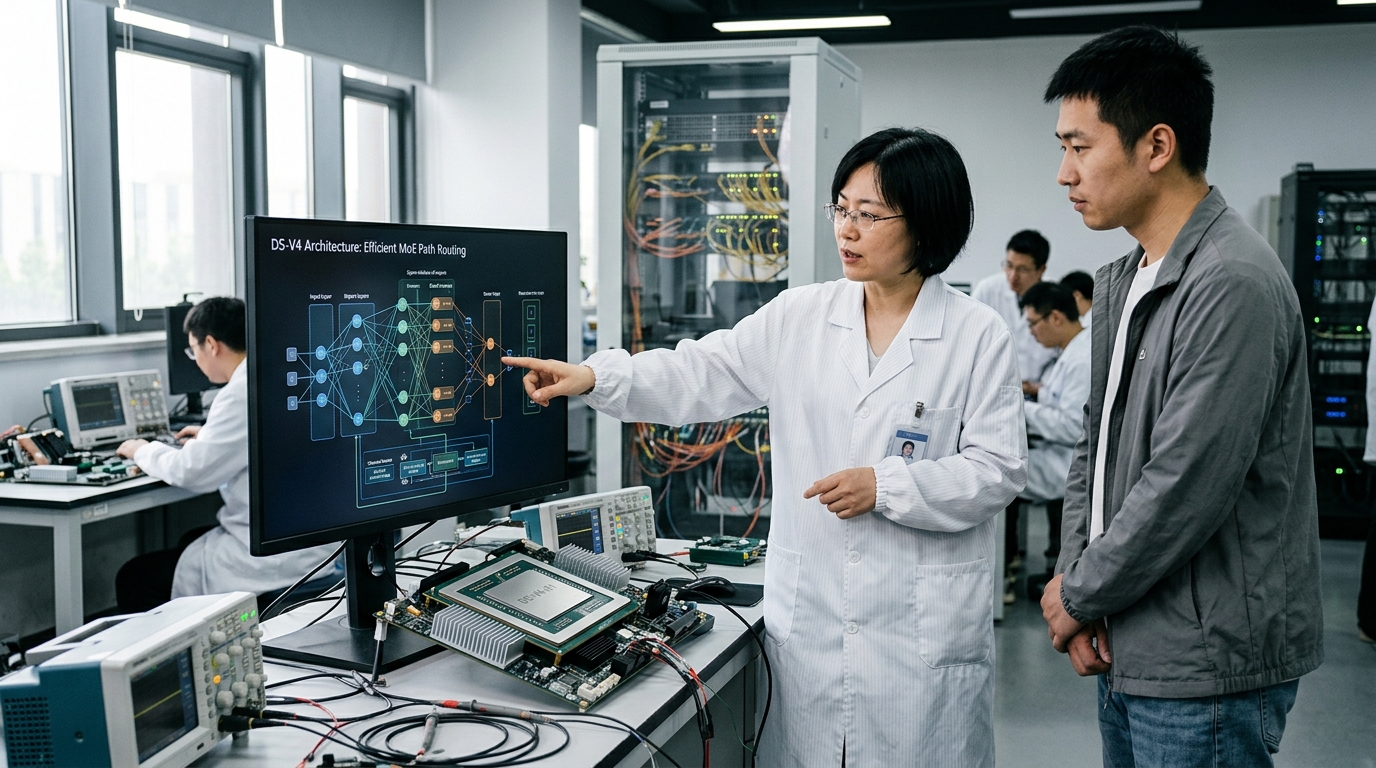
DeepSeek V4 is built upon a sophisticated Mixture of Experts (MoE) architecture, which allows the model to activate only a specific subset of its parameters for any given query. While this approach is not new, the Chinese team has refined it to an extent that is causing widespread industry ripples. The model's ability to compete with OpenAI’s GPT-4o and Anthropic’s Claude 3.5 while requiring significantly fewer GPU resources changes the market narrative. Previously, investment logic dictated that the more NVIDIA GPUs a company possessed, the stronger its competitive moat. DeepSeek V4 shatters this argument, proving that algorithmic intelligence can compensate for hardware scarcity.
This development has immediate implications for the stocks of companies forming the industry's backbone. Analysts at IndexBox note that DeepSeek’s "efficiency-first strategy" is creating margin pressure for cloud providers and chipmakers alike. If the market shifts toward models that require less computational power, the explosive demand for high-end NVIDIA chips (such as the H100 and B200) may plateau sooner than anticipated.
Reassessing Stocks: Winners and Losers
The impact of DeepSeek V4 on equity markets is already palpable. Companies focused exclusively on hardware manufacturing are facing scrutiny as investors fear a potential "peak demand" scenario. Conversely, firms specializing in algorithmic optimization, custom chip design (ASICs), and AI software solutions are beginning to attract greater interest. The market appears to be transitioning from an "infrastructure build-out" phase to an "operational optimization" phase.
- Semiconductors: While NVIDIA remains dominant, the rise of DeepSeek favors companies like Broadcom and Marvell, which assist hyperscalers in designing their own specialized chips.
- Cloud Providers: Microsoft, Google, and Amazon face a dilemma: continue massive capital expenditure on hardware or pivot toward more efficient models that reduce operational costs?
- Energy: Reducing energy consumption per AI query is the "holy grail" of sustainability. DeepSeek V4 paves the way for a less power-hungry artificial intelligence.
Geopolitics and Technological Autonomy
One cannot ignore the geopolitical weight of this launch. DeepSeek, based in China, managed to develop a world-class model despite stringent US export controls on high-end chips. This sends a clear message to Washington: hardware restrictions are insufficient to halt software innovation. The success of DeepSeek V4 suggests that China has found ways to bypass the "chip wall" through superior architectural design.
"DeepSeek V4 is not just a model; it is proof that creativity can defeat resource abundance. In the AI economy, capital is no longer just dollars, but the efficiency of algorithms."
In conclusion, the AI industry chain is entering a phase of maturity. The era where investors blindly bought any AI-related stock is coming to an end. The case of DeepSeek V4 forces the market to look past the glitz of keynotes and focus on the hard metrics: cost per query, energy consumption, and implementation flexibility. 2026 will be remembered as the year efficiency became the new currency of technological power.