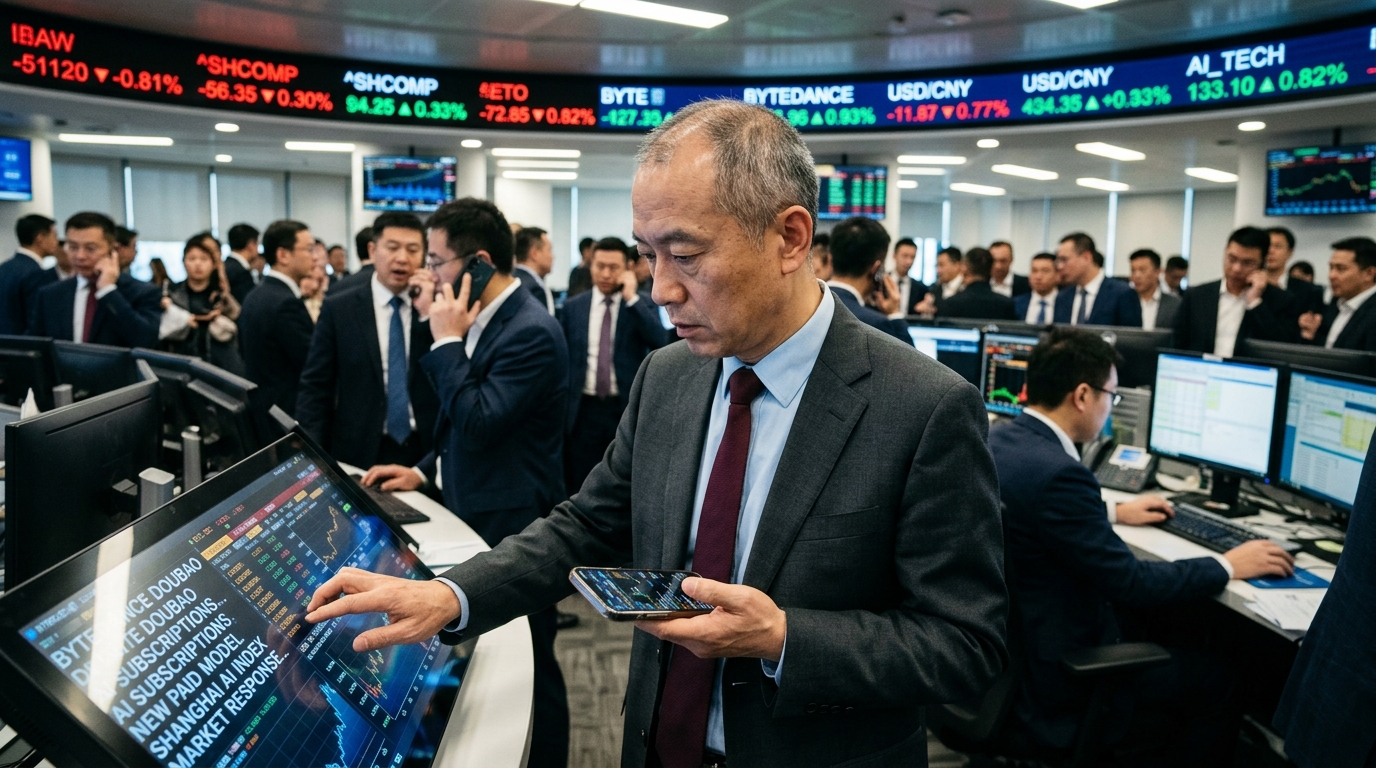
The era of "free abundance" in China's generative artificial intelligence sector is drawing to a close. ByteDance, the global powerhouse behind TikTok, has begun testing paid subscription tiers for Doubao, the country's most popular AI chatbot. This move is more than just a pricing update; it represents a strategic pivot for the entire Chinese tech ecosystem toward sustainability and profitability.
Until recently, Chinese tech giants—including Baidu, Alibaba, and Tencent—were locked in a ruthless price war, offering free services to capture market share. Doubao, with its massive user base, was the champion of this land-grab strategy. However, the astronomical costs of compute power and the need to recoup billions invested in GPUs and data centers are forcing ByteDance to seek direct revenue from end-users.
The ByteDance Strategy and Doubao's Dominance
Doubao is not just another chatbot. Since its launch, it has consistently outperformed Baidu's Ernie Bot in downloads and active users, thanks to its deep integration within the ByteDance ecosystem and its superior handling of the Chinese language. The decision to introduce "Pro" subscriptions suggests that the company believes its product has reached a level of maturity where users are willing to pay for advanced features, such as faster response times, complex document analysis, and high-resolution image generation.
This move mirrors the path taken by OpenAI with ChatGPT Plus and Google with Gemini Advanced. However, the challenges in China are unique. The market is highly fragmented, and the willingness of consumers to pay for AI services has yet to be tested at scale. ByteDance is betting that its model's quality will maintain user loyalty despite the price tag.
The Cost of Intelligence and Geopolitical Constraints
A primary driver for the shift to paid models is operational expenditure. Training and maintaining Large Language Models (LLMs) requires thousands of GPUs, which have become scarce and expensive due to US export restrictions. ByteDance, like its competitors, must manage its resources meticulously. Offering free services to millions of users without an immediate Return on Investment (ROI) is a luxury that even the wealthiest corporations cannot sustain indefinitely.
- Rising electricity costs for massive data center operations.
- Limited access to cutting-edge chips like Nvidia's H100 or B200.
- The necessity for continuous model refinement to remain globally competitive.
Furthermore, the Chinese government has implemented strict regulations regarding AI safety and content censorship. Compliance requires additional layers of filtering and human oversight, further driving up the cost per query. Moving to a paid model helps offset these regulatory and technical overheads.
The Future of the Chinese AI Market
ByteDance's move is expected to trigger a domino effect. It is highly likely that Baidu and Moonshot AI (Kimi) will follow suit with similar subscription models, officially ending the "free trial" period of the industry. The market is moving from a phase of hype to a phase of utility. Companies must now prove that AI offers real-world value to users' lives or workflows that justifies a monthly fee.
"The transition to paid services is the ultimate test for the value of generative AI in China. If users pay, the industry matures. If not, we will witness a violent consolidation of the sector," noted market analysts in Beijing.
In the long run, this evolution may favor companies focusing on specialized B2B applications where profit margins are higher. For the average consumer, AI will cease to be a free novelty and will become a productivity tool with a clear cost, much like a subscription to Netflix or Microsoft 365.