At the dawn of the third decade of the 21st century, humanity faces an invisible yet transformative shift. It is no longer about simply using Artificial Intelligence (AI) tools through a screen; it is about our total immersion in an ecosystem of "intelligent" agents that record, analyze, and ultimately predict our every move. Recent analysis highlighted by international outlets, such as Vietnam.vn, poses a critical question: Are billions of artificial intelligences silently learning every human action? The answer appears to be a resounding, albeit whispered, "yes."
From the Internet of Things to the Intelligence of Everything
For years, we discussed the Internet of Things (IoT) as a network of devices. Today, we are transitioning to the Intelligence of Everything. Every sensor in a smartwatch, every security camera with facial recognition, every digital assistant in the home, and every algorithm on social networks functions as a data entry node. These billions of "touchpoints" do not just collect static data; they train machine learning models in real-time.
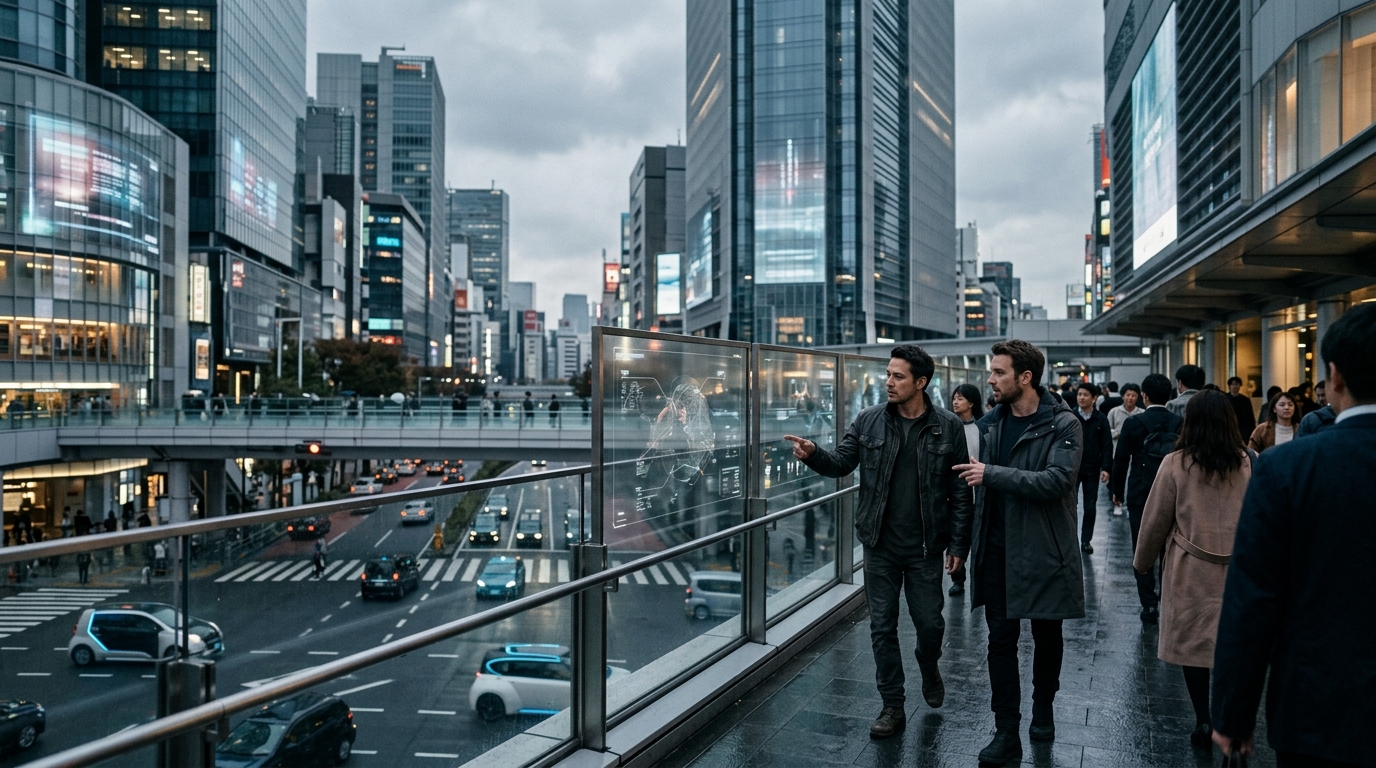
The concept of "silent learning" refers to the ability of AI systems to extract patterns from our behavior without our explicit intervention or guidance. When you walk down the street and your phone records your gait, it isn't just counting steps. It is learning about your health status, your stress levels, and even the likelihood of you stopping in front of a particular storefront. This constant feed turns daily life into a vast laboratory for algorithmic training.
The Architecture of the Digital Panopticon
Philosopher Jeremy Bentham envisioned the "Panopticon," a prison where inmates never knew when they were being watched, leading them to self-regulate their behavior. In the age of ubiquitous AI, the Panopticon has no walls. It is built of code. The difference is that today's surveillance aims not at punishment, but at profitability and prediction.
Big Tech companies are developing what is known as "Agentic AI"—agents that can act autonomously on behalf of the user. However, to be effective, these agents must "know" the user better than the user knows themselves. This leads to a paradoxical situation: to gain the convenience promised by AI, we must surrender the last bastion of our privacy: spontaneous, unrecorded human action.
- Continuous Multimodal Learning: AI no longer processes just text, but audio, video, and biometric data simultaneously.
- Edge AI: Processing is now happening locally on devices, making monitoring faster and more "invisible."
- Behavioral Surplus: The data we produce unintentionally becomes the most valuable commodity in the global economy.
Geopolitical and Social Implications
The scale of this learning has massive geopolitical consequences. States that control the largest data pools—such as China and the US—gain a strategic advantage in developing superior AI systems. "Silent learning" allows for the creation of models that can simulate social behavior, influence elections, or predict social unrest before it even manifests.
On an individual level, the risk is the loss of "randomness." If AI knows what we will do before we do it, and if our environment constantly adapts to satisfy our predicted desires, then free will is reduced to a series of pre-selected options. Human agency is transformed into a predictable dataset, stripping away the element of surprise and authentic discovery.
"We are no longer training artificial intelligence; artificial intelligence is training on us, using our lives as the ultimate dataset."
Toward a New Social Contract
The solution is not technophobia or complete disconnection, which seems impossible in the modern world. A new social contract for the digital age is required. This includes "radical transparency" of algorithms, the right to "non-recording," and the ownership of personal data by the user rather than the service provider.
As billions of AI agents continue to learn silently, humanity must decide whether it will remain the teacher or be relegated to a mere experiment within a digital laboratory. Knowledge is power, but when that knowledge concerns every second of our existence and belongs to others, then power turns into absolute control.