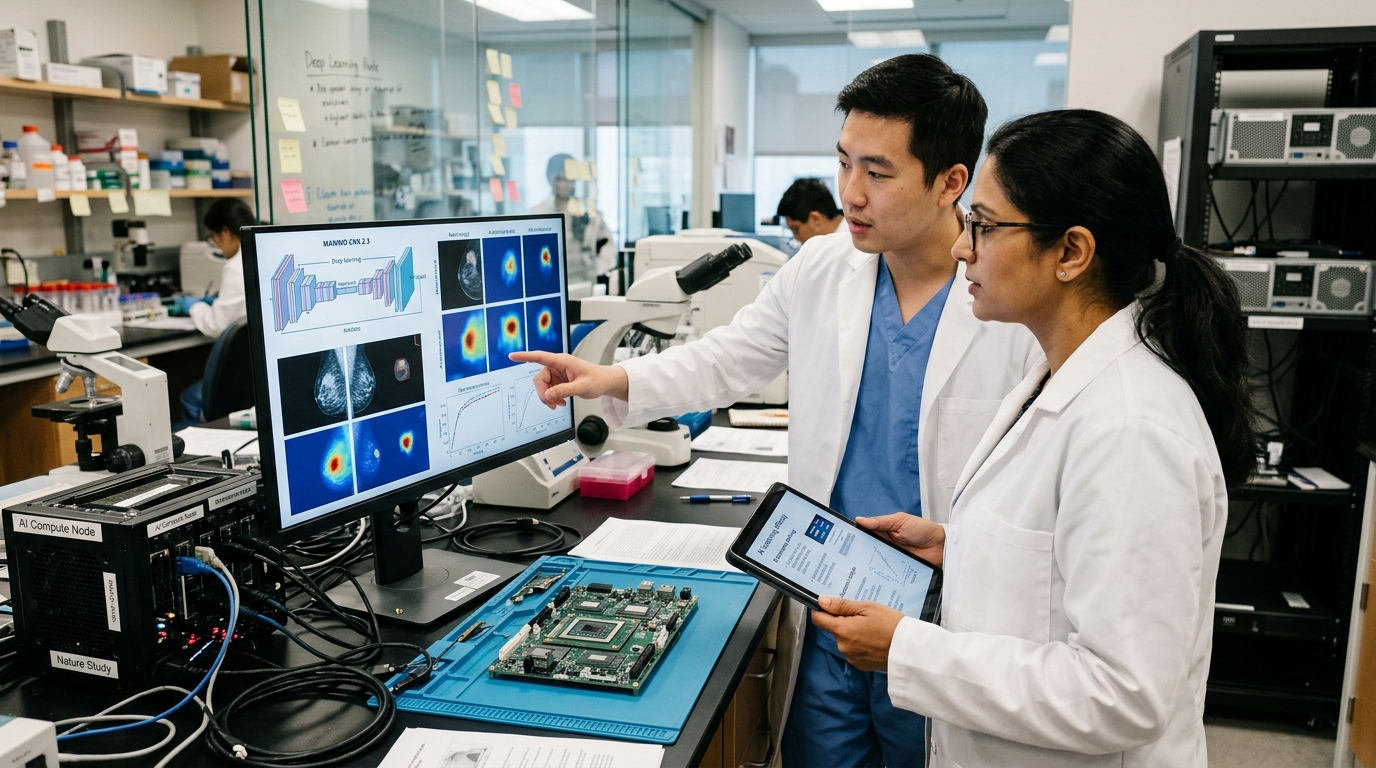
The integration of Artificial Intelligence (AI) into clinical practice is no longer a futuristic concept but a pressing economic and clinical necessity. A landmark study recently published in the journal Nature sheds light on one of its most critical applications: breast cancer detection within the UK’s National Health Service Breast Screening Programme (NHSBSP). This research moves beyond simple diagnostic accuracy, providing a rigorous economic evaluation to determine if AI truly offers value for money in an overstretched healthcare system.
The Workforce Crisis and the AI Intervention
The UK, like many Western nations, faces a chronic shortage of breast radiologists. The current gold standard requires a 'double reading' of every mammogram by two independent experts—a process that ensures high sensitivity but consumes immense resources. The Nature study evaluates scenarios where AI replaces one of the two human readers or acts as a triage filter for low-risk cases, allowing clinicians to focus their expertise on more complex or suspicious findings.
The findings suggest that utilizing AI as a 'second reader' is not only clinically non-inferior to the traditional human-human double reading but is also economically viable. In a system grappling with significant backlogs, AI's ability to process thousands of images in seconds offers a solution that transcends speed. It is about the strategic reallocation of human capital to areas where clinical judgment and patient empathy are irreplaceable.
Economic Modeling and Cost-Effectiveness
The economic evaluation employed sophisticated Markov models to simulate long-term costs and benefits. Researchers accounted for variables such as the cost of false positives, biopsy expenses, and Quality-Adjusted Life Years (QALYs) gained. The results are compelling: AI has the potential to lower the overall cost of the screening programme while maintaining, or even slightly improving, cancer detection rates.
- Reduction in radiologist workload by up to 50% in specific operational models.
- Lower cost per cancer detected compared to traditional double-reading.
- Faster turnaround times for results, significantly reducing patient anxiety.
However, the study emphasizes that cost-effectiveness is highly sensitive to the licensing costs of AI software. If technology providers set prices too high, the economic advantages for the NHS could be neutralized, turning a promising innovation into a financial burden. This highlights the need for transparent pricing and public-private partnerships that prioritize public health outcomes over short-term profits.
Challenges and Ethical Considerations
Despite the favorable economic data, implementing AI in cancer screening is not without its hurdles. The 'black box' nature of deep learning algorithms remains a concern, as the logic behind a specific diagnosis may not always be transparent to the clinician. Furthermore, the study points to the necessity of continuous monitoring to ensure AI performance remains consistent across diverse demographic groups, preventing algorithmic bias from exacerbating healthcare inequalities.
"AI will not replace radiologists, but radiologists who use AI will replace those who do not," the study suggests, echoing a growing sentiment in the medical community.
In conclusion, the Nature paper serves as a strategic roadmap for integrating technology into public health. It is not merely about adopting a new tool; it is about redesigning a system for sustainability and precision. The question is no longer whether AI will be used in screening, but how quickly and under what regulatory framework it will become the silent partner of every radiologist in the screening room.