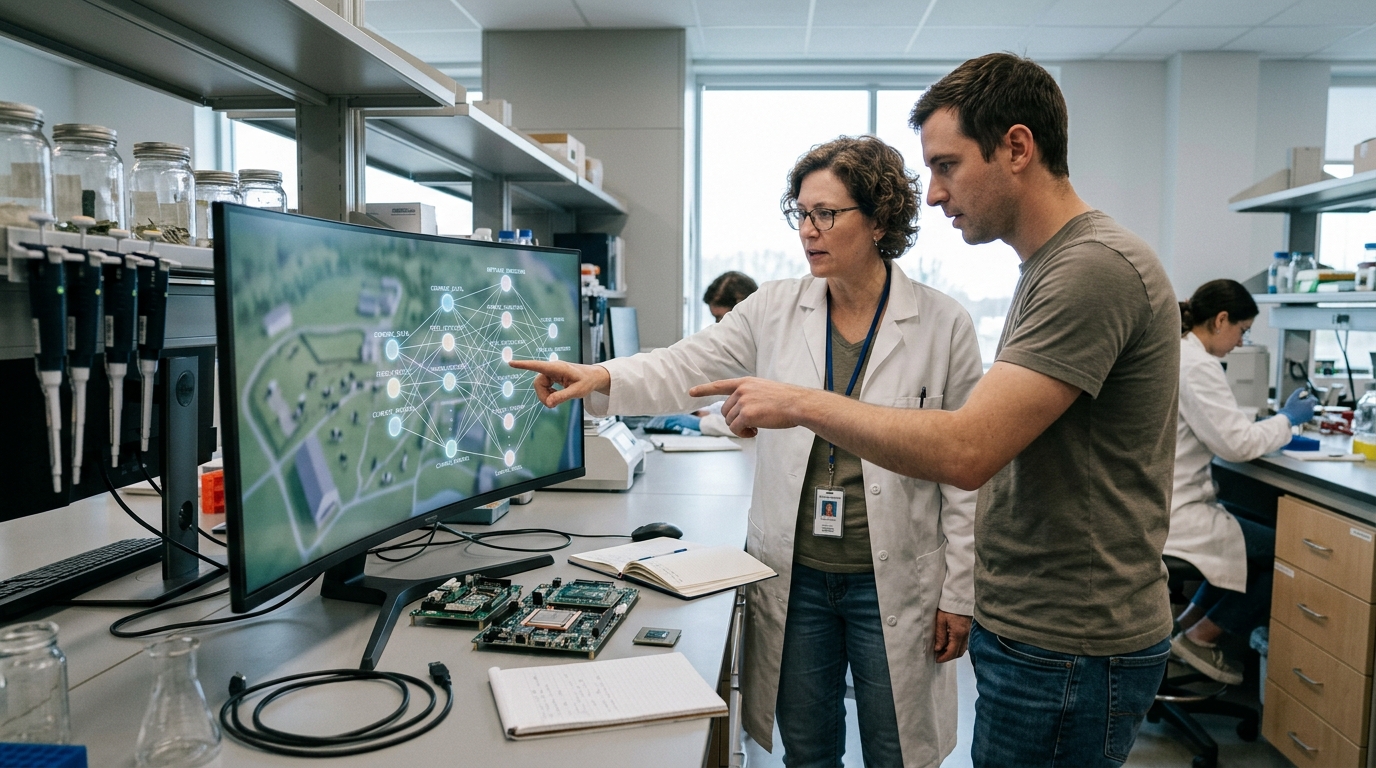
In an era where global food security collides with the urgent necessity for environmental preservation, technology is emerging as the critical mediator. Recent research from Texas A&M AgriLife Research, focusing on the use of Artificial Intelligence (AI) decision-making models, is not merely a technical upgrade but a fundamental paradigm shift in how we perceive livestock farming. This study seeks to answer a pressing question: can meat and dairy production become truly sustainable on a warming planet?
The Precision Revolution in the Field
For centuries, traditional livestock farming relied on empirical knowledge and observation. However, the challenges of the 21st century demand greater precision. The AgriLife research introduces the concept of "Precision Livestock Farming" (PLF), where AI takes on the task of analyzing vast amounts of data from sensors, satellite imagery, and genetic information. These models do more than predict animal growth; they optimize every aspect of their lives, from feed intake to reproductive health.
The use of Bayesian networks and neural networks allows researchers to simulate scenarios that previously would have required decades of field experimentation. For instance, through AI, scientists can identify which animals are more heat-tolerant or which require less feed for the same yield, thereby reducing the ecological footprint per kilogram of product.
Cracking the Methane Code
One of the biggest hurdles for the livestock industry is methane emissions, a greenhouse gas significantly more potent than carbon dioxide. AI decision modeling offers a new path forward. By analyzing feed composition and the microbial flora of the ruminant digestive system, AI can suggest personalized diets that minimize emissions without sacrificing animal health.
Furthermore, the research focuses on pasture management. AI models can analyze soil data and weather forecasts to guide farmers in rotational grazing, preventing overgrazing and enhancing soil carbon sequestration. This holistic approach transforms livestock farming from a climate problem into part of the solution.
From Genomic Data to Global Markets: The Digital Twin
The innovation of this research lies in integrating genomics with real-time data. Researchers are creating what they call "digital twins" of animals and farm operations. These virtual models allow for the testing of different management strategies in a safe, digital environment before they are implemented in the real world.
- Reproductive Optimization: Reducing the interval between births and improving neonatal survival rates.
- Proactive Health: Identifying diseases through behavioral changes before clinical symptoms even appear.
- Resource Management: Precise calculation of water and energy needs.
This approach not only reduces costs for the producer but also ensures a higher level of animal welfare, as interventions are targeted and timely.
The Ethical and Economic Crossroads
Despite the promises, the introduction of AI into livestock farming is not without challenges. There is a risk of further concentrating power in large agricultural enterprises that have the resources to invest in such technologies, potentially leaving small-scale producers behind. Moreover, the reliance on algorithms raises questions about farmer autonomy and the traditional human-animal relationship.
In conclusion, the Texas A&M AgriLife research serves as a beacon of hope for a more rational and sustainable food production system. AI is not just a tool for profitability; it is a necessary bridge to a world where feeding humanity does not entail the destruction of the ecosystem. The challenge now shifts from the laboratory to the field: how can we ensure these innovations are accessible and equitable for all?