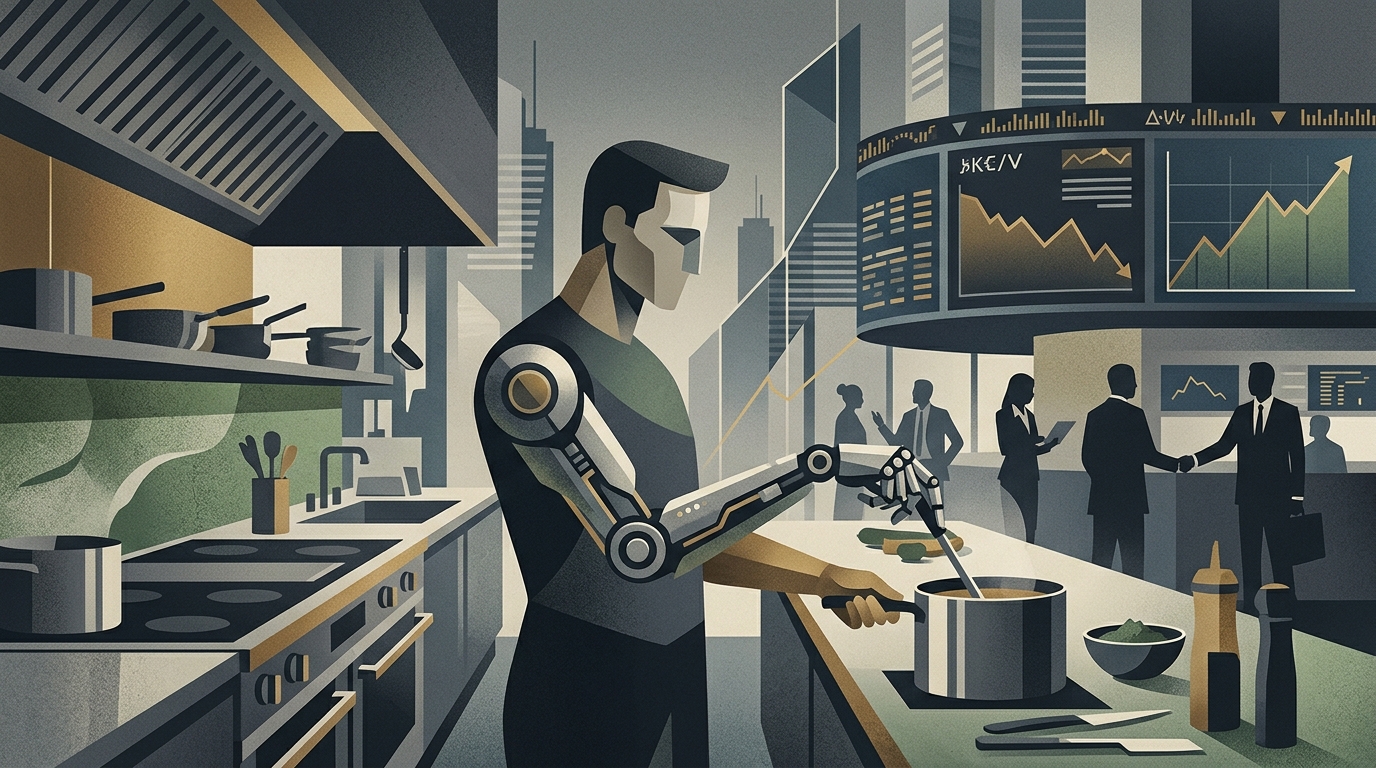
The restaurant industry is standing at a critical crossroads. For years, restaurateurs—from global fast-food giants to local independent eateries—have been grappling with a persistent and painful reality: a chronic labor shortage. The workers who left the industry during the pandemic have never fully returned, often seeking better working conditions and higher wages in other sectors. Into this void steps Artificial Intelligence (AI), no longer as a futuristic promise, but as a necessary business survival strategy.
The Digital Revolution in Order-Taking
One of the most visible shifts is occurring at the point of customer contact. The traditional image of a staff member taking orders at a drive-thru or counter is being rapidly replaced by voice recognition and Conversational AI systems. These systems don’t get tired, don’t make mistakes under pressure, and, most importantly, can handle multiple orders simultaneously. According to recent industry analyses, implementing AI in order-taking can reduce wait times by up to 20%, significantly boosting customer satisfaction during peak hours.
However, the challenge remains the naturalness of the interaction. While algorithms have improved dramatically in understanding diverse accents and background noise, "human warmth" is something software struggles to replicate. For many establishments, the solution is a hybrid model: AI handles the routine transactions, allowing the limited staff available to focus on problem-solving and providing a higher-quality hospitality experience.
Robotics and Automation in the Kitchen
If order-taking is the face of the business, the kitchen is its heart—and that’s where the labor shortage is felt most acutely. Kitchen work is often repetitive, hot, and physically demanding. Here, AI is merging with robotics to provide solutions that once belonged to the realm of science fiction. Robotic arms that flip burgers or fry potatoes with pinpoint precision, computer vision systems that monitor ingredient quality in real-time, and smart ovens that adjust cooking times based on order volume are becoming the new "sous-chefs."
The investment in such technologies is high, but the ROI (return on investment) is becoming increasingly attractive for businesses facing rising labor costs and minimum wage hikes. While the hospitality sector has traditionally relied on personal touch, the pressure of seasonal peaks and the difficulty of finding specialized staff are pushing more businesses to consider automation for prep work and back-of-house operations.
Economic Implications and the Future of Work
The adoption of AI in restaurants isn't just about replacing missing workers; it's about transforming the economic structure of the industry. By reducing operational costs through automation, restaurants can keep their prices competitive in a high-inflation environment. Simultaneously, new roles are being created for staff who can manage, troubleshoot, and maintain these technological systems.
The lingering question is whether AI will lead to a permanent reduction in low-skilled jobs. While tech proponents argue that AI frees humans from "drudgery," skeptics warn of the risk of social alienation and the loss of authenticity. Ultimately, the success of AI in the restaurant world will be judged by whether it can enhance, rather than eliminate, the essence of dining out: the joy of sharing a meal in an environment where one feels genuinely welcomed.
- Labor shortages in hospitality are structural, not temporary.
- AI is taking over critical roles in order-taking and supply chain management.
- The combination of robotics and AI in the kitchen reduces errors and overhead.
- The ultimate challenge remains preserving the human element in the guest experience.