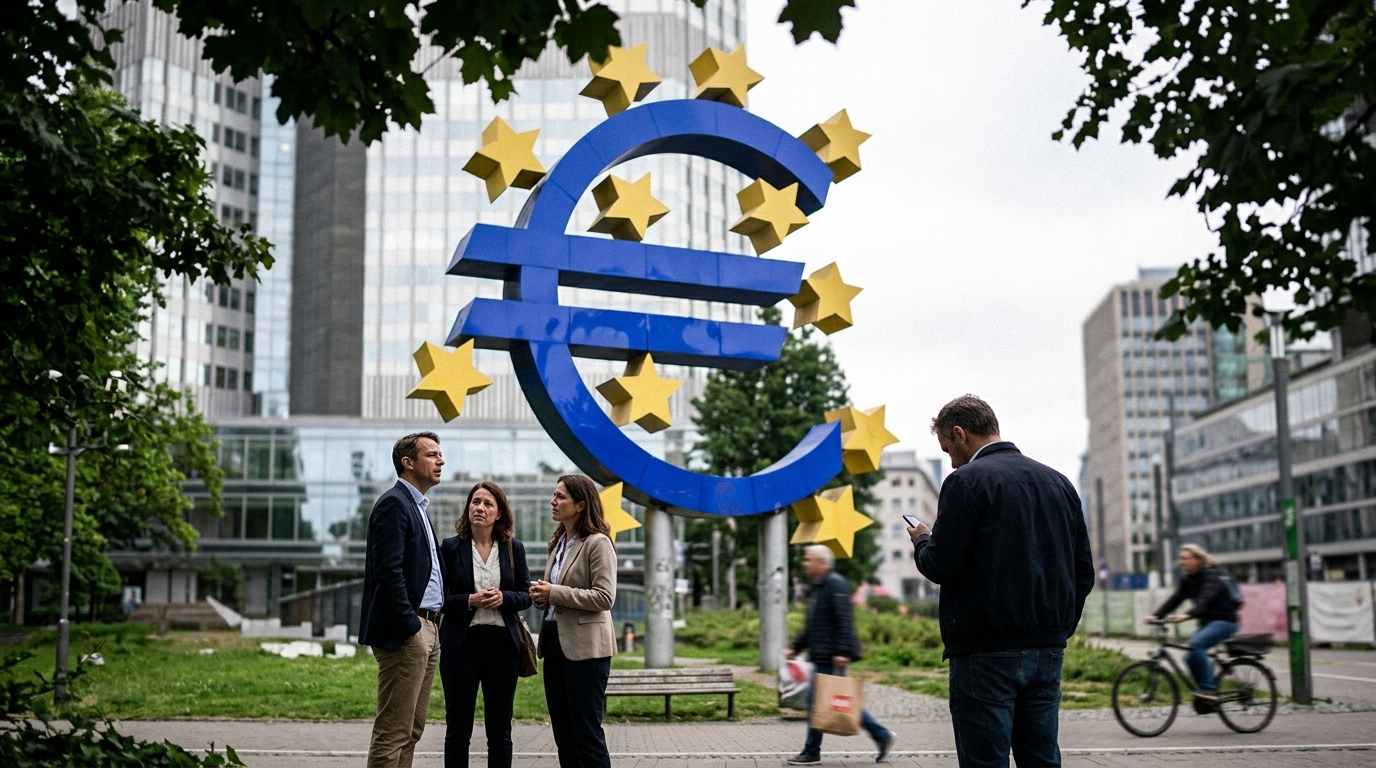
The release of data for the first quarter of 2026 has confirmed analysts' worst fears: the Eurozone has entered a period of economic malaise, with GDP recording a 0.2% decline. This development is not merely a statistical indicator but the result of a multi-layered crisis combining the energy transition, geopolitical tensions, and the delayed adoption of cutting-edge technologies, such as artificial intelligence, into the continent's productive fabric.
Germany in a Tailspin and the End of the Industrial Model
Europe's largest economy, Germany, continues to be the region's "sick man." The contraction of German GDP was the primary driver behind the Eurozone's negative performance. With energy costs remaining structurally higher than in the US and China, the country's heavy industry—from automotive to chemicals—is facing an existential crisis. The transition to electromobility, which proved slower and more expensive than expected, has left German companies exposed to Chinese competition.
According to Eurostat data, industrial production in Germany fell by 1.5% during the same period, dragging down neighboring economies that function as satellites to the German supply chain, such as Austria and the Czech Republic. A shortage of skilled labor and bureaucracy that continues to stifle investment make recovery a difficult equation for Berlin.
Southern Resilience: Greece and Spain Against the Grain
In contrast, the countries of the European South showed unexpected resilience, though not enough to offset the North's losses. Greece and Spain recorded marginal growth of 0.3% and 0.4%, respectively. Tourism, which began earlier than ever in 2026, combined with the absorption of Recovery Fund grants, acted as a cushion for these economies.
However, analysts warn that this divergence between North and South creates new challenges for the European Central Bank (ECB). While the North needs lower interest rates to stimulate growth, the South is still struggling with service inflation, complicating monetary policy. Frankfurt finds itself caught between supporting growth and maintaining price stability in an environment where household consumption remains sluggish due to the erosion of real income.
The Productivity Gap and the AI Challenge
A key reason the Eurozone lags behind the US is the productivity gap. While the American economy has begun to reap the benefits of integrating Generative AI into business processes, Europe remains tethered to strict regulatory frameworks that, while protecting rights, often stifle innovation. R&D investment in the Eurozone remains stuck below 2.5% of GDP, while global competitors exceed 3.5%.
"Europe risks becoming an open-air museum if it fails to translate technological progress into economic growth," states a recently leaked European Commission report.
The lack of a unified digital state and fragmented capital markets prevent European startups from scaling within the continent, often forcing them to seek funding across the Atlantic. This "brain and capital drain" deprives the Eurozone of the dynamism it needs to escape stagnation.
Outlook for the Remainder of 2026
Forecasts for the second half of 2026 remain cautious. Geopolitical instability, with tensions in the Middle East and uncertainty surrounding trade relations with China, continues to weigh on investor sentiment. The Eurozone must decide whether to move toward a more aggressive fiscal policy, loosening the rules of the Stability Pact, or remain committed to austerity, risking a prolonged period of zero growth.
In conclusion, the 0.2% GDP decline is a wake-up call. Europe can no longer rely on the achievements of the past. The need for a common energy policy, the completion of the banking union, and a bold investment in the technologies of the future is more urgent than ever. Without these, the first-quarter contraction may not be a transient disturbance but the beginning of a new normalcy of low expectations.