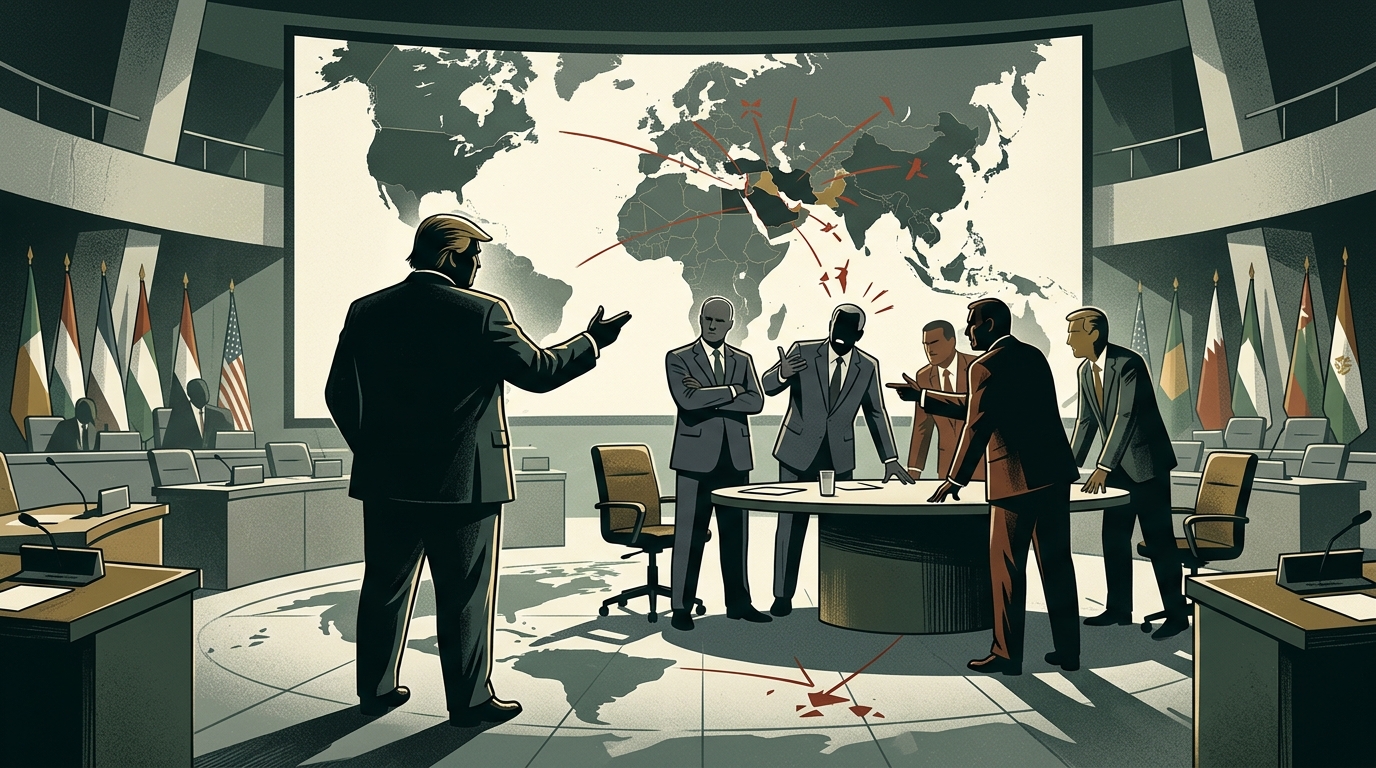
In a move that is sending shockwaves through the foundations of United States foreign policy, President Donald Trump has launched a blistering attack on senior members of his own party, labeling them "losers." The catalyst for this internal explosion is the emerging ceasefire and diplomatic rapprochement deal with Iran—a development that many traditional Republicans view as a historic blunder. This rift is not merely an internal party squabble; it is a fundamental clash between the isolationist "America First" doctrine and the traditional interventionist stance of the GOP establishment.
The Hawks’ Revolt: Cruz, Graham, and Wicker
In recent days, Washington has echoed with warnings from heavyweights like Ted Cruz, Lindsey Graham, and Roger Wicker. These three senators, once the backbone of Trump’s support in Congress, are now expressing profound anxiety. They fear the White House is preparing to sign a deal that would leave Iran’s nuclear infrastructure largely intact while providing the regime with an economic lifeline through sanctions relief. Roger Wicker, the ranking Republican on the Armed Services Committee, called the approach a "recipe for disaster," arguing that Tehran cannot be treated as a credible partner.
Ted Cruz, for his part, warned that any agreement not submitted to the Senate for approval as a formal treaty would be "dead on arrival." He pointedly reminded Trump of his own past criticisms of Barack Obama’s 2015 deal. The irony of the situation is lost on no one: the man who tore up the JCPOA is now being accused by his own allies of crafting something even weaker and more dangerous.
Trump’s Rebuttal: The Confidence of the 'Dealmaker'
Trump, true to form, took to social media to dismiss the mounting criticism. “Both sides must take their time and get it right. There can be no mistakes!” he declared, adding his now-infamous command: “Don’t listen to the losers!” For Trump, foreign policy is fundamentally transactional. He firmly believes that his personal rapport with world leaders—even those of hostile nations—can achieve breakthroughs where traditional diplomacy has failed for decades.
His strategy appears focused on avoiding a new conflict in the Middle East, which would be catastrophic for his domestic agenda and the global economy. However, critics argue that his desperation for a "Grand Bargain" makes him vulnerable to manipulation by Iranian negotiators, who are well-versed in the art of stalling and extracting concessions from leaders seeking a PR victory.
Geopolitical Implications and the Israeli Stance
The concern extends far beyond Capitol Hill. In Jerusalem, the government is watching with bated breath. While Trump has been one of Israel’s staunchest allies, the prospect of a deal that legitimizes the Tehran regime is causing significant jitters. US allies in the Gulf, such as Saudi Arabia, find themselves in a complex dilemma: they desire a reduction in regional tensions but fear an emboldened Iran with a replenished treasury.
- The potential deal may include partial sanctions relief for Iranian oil exports.
- Tehran is reportedly demanding guarantees that no future administration can unilaterally withdraw again.
- Washington is pushing for limits on Iran's ballistic missile program, a point Tehran has historically refused to negotiate.
"This isn't about diplomacy; it's about Trump trying to prove he's better than all his predecessors combined, even if the price is our national security," a senior State Department official remarked anonymously.
Conclusion: A Historic Turning Point
We are witnessing a historic pivot. If Trump proceeds, he will have fundamentally reshaped the Republican Party, transforming it from a party of military projection into a party of "transactional peace." Whether this approach will bring lasting stability or merely pave the way for a more severe crisis remains to be seen. What is certain is that Trump has no intention of letting any "losers" derail his vision for a grand return to the center of the global stage.