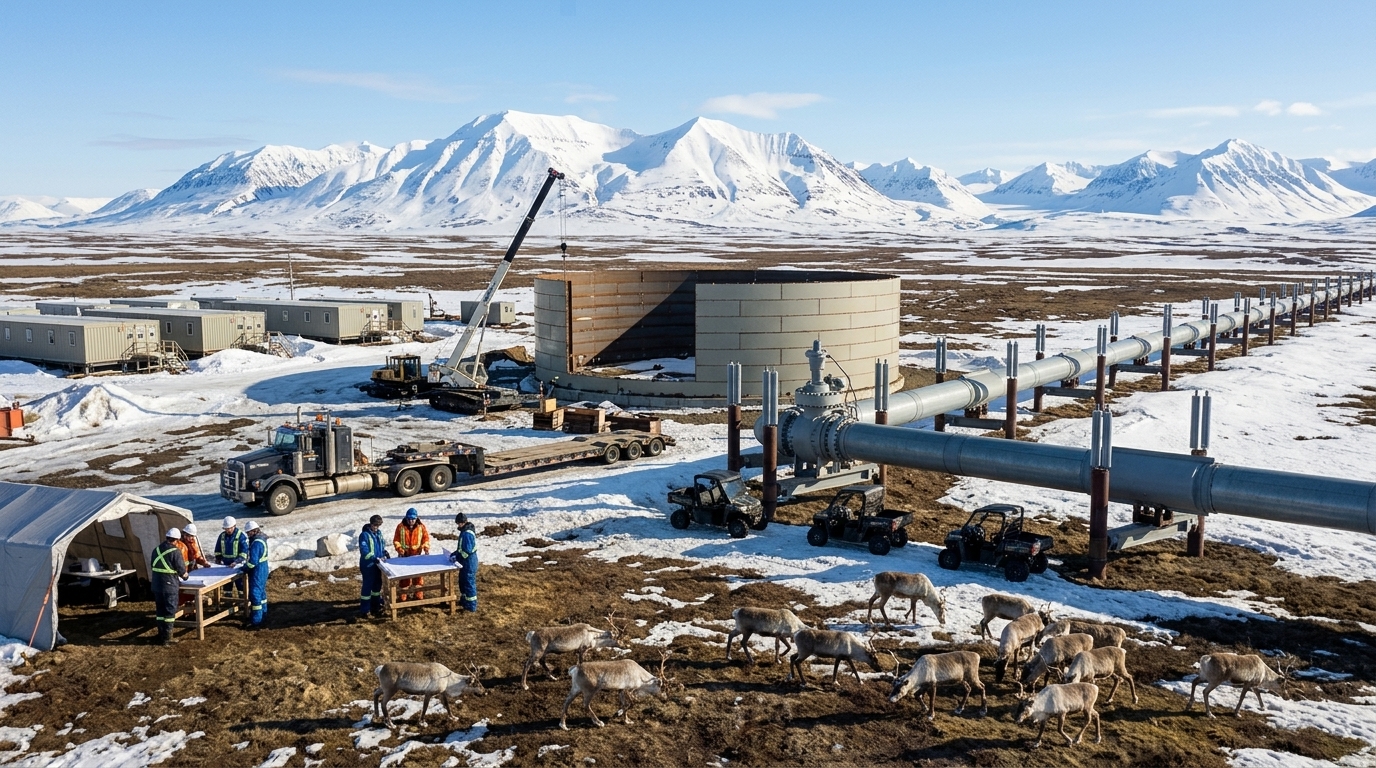
For decades, the narrative surrounding Alaska’s oil production was one of gradual terminal decline. The iconic Trans-Alaska Pipeline System (TAPS), which once carried 2 million barrels a day, saw its flow dwindle significantly, sparking concerns about the economic future of the 49th state. However, May 2024 marks a critical turning point. A series of massive discoveries and the approval of controversial projects have ignited a new 'golden age' for black gold in the frozen North, defying predictions of a swift energy transition.
The Willow Effect and the Market Shift
The primary driver behind this resurgence is undoubtedly ConocoPhillips’ Willow project. Despite fierce opposition from environmental groups and initial hesitation from the Biden administration, the urgent need for energy security following Russia’s invasion of Ukraine shifted the paradigm. Willow, located within the National Petroleum Reserve-Alaska (NPRA), is expected to produce up to 180,000 barrels per day at its peak. But Willow is just the beginning. The Pikka project by Santos, another massive discovery on the North Slope, confirms that the region’s geological reserves are far more extensive than previously estimated.
Technological advancements are also playing a pivotal role. Companies are now utilizing advanced 3D seismic imaging and horizontal drilling techniques that allow access to reservoirs from greater distances, minimizing the surface footprint on the fragile tundra. This 'surgical' approach to drilling has made Arctic extraction economically viable even in high-cost environments, allowing companies to compete with shale production in the Lower 48.
Geopolitical Chessboard and Energy Security
Alaska’s revival isn't just about corporate profits; it is a matter of national security for the United States. As the world fragments into competing geopolitical blocs, reliance on Middle Eastern oil or Russian energy is increasingly viewed as an unacceptable risk. Alaska offers a stable, domestic source of hydrocarbons that can supply the U.S. West Coast for decades. Furthermore, the growing presence of China and Russia in the Arctic has forced Washington to re-evaluate the strategic importance of the region.
"Alaska is no longer on the fringes of U.S. energy policy; it is at the center of it," says a leading energy analyst. "The ability to produce oil under the world's highest environmental standards is our strongest argument against the leverage of autocratic regimes."
Environmental Costs and Indigenous Perspectives
However, this renaissance comes with a heavy price tag. The Arctic is warming at a rate nearly four times faster than the global average. Extracting oil in a region already reeling from melting glaciers and permafrost destabilization is seen by many as climate suicide. Environmental organizations warn that investing in fossil fuel infrastructure intended to last 30 years directly contradicts the goals of the Paris Agreement.
Indigenous communities in Alaska are deeply divided. For many, oil revenue is the sole source of funding for schools, hospitals, and essential services in remote villages. For others, industrial activity threatens caribou migration patterns and traditional hunting and fishing practices that have sustained their culture for millennia. The balance between economic survival and environmental stewardship remains the most intractable problem in the state’s history.
The Economic Reality: Betting on the Pipeline
From an economic standpoint, increasing production is vital for the survival of TAPS. If flow rates drop below a certain threshold, the oil moves too slowly, cools down, and creates maintenance issues that could render the pipeline inoperable. The new projects on the North Slope guarantee that the pipeline will remain functional for the next 20 to 30 years, simultaneously securing the revenue for the Alaska Permanent Fund. This fund, which distributes annual dividends to every resident, is the backbone of the state's economy. In a world hungry for energy but terrified of climate change, Alaska stands as the ultimate paradox of the 21st century.