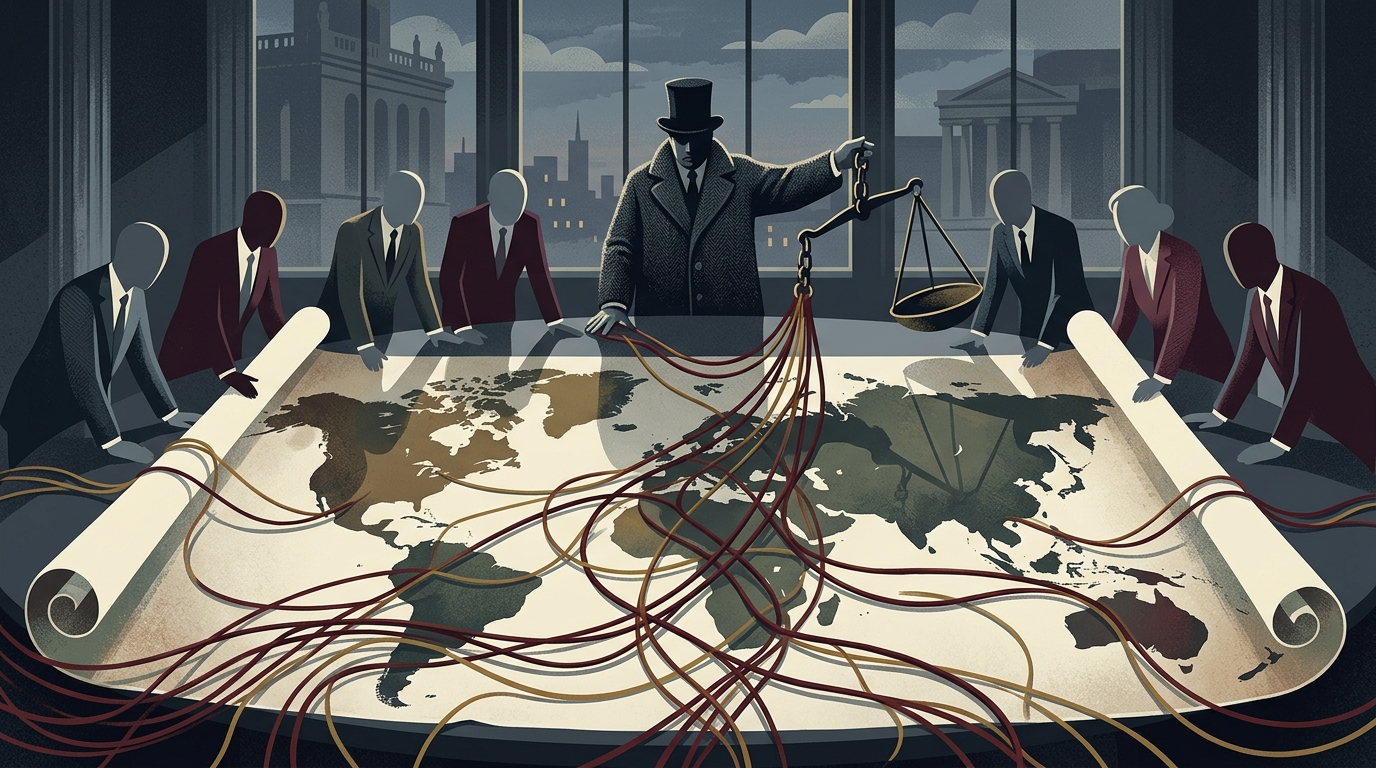
In an era where technological prowess translates directly into political sovereignty, the emergence of an unexpected partnership between Canada and India is creating ripples among international analysts. While diplomatic relations between the two nations have recently been tested by severe crises, the reality of the digital economy seems to be imposing a different agenda. The convergence of Canadian research excellence with Indian data scale and talent is shaping a new world order aimed at decoupling from the suffocating dominance of Silicon Valley and Beijing.
The Canadian Research Legacy and Indian Scale
Canada is no minor player. It is considered the birthplace of modern deep learning, with figures like Geoffrey Hinton and Yoshua Bengio laying the foundations in the labs of Toronto and Montreal. The country boasts one of the most mature ethical AI ecosystems and strong government support through the Pan-Canadian AI Strategy. However, Canada faces a long-standing problem: a lack of scale and a 'brain drain' of talent to the United States.
This is where India enters the frame. With a population of 1.4 billion and a growing digital infrastructure built on the 'India Stack,' New Delhi offers exactly what Canada lacks: volume. India is rapidly transforming from 'the world's back office' into a global innovation lab. The Indian government's 'AI for All' strategy aims to use technology to solve social problems in healthcare, agriculture, and education, creating a model that is highly attractive to the Global South.
A Third Pole Against Duopoly
This collaboration is not merely commercial; it is deeply geopolitical. The rest of the world watches with concern as the AI arms race between the US and China intensifies. Washington promotes a model dominated by Big Tech, while Beijing utilizes AI as a tool for state control. Canada and India are proposing an alternative path: 'democratic and inclusive AI.'
- Knowledge Transfer: Canadian universities are partnering with Indian Institutes of Technology (IITs) to develop algorithms that require less computational power.
- Data Governance: A unified stance in international forums like the Global Partnership on AI (GPAI) to create standards that protect privacy without stifling innovation.
- Supply Chain Resilience: Cooperation in the fields of semiconductors and critical minerals required for AI hardware.
"Artificial Intelligence must not be the privilege of a few nations. Our cooperation with Canada shows that knowledge and scale can coexist for the global good," sources from the Indian Ministry of Electronics and IT suggest.
Challenges and the Future of Cooperation
Despite the prospects, the road is not without obstacles. Recent diplomatic frictions regarding security issues have created a climate of mistrust that threatens joint investments. Furthermore, India often adopts a protectionist stance regarding local data localization, which conflicts with the Canadian preference for the free flow of data between democratic states.
However, market dynamics seem to be outweighing politics. Canadian software firms see India as the market of the future, while Indian IT giants are investing in R&D centers in Toronto and Vancouver to gain access to the North American ecosystem. If this partnership flourishes, it could serve as a blueprint for a new form of 'tech diplomacy,' where middle powers coalesce to maintain their strategic autonomy in a world increasingly governed by algorithms.