It is 2026, and the promise of Artificial Intelligence (AI) has permeated every facet of human activity, from medical diagnosis to automated supply chains. However, this digital renaissance comes with a steep price: an insatiable thirst for electricity and water. Data centers, the "temples" of information, were until recently resource-consuming black holes. Today, however, the industry is experiencing a critical turning point, turning a threat into an opportunity for sustainable innovation.
The Shift from Air to Liquid Cooling
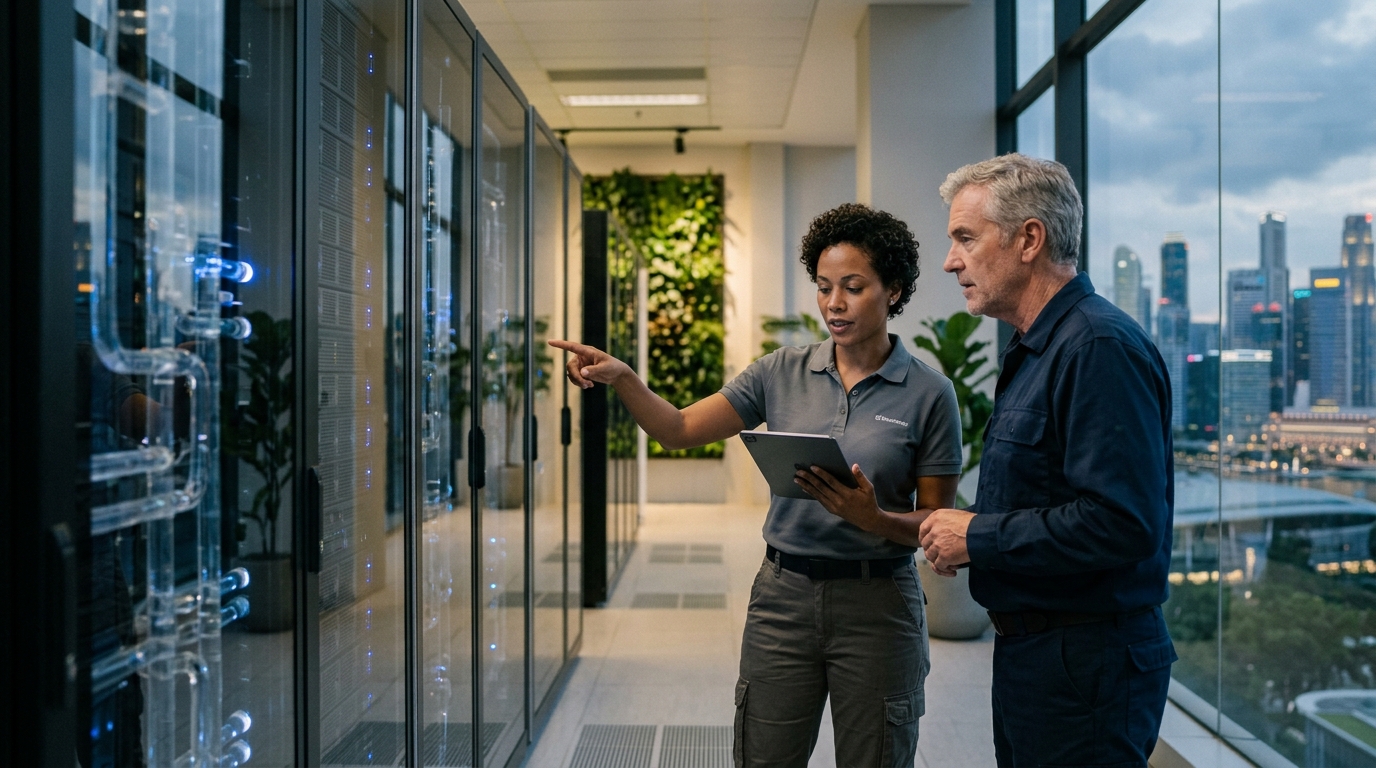
For decades, the method of cooling servers remained primitive: massive fans that consumed nearly 40% of a data center's total energy just to keep the machines at an operational temperature. With the advent of next-generation processors required for Large Language Models, air cooling has reached its physical limits. The dominant solution now is liquid cooling, specifically immersion cooling.
- Direct Contact: Servers are submerged in specialized dielectric liquids that dissipate heat a thousand times more effectively than air.
- Noise and Space Reduction: The absence of fans allows for denser equipment placement, reducing the physical footprint of the buildings.
- Water Conservation: Closed-loop liquid cooling systems minimize water evaporation, a critical issue for drought-stricken regions.
This technological shift is not merely an engineering improvement but a necessity for survival for companies facing stricter environmental regulations globally.
The Nuclear Renaissance and Small Modular Reactors (SMRs)
Perhaps the most controversial yet effective change concerns the source of energy. In 2026, Big Tech companies are no longer satisfied with purchasing "green certificates." They are investing directly in zero-emission power generation infrastructure. Small Modular Reactors (SMRs) have emerged as the "Holy Grail" for data centers.
"We cannot rely solely on sun and wind for base loads that require 24/7 operation. Next-generation nuclear energy is the only way to power AI without burning the planet," says a senior executive at a major infrastructure firm.
These reactors, manufactured in factories and shipped ready for installation, offer steady power without the carbon emissions of traditional natural gas plants. Simultaneously, the use of geothermal energy in regions like Iceland and the western U.S. offers an alternative that is both clean and uninterrupted.
Circular Economy: Data Centers as Urban Heaters
Another innovation gaining ground is waste heat recovery. In the past, the heat generated by servers was considered waste and expelled into the atmosphere. Today, new data centers in Europe and North America are designed as part of the urban fabric. The heat they produce is channeled into city district heating networks, warming homes, swimming pools, and greenhouses.
This symbiotic relationship turns an environmental problem into a social benefit. In Helsinki and Dublin, entire neighborhoods are now heated by our data "clouds." Furthermore, the use of "green concrete" and recycled materials in building construction reduces the embodied carbon footprint, completing the sustainability cycle.
AI as Its Own Overseer
The most ironic, yet hopeful, element is that AI itself is being used to optimize its own consumption. Advanced machine learning algorithms monitor temperatures, humidity, and power flow in real-time, making micro-adjustments that would be impossible for a human to execute. These "self-optimizing" systems have managed to reduce energy consumption by an additional 15-20% in many facilities.
In conclusion, the path toward eco-friendly data centers is not just a public relations exercise. It is a race for technological sovereignty in a world of finite resources. The success of this endeavor will determine whether Artificial Intelligence will be the savior of the climate or the accelerator of its crisis.