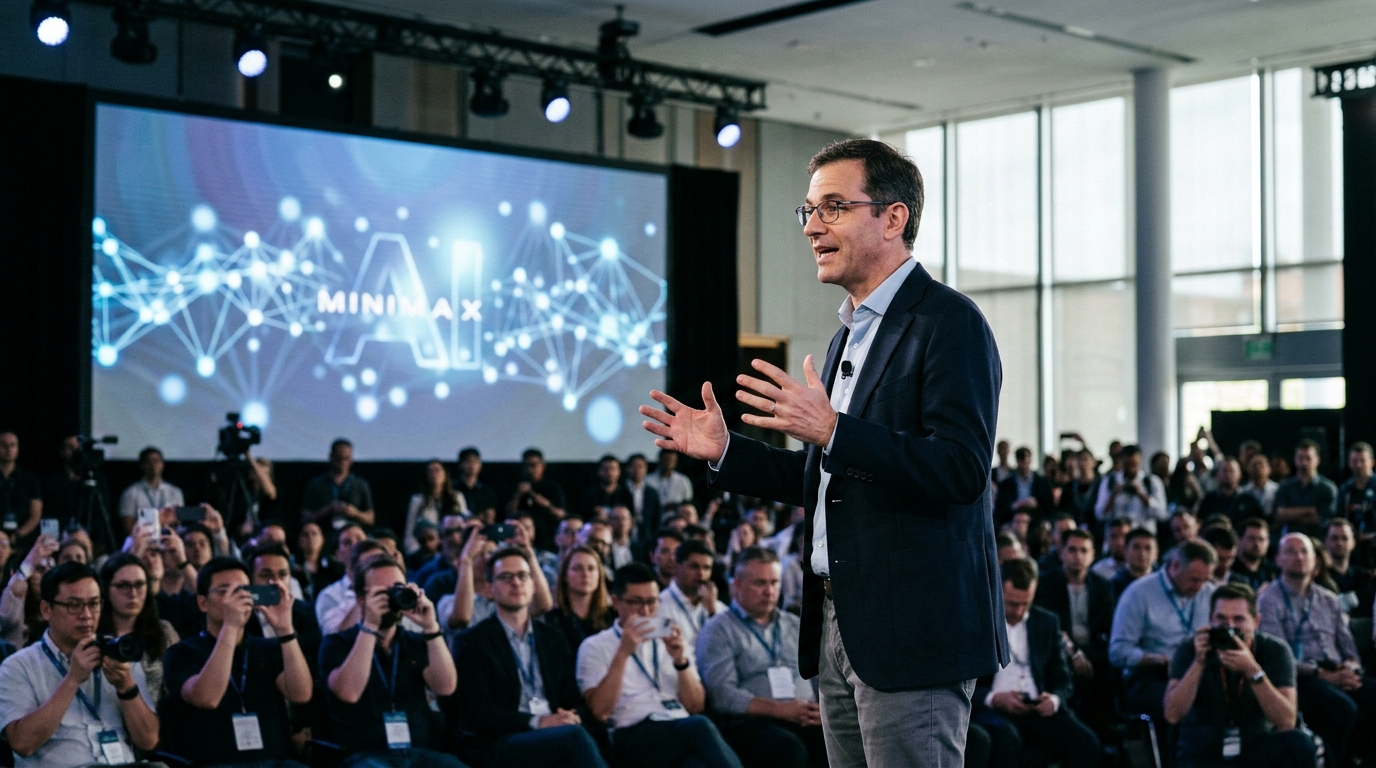
As we navigate the second quarter of 2026, the global Artificial Intelligence landscape is no longer defined solely by Silicon Valley. Shanghai-based MiniMax AI has emerged as one of the most formidable players, bridging the gap between social interaction and advanced generative intelligence. Once considered a mere underdog in the Chinese tech sector, the company has now solidified its position as one of the "Four New Dragons" of Chinese AI, alongside names like Moonshot AI and Zhipu AI.
Technical Superiority: From Abab to Hailuo
The backbone of MiniMax’s success in 2026 remains its "Abab" model series. Starting from version 6.5 and now reaching even more sophisticated architectures, MiniMax has managed to solve one of generative AI's greatest hurdles: the balance between processing speed and depth of understanding. Its Mixture of Experts (MoE) architecture allows the system to activate only the necessary segments of the neural network for each query, drastically reducing operational costs.
However, the true crown jewel for the company in 2026 is Hailuo AI, its video and audio generation suite. Unlike its Western counterparts, Hailuo has integrated a unique capacity for emotional intelligence. Users don’t just generate content; they interact with characters possessing memory and personality—an evolution that began with the Glow app and has now expanded into professional content creation tools.
Market Statistics and Valuation
MiniMax’s 2026 financial data reflects explosive growth. Following successive funding rounds from giants like Alibaba and Tencent, the company’s valuation has surpassed $5.5 billion. Active users across its platforms are nearing 50 million globally, as the firm made bold strides into Southeast Asian and Middle Eastern markets.
- Revenue Growth Rate: 150% year-over-year (2025-2026).
- Inference Cost: Reduced by 40% due to Abab algorithm optimization.
- Market Share in China: Holds 18% of the B2B market for AI agents.
Pros and Cons: The Two Sides of Innovation
MiniMax’s greatest advantage is its ability to create "characters." While OpenAI’s ChatGPT remains an excellent assistant, MiniMax has succeeded in creating digital entities that simulate human connection. This makes it a leader in the AI Entertainment sector. Furthermore, multimodality is now native to all its models, allowing simultaneous processing of text, image, and voice with minimal latency.
On the flip side, significant challenges remain. Its heavy reliance on the Chinese market makes it vulnerable to geopolitical tensions and U.S. semiconductor export restrictions. Despite efforts for "out-of-China" growth, MiniMax must balance Beijing’s strict censorship requirements with international expectations for freedom of expression. Additionally, data privacy remains a sticking point for European users, who view Chinese platforms with skepticism.
The Geopolitical Chessboard of AI
MiniMax’s trajectory in 2026 is not just a business story; it is a lesson in geopolitics. The company managed to survive and flourish in an environment where access to high-end GPUs (like Nvidia’s) is restricted. This forced them to become more creative in software engineering. MiniMax proved that raw hardware power can, to an extent, be compensated for by intelligent model architecture.
"MiniMax isn’t just competing with Silicon Valley; it’s proposing a different paradigm for what AI can be: not an impersonal tool, but a social companion," say market analysts in Shanghai.
In conclusion, MiniMax AI represents a new generation of tech giants unafraid to experiment. 2026 finds it at a critical crossroads: if it can convince the international community of its data security, it may become the first Chinese AI unicorn to truly conquer the global market.