The energy crisis triggered by the Russian invasion of Ukraine did not only change the prices on consumers' bills; it radically reshaped the geopolitical map of the Old Continent. At the heart of this tectonic shift, as extensively discussed at the 11th Delphi Economic Forum, lies the "Vertical Corridor." This is a strategic initiative that aims to connect the natural gas networks of Greece, Bulgaria, Romania, Hungary, Slovakia, Moldova, and Ukraine, creating a new flow artery from South to North.
Greece as Europe's New Gateway
For decades, Europe relied on a horizontal energy architecture, with natural gas flowing primarily from the East (Russia) to the West. The Vertical Corridor overturns this dogma. Greece, thanks to its geographical position and investments in infrastructure such as the Revithoussa LNG terminal and the new FSRU in Alexandroupolis, is becoming the critical entry hub. Liquefied Natural Gas (LNG) arriving at Greek shores from the US, Qatar, and Egypt can now be channeled deep into Central and Eastern Europe, reaching as far as Ukraine's storage facilities.
The significance of the Alexandroupolis FSRU is not just commercial but deeply geopolitical. It allows for the diversification of supply sources for countries that were previously 100% dependent on Gazprom. As emphasized in Delphi, the completion of interconnecting pipelines, such as the IGB (Greece-Bulgaria), is the first step toward an integrated market operating on terms of security and competition.
Synergies and Technical Challenges
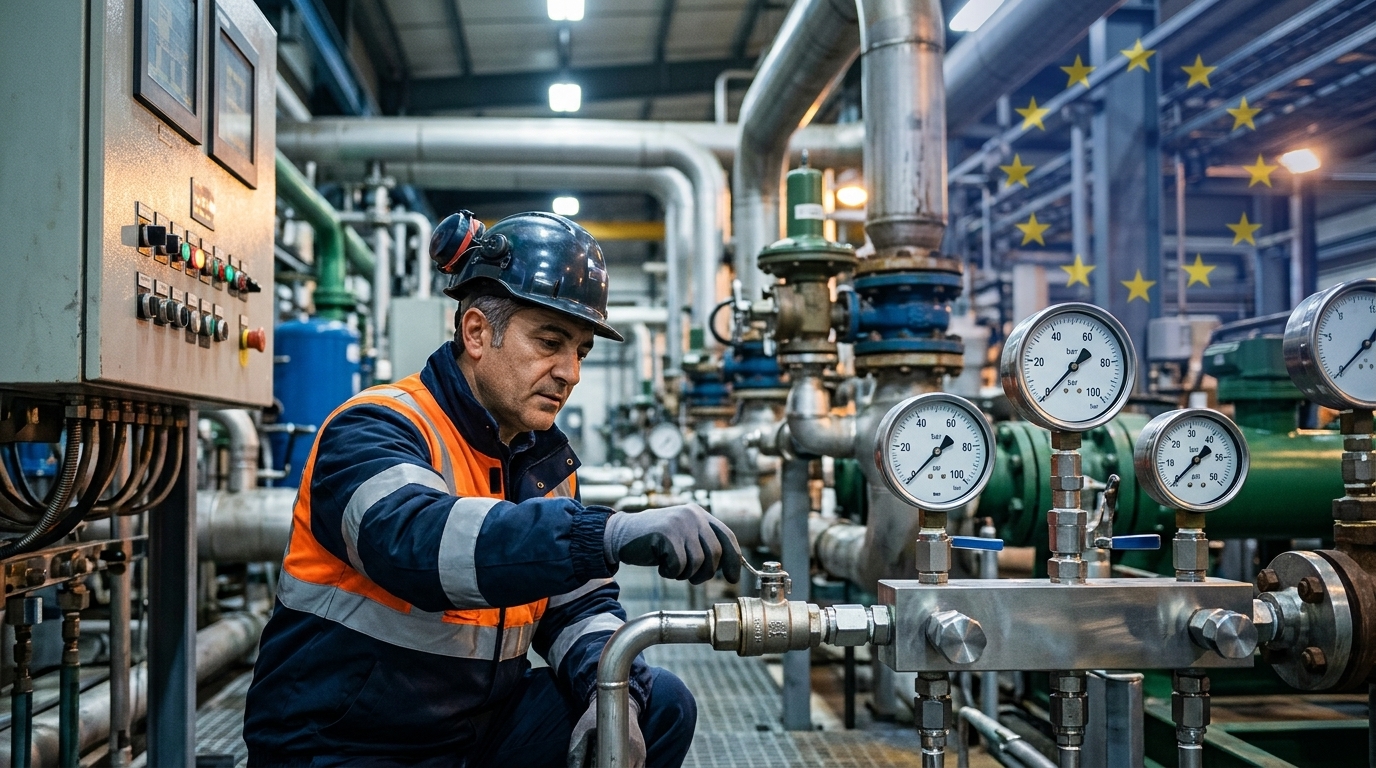
The Vertical Corridor is not a single project but a system of interconnected pipelines and upgrades to national transmission networks. The Transmission System Operators (TSOs) of the participating countries are working closely to eliminate technical barriers and increase the capacity of interconnection points. Bidirectional flow capability is key: gas will not only move upwards but can be redistributed according to market needs and storage levels.
Particular emphasis is placed on the participation of Moldova and Ukraine. Ukraine possesses the largest natural gas storage facilities in Europe, which remain largely underutilized due to the war. Connecting them to the Vertical Corridor offers the EU a massive "strategic reserve," shielding the continent against future supply disruptions. However, the investments required to upgrade compressors and pipelines in Romania and Bulgaria are colossal and require European funding.
Hydrogen and the Green Future
One of the most interesting aspects of the discussion concerns the "transitional" nature of the infrastructure. While the immediate goal is security through natural gas, long-term planning envisions the transport of hydrogen. The new pipelines are designed to be "hydrogen-ready," ensuring that today's investments do not become "stranded assets" in the era of climate neutrality.
Greece aspires to also become a producer of green energy, exporting not only gas but also clean electricity through international interconnections. Europe's new energy architecture, therefore, is not just about changing suppliers, but about a complete restructuring of how the continent consumes and moves energy. The Vertical Corridor is the first and most critical chapter in this new story of European solidarity and strategic autonomy.