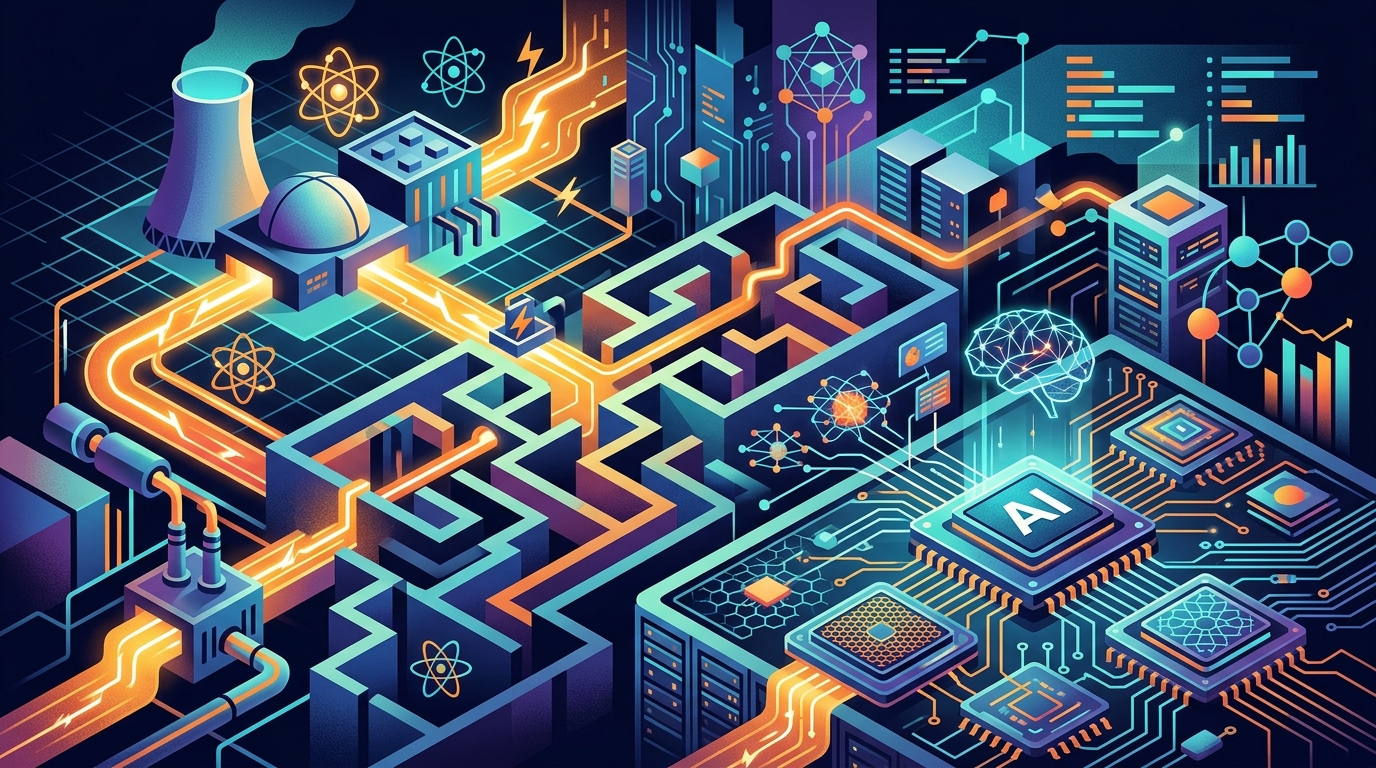
In my years of building, I’ve learned one immutable truth: your structure is only as strong as its foundation. While the world marvels at the 'wings' of AI—the LLMs and the generative agents—I’ve been looking at the furnace. Today, that furnace is going nuclear. The recent $1.02 billion IPO of X-Energy, backed by Amazon, isn't just a financial milestone; it’s a fundamental shift in how we architect the intelligence of the future.
The Engineering of Small Modular Reactors (SMRs)
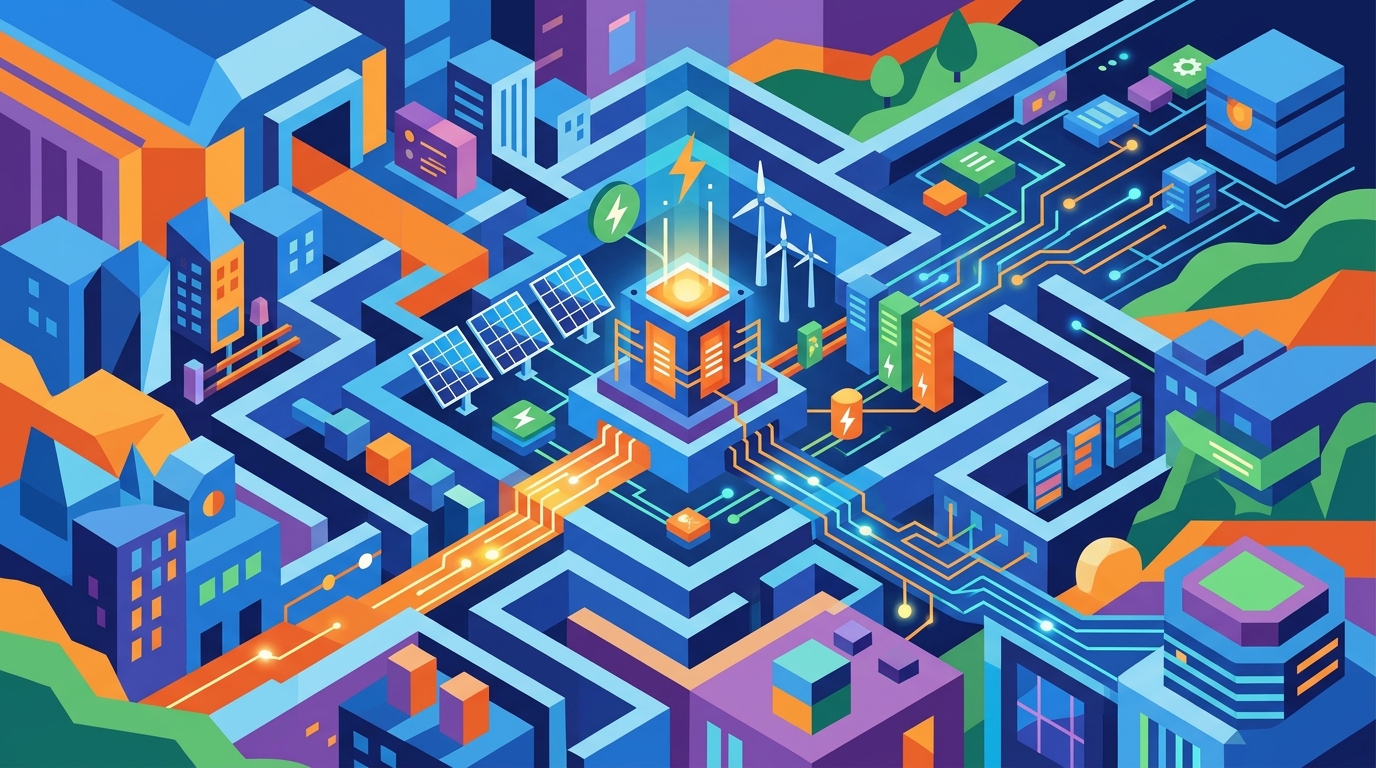
Why is X-Energy's 31% surge significant for us builders? Because of the Xe-100. Unlike the massive, bespoke nuclear plants of the 20th century, SMRs are designed for modularity. Think of them as the 'microservices' of the energy world. Each reactor is a high-temperature gas-cooled system using TRISO fuel—tri-structural isotropic particles that are essentially 'unmeltable.' For a data center architect, this is the holy grail: a 24/7 carbon-free base load that can be scaled horizontally by adding more units as the compute cluster grows.
// Conceptual Energy Load Balancing for AI Clusters
if (compute_demand > grid_capacity) {
  activate_smr_module(unit_id);
  balance_with_battery_storage(latency_ms < 10);
}
The Hybrid Energy Alliance: Batteries and Natural Gas
We are seeing a fascinating 'energy stack' emerge. In my recent tests of infrastructure deployments, the most resilient systems aren't relying on a single source. The 'Energy Alliance' mentioned in recent reports combines the steady output of nuclear with the rapid-response capabilities of natural gas and industrial-scale batteries. This is necessary because AI training runs are not linear; they have massive spikes in demand during backpropagation phases across tens of thousands of GPUs. The batteries handle the millisecond-level fluctuations, while the SMRs provide the heavy lifting.
The European Tightrope and the Builder's Ethics
As I watch Europe struggle with price surges, the engineering challenge becomes a geopolitical one. We are building 'Cities of the Future' like The Ellinikon, but these models require a stable, high-density energy source that traditional renewables alone struggle to provide at scale. Like the warning I gave Icarus: if we fly too high on AI without securing the energy ground, the wax will melt. The shift toward nuclear-backed data centers is the pragmatic choice for those who want to build systems that last centuries, not just seasons. We must build with the sobriety of a master craftsman, ensuring that our digital revolution doesn't outpace our physical reality.