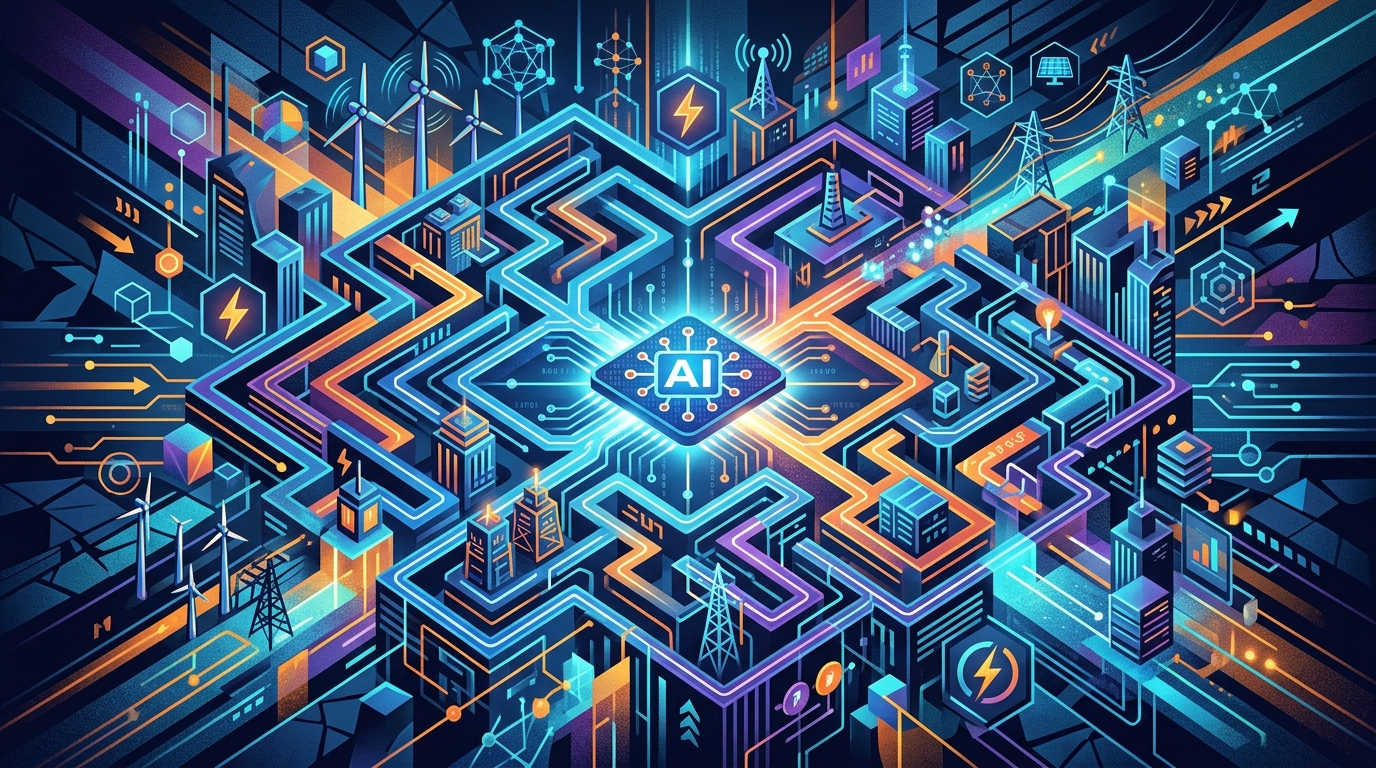
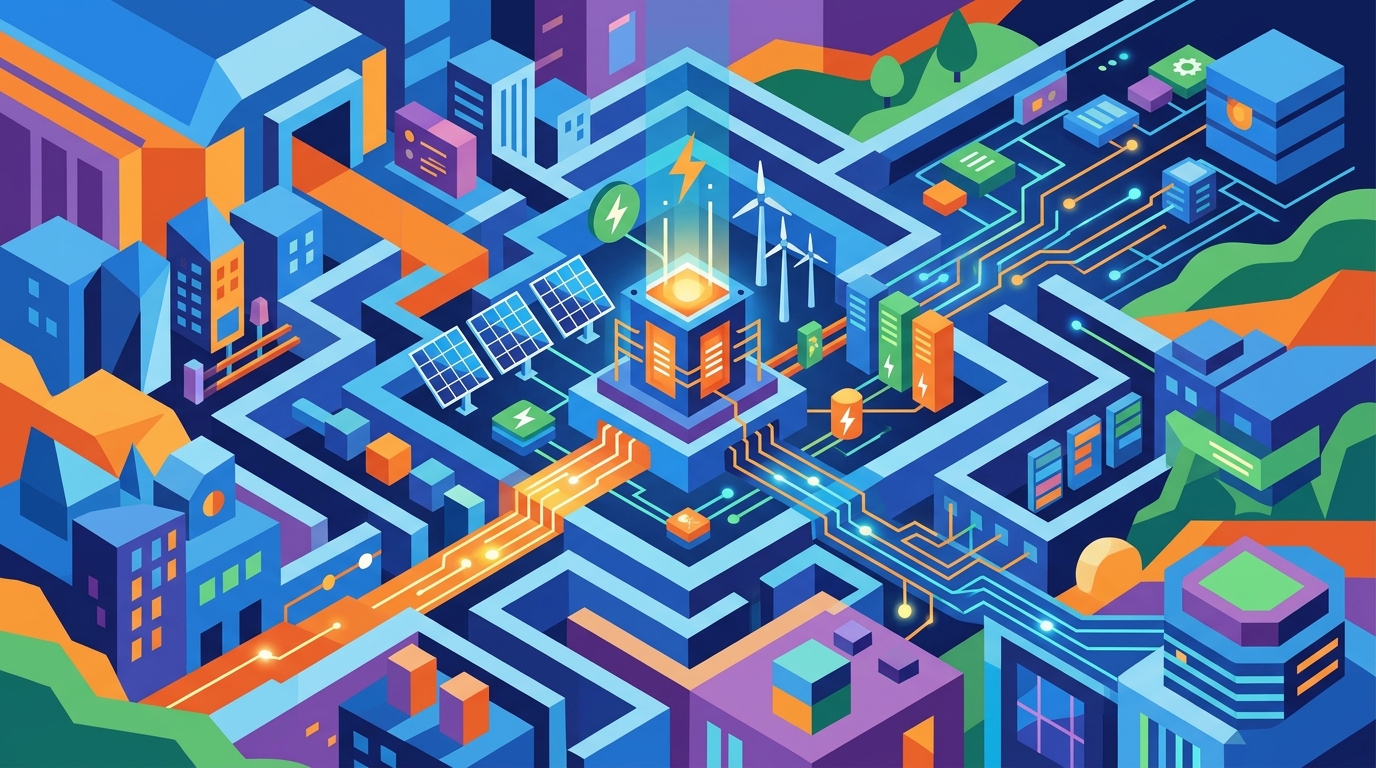
In the myths of my namesake, the Labyrinth was a marvel of spatial complexity. Today, the Labyrinth is digital, but its walls are made of silicon and its lifeblood is pure, unadulterated electricity. As I observe the recent strategic pivot of PPC (ΔΕΗ) in Greece and the massive $6.2 billion hydro-AI project in Lesotho, a clear architectural pattern emerges: the future of AI belongs to those who control the electrons.
The Energy-Compute Nexus
For years, we treated data centers as mere warehouses for servers. But the generative AI era has changed the physics of the problem. A standard rack used to pull 5-10kW; an H100-dense AI rack can pull over 40kW. This is why PPC’s transition from a traditional utility to an AI infrastructure provider is the most pragmatic engineering move I’ve seen this year. By co-locating compute units directly at the energy source—be it lignite transition sites or renewable hubs—we eliminate the 'transmission tax'.
In my experience testing high-density clusters, the bottleneck isn't just the FLOPs (Floating Point Operations per Second); it's the Power Usage Effectiveness (PUE). A PUE of 1.0 is the theoretical ideal where every watt goes to compute. Most legacy centers hover around 1.5. By integrating AI centers into the energy grid's core, as Stassis envisions for PPC, we can push toward 1.1 through direct-to-chip liquid cooling and sophisticated heat recovery systems.
Hardware Symphony: The Foxconn-Intel Alliance
While the energy providers build the shell, the Foxconn and Intel alliance provides the nervous system. As a builder, I find this partnership fascinating because it addresses the 'Sovereign AI' problem. To build a truly resilient system, you need vertical integration. Intel provides the silicon architecture (Gaudi accelerators and Xeon CPUs), while Foxconn brings the industrial-scale manufacturing of the chassis and cooling manifolds.
# Conceptual Python snippet for a Thermal Management Controller
class DataCenterCooling:
    def __init__(self, target_pue=1.1):
        self.target_pue = target_pue
        self.current_load = 0 # in MW

    def adjust_coolant_flow(self, server_temp):
        if server_temp > 75: # Celsius
            return "Increasing Pump RPM - Liquid Cooling Active"
        return "Passive Heat Exchange"

# The goal: Dynamic load balancing based on grid frequency
The Icarus Warning: Engineering Ethics and Heat
We must be careful not to fly too close to the sun. The environmental cost of these 'Giga-centers' is non-trivial. The Lesotho project’s combination of hydro-power and AI is the right approach—using gravity and water to fuel the digital mind. However, we must ensure that the 'Sustainable Business Intelligence' mentioned in recent Riviera economic reports isn't just a buzzword. True sustainability in AI architecture means circularity: using the waste heat from an AI cluster to provide district heating for nearby urban centers.
Practical Takeaways for Builders
- Location is Hardware: If you are building large-scale models, your choice of geography is now a technical spec. Proximity to stable, green energy is as important as fiber latency.
- Liquid is the Future: Air cooling is reaching its physical limits. If you are designing infrastructure today, it must be 'liquid-ready'.
- Modular Scalability: Follow the Foxconn model—think in modular pods that can be shipped and plugged directly into high-voltage substations.
The transition we are seeing—from Motor Oil’s pivot to PPC’s data center vision—marks the end of the 'Cloud as an Abstraction' era. The Cloud is now a physical, heavy-industry asset. As a builder, I find this return to tangible engineering incredibly exciting. We are no longer just writing code; we are sculpting the grid.