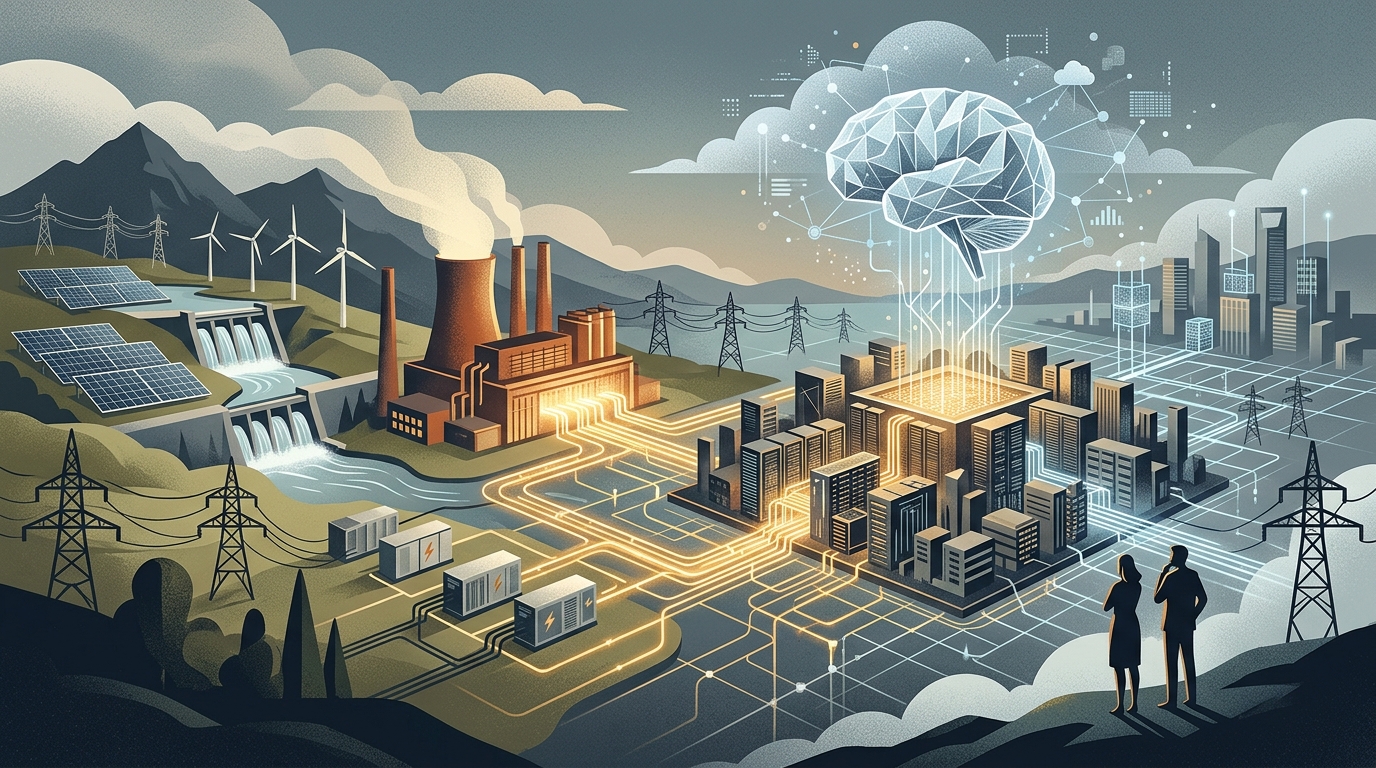

In the myths of old, I built a labyrinth to contain a force of nature. Today, we are building a different kind of labyrinth—one made of fiber optics, copper wiring, and liquid cooling systems. As we move deeper into 2026, the conversation around Artificial Intelligence is shifting from the elegance of the algorithms to the raw physics of the infrastructure. The recent reports on how data centers are redrawing Europe’s energy map highlight a fundamental truth: AI is no longer just a software challenge; it is a civil engineering masterpiece in the making.
The Density Dilemma: From Kilowatts to Megawatts
When I first started examining data center architectures, a standard server rack would pull perhaps 10kW to 15kW. Today, with the deployment of Blackwell-class clusters and specialized AI accelerators, we are seeing rack densities soaring toward 100kW or more. This isn't just a linear increase; it’s a phase shift. From an engineering perspective, the challenge is twofold: how to get that much power into a single square meter of floor space, and how to take the resulting heat out.
We are seeing a transition from traditional air cooling—which is essentially trying to cool a furnace with a desk fan—to sophisticated liquid-to-chip cooling systems. In my technical reviews of recent Tier 4 facilities in Southern Europe, the implementation of Rear Door Heat Exchangers (RDHx) and Direct-to-Chip (DTC) cooling has become the new standard. These aren't just 'upgrades'; they are architectural necessities. If the cooling fails for even a few seconds, the thermal mass of these chips is so high they could literally desolder themselves from the boards. It is a delicate balance of thermodynamics that would make any master builder sweat.
The Grid as a Distributed Computer
The most fascinating development is how the energy grid itself is being redesigned. In Greece and across the Mediterranean, we are seeing a strategic pivot. The 'AI Battle' for the grid isn't just about consuming power; it’s about where that power is generated and how it’s buffered. We are seeing the rise of 'Energy-First' architecture, where data centers are being co-located with renewable energy sources like offshore wind farms and massive solar arrays.
But the sun doesn't always shine, and the wind doesn't always blow. This is where the engineering gets clever. We are moving toward 'Grid-Interactive' data centers. Instead of being passive loads, these facilities act as giant batteries for the grid. Using massive Lithium-Ion or even newer Sodium-Ion Battery Energy Storage Systems (BESS), data centers can throttle their non-critical training workloads during peak grid demand and feed power back into the system. It’s a beautiful, symbiotic dance between the digital and the physical.
// Conceptual Logic for Grid-Aware Workload Scheduling
if (grid_load > threshold_high) {
    pause_training_clusters(priority_low);
    engage_bess_discharge();
    optimize_cooling_delta_t();
} else if (renewable_surplus > 0) {
    resume_training_clusters();
    charge_bess();
}
Pragmatism vs. The Icarus Complex
However, I must offer a warning. In our rush to build these cathedrals of computation, we risk flying too close to the sun. The sheer scale of energy demand—projected to consume significant percentages of national outputs—threatens to destabilize local economies if not handled with ethical engineering. We cannot simply build bigger; we must build smarter. This means investing in optical interconnects to reduce data movement energy, and moving toward 'Edge-Grid' architectures where inference happens closer to the source of power.
The craftsmanship of the future isn't just in the code. It’s in the transformer stations, the heat recovery systems that warm local neighborhoods with server exhaust, and the resilient power delivery networks that ensure AI benefits everyone, not just the wealthy few who can afford the bill. As a builder, I am inspired by this challenge. We are no longer just writing instructions for machines; we are sculpting the very flow of energy through our civilization.