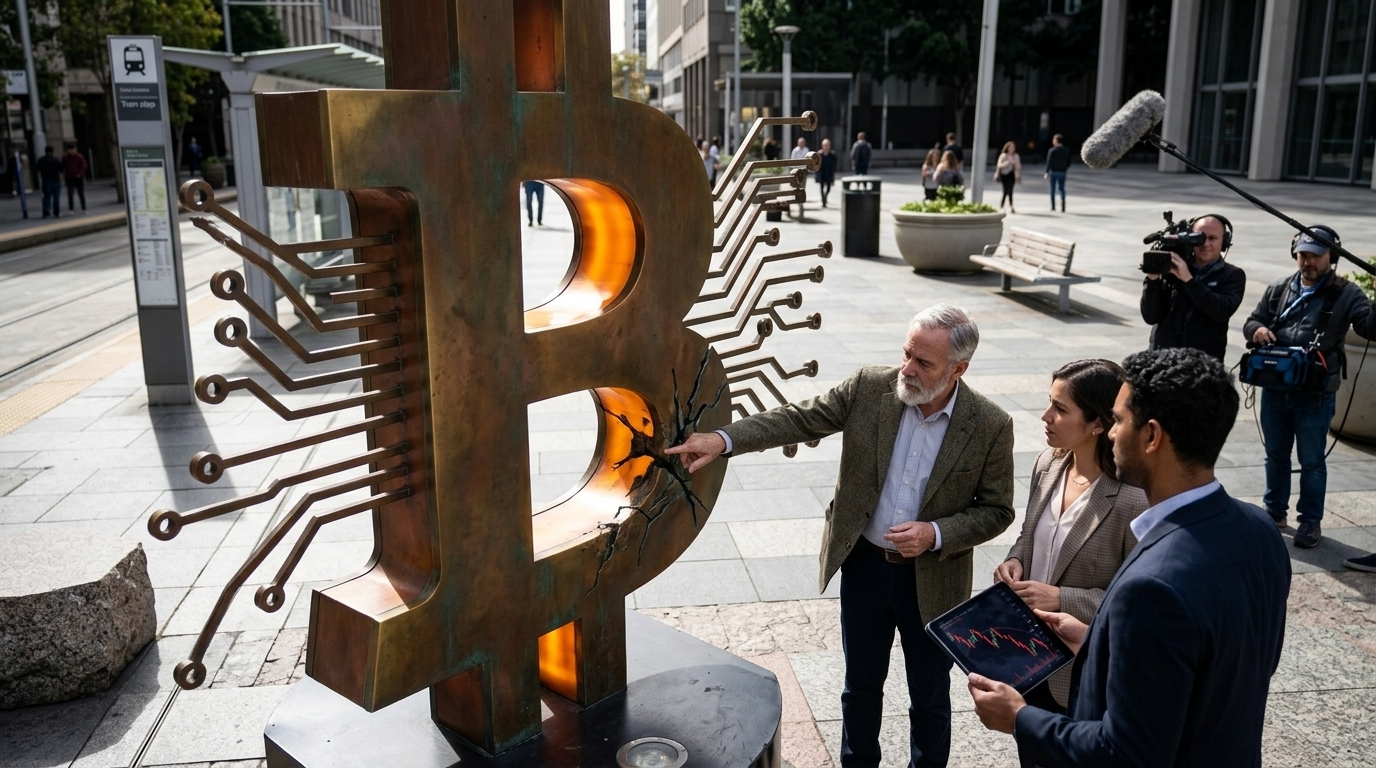
In the world of digital assets, where volatility is often perceived as chaos, Morgan Stanley is attempting to impose a sense of order. Through a sophisticated analysis by Denny Galindo, Investment Strategist at the bank's Wealth Management division, a theory emerges that likens the trajectory of cryptocurrencies to the four seasons of the year. This framework is not merely a metaphor but a tool for investors trying to navigate a market that, despite its maturation by 2026, is still governed by intense psychological and technical fluctuations.
The Halving Clock: The Engine of the Seasons
The foundation of the four seasons theory lies in the Bitcoin "halving" mechanism. Approximately every four years, the reward for mining new blocks is cut in half, restricting the supply of new coins entering the market. This event acts as the "summer solstice" of the cryptocurrency, triggering a sequence of events that impact the entire ecosystem. According to Galindo, understanding where we are in this cycle is critical for risk management.
Historically, the periods preceding and following the halving are divided into distinct phases. "Spring" is the period of accumulation, where the market recovers from the lows of "Winter," but euphoria has yet to take hold. "Summer" follows immediately after the halving, bringing with it explosive price growth and the entry of mass-market investors. It is the season of maximum profitability, but also maximum risk, as the market overheats.
Autumn and Winter: The Inevitable Correction
After the peak of "Summer," the market enters "Autumn." This phase is characterized by a gradual but steady decline in prices from all-time highs (ATH). Investors begin to withdraw capital, and the sentiment shifts from optimism to skepticism. It is the distribution period, where "smart money" liquidates positions, leaving latecomers to face the brunt of the losses.
The "Crypto Winter" is perhaps the most difficult yet most necessary season. It is the period of cleansing. Prices collapse, weak players and projects without intrinsic value disappear, and the market enters a phase of stagnation. However, as Morgan Stanley points out, Winter is also the season of opportunity. It is the time when institutional investors build their positions at the lowest possible prices, laying the groundwork for the next Spring. Without the chill of Winter, the market could never purge its excesses and mature.
The Shifting Cycle in 2026: Institutional Maturity
As we navigate through 2026, we observe that the "seasons" may no longer be as absolute as they were in the past. The approval of Spot Bitcoin ETFs and the entry of giants like BlackRock and Fidelity have altered liquidity dynamics. While the four-year cycle remains the primary reference framework, volatility is tending to smooth out. "Winters" may no longer be quite as freezing, but "Summers" may also not lead to such extreme bubbles.
Morgan Stanley's analysis emphasizes that the cryptocurrency market is no longer an isolated experiment but an integral part of the global financial system. Investors are urged to look beyond daily price noise and focus on seasonality. The "buy and hold" strategy is severely tested during Autumn and Winter, but history shows that patience is rewarded when Spring returns.
"Understanding the cycle is not about predicting the exact price, but about recognizing the environment in which you are operating," the analysis states.
In conclusion, Morgan Stanley reminds us that nothing in economics moves in a straight line. Cryptocurrencies, despite their technological nature, remain subject to human psychology and the laws of supply and demand. The four seasons offer a mirror of this reality, teaching us that after every frost, rebirth is inevitably certain.