In the corridors of major investment houses on Wall Street and in the City of London, the scent of gunpowder from the Middle East does not translate into fear, but into code. As we move through the first half of 2026, the global energy market is in a state of constant turmoil, with crude oil prices resembling an EKG in shock. However, behind the screens, a specific class of investors—the so-called quantitative hedge funds (quants)—is experiencing one of the most profitable periods in its history. These 'war algorithms' do not analyze the ethics of conflict; they analyze price momentum, turning geopolitical crises into a vast field of speculation.
The Dominance of CTAs and Trend Following
The big winners this year are Commodity Trading Advisors (CTAs), a subcategory of hedge funds that use systematic algorithms to identify and exploit long-term trends in commodity markets. Unlike traditional traders who rely on intuition or fundamental analysis (supply and demand), these algorithms thrive on volatility. When attacks on oil infrastructure or the closure of strategic straits cause sharp price spikes, the algorithms 'read' the trend within milliseconds and place massive bets in favor of the rally.
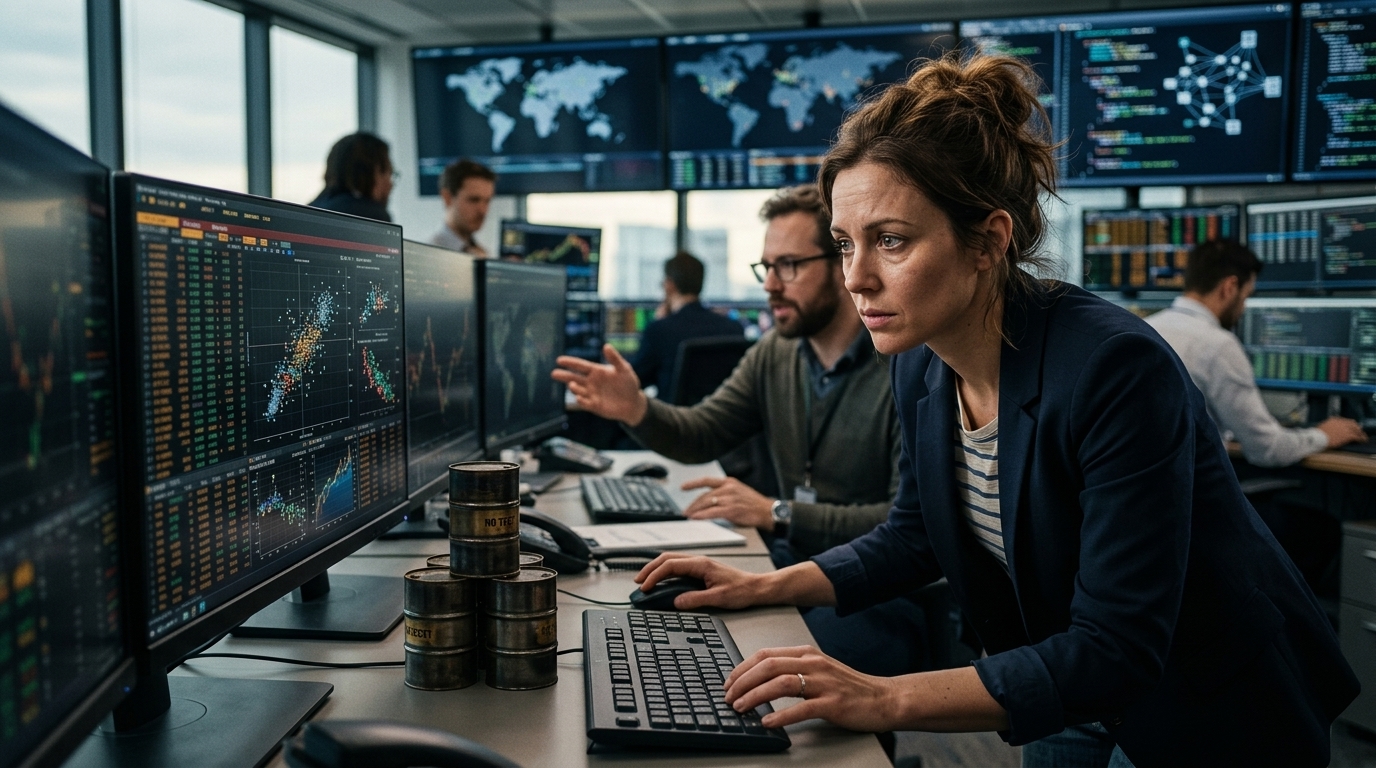
This year's strategy has been based on a simple but effective premise: geopolitical uncertainty creates 'noise,' and noise creates opportunities for arbitrage. According to market data, systematic funds focusing on energy have seen returns exceeding 25% since the beginning of the year, while traditional stock indices struggle with inflation and high interest rates. This success is not accidental. The use of AI to analyze satellite imagery of tankers and the processing of diplomatic announcements via Natural Language Processing (NLP) allow these funds to stay ahead of developments.
Decoupling from Fundamentals
One of the most concerning phenomena of the current period is the complete decoupling of oil prices from traditional fundamentals. While inventories may be adequate, the dominance of algorithmic flows creates artificial pressure on prices. When an algorithm issues a buy order, it often triggers a chain reaction: other algorithms follow suit, driving the price to levels not justified by actual consumption.
- Automated Execution: Stop-loss and take-profit orders are executed without human hesitation, accelerating downward or upward movements.
- Emotional Immunity: Machines do not fear war; they only see statistical probabilities, allowing them to stay in the market when humans flee.
- Leverage: The use of high leverage multiplies profits but also increases the risk of a sudden flash crash.
This 'mathematization' of war has sparked intense reactions from political circles in Europe and the US. Many argue that quant speculation directly burdens consumers at the pump, as fuel prices remain high not due to an oil shortage, but due to bets placed in the derivatives markets.
Ethics and the Future: The New Market Normal
As we head into the second half of 2026, the question is not whether algorithms will continue to dominate, but how they will be regulated. Their ability to 'treasure hunt' from human suffering and geopolitical conflict raises serious ethical questions. However, for fund managers, the answer is simple: they provide liquidity to the market. Without these funds, they argue, volatility would be even more chaotic.
The reality is that the commodity market has changed irrevocably. The integration of LLMs (Large Language Models) that analyze real-time statements from leaders and troop movements has made information more valuable than the oil itself. In this new digital battlefield, the winners do not wear uniforms; they sit in front of terminals, watching their profit lines rise as long as the flames in the Middle East remain lit. This year's turmoil proved that in the age of AI, war is, above all, a highly profitable data point.