In an era where technology seems to outpace our capacity for assimilation, Meta is attempting to fundamentally redefine how we interact with the digital world. According to recent statements by Wang, a lead executive in Meta's AI division, we are on the threshold of an "ontological shift": AI agents are ceasing to be passive chatbots waiting for commands and are transforming into proactive partners that understand the context of our lives.
From Reaction to Anticipation: The Birth of the Digital Agent
Meta's core thesis, as articulated in the Bloomberg interview, is that our "relationship" with technology is about to change radically. Until now, using a computer or smartphone has been an act of intent: we open an app, type a request, and receive a response. Next-generation AI agents, however, operate on the basis of "context awareness." This means the agent doesn't wait for you to say "book a table for dinner"; instead, knowing your schedule, dietary preferences, and location, it suggests and prepares the action before you even think of it.
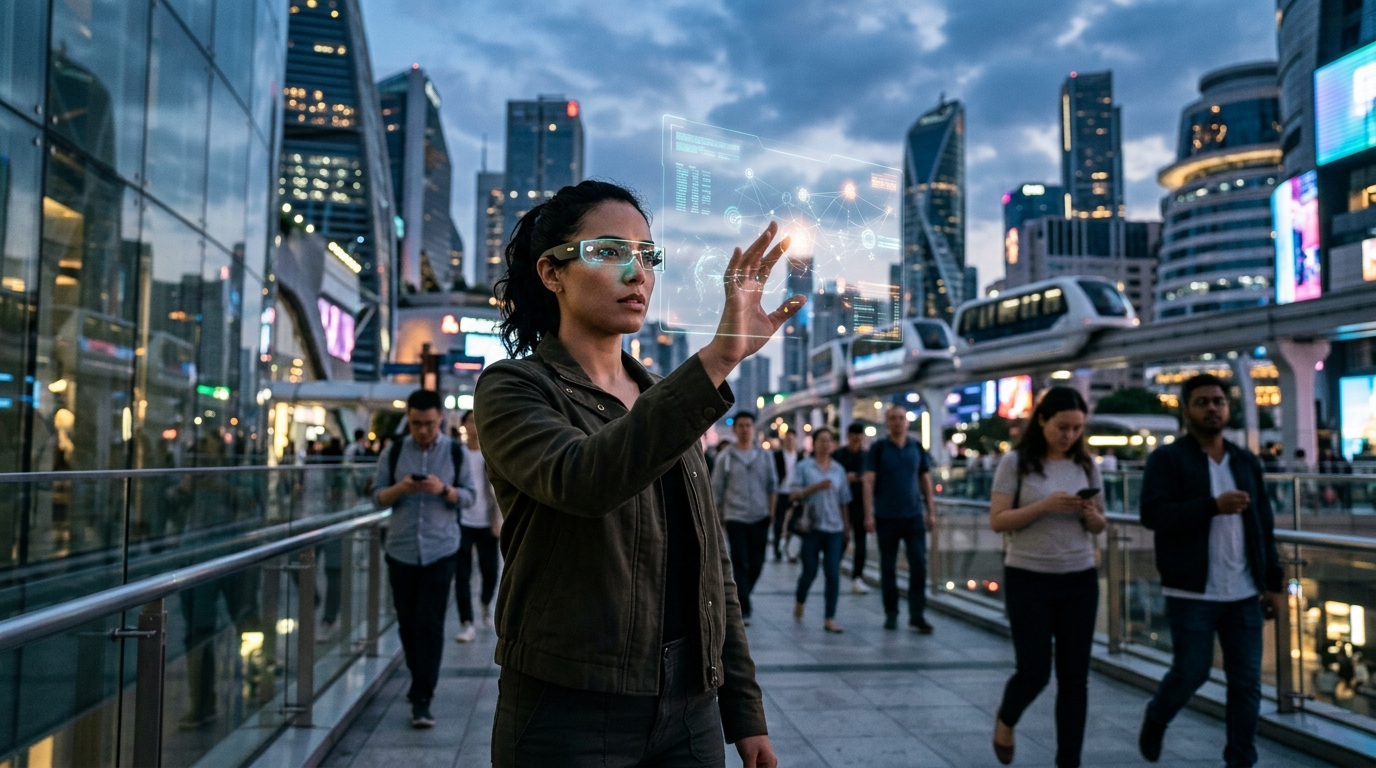
This transition requires immense computational power and, crucially, deep integration into daily life through devices like the Ray-Ban Meta smart glasses. Wang argues that the interface of the future will not be a screen, but our own voice and vision, mediated by an invisible digital assistant that "sees" what we see and "hears" what we hear.
Trust as the Foundational Pillar
However, this intimate relationship brings to the fore the most critical issue of the decade: trust. For a user to allow an AI agent to manage their emails, financial transactions, or communication with family, they must be certain that their data is secure and that the agent is acting in their best interest, not in the interest of Meta’s advertising platform.
"The industry must build trust not through promises, but through proof of transparency and user control," Wang emphasized.
Meta seems to recognize that the old "move fast and break things" model cannot be applied here. Trust is fragile, and if AI agents are perceived as tools for surveillance or manipulation, their adoption will hit a wall. The company is investing billions in "on-device AI" technologies, where data processing happens locally on the user's device rather than in the company's clouds, offering a level of privacy previously thought impossible.
The Social Dimension: Assistant or Substitute?
Beyond the technical and economic aspects lies the social dimension. If AI agents become the primary mediators of our social interactions, do we risk losing the authenticity of human contact? Wang remains optimistic, arguing that technology will liberate us from the "drudgery" of digital management, allowing us to focus on what makes us human: creativity and deep connection.
Nonetheless, critics point out that Meta has a history of exploiting human attention. Creating an "agent" that is always present could be the ultimate form of lock-in within an ecosystem. Meta’s challenge in 2026 is to prove that the agent is truly at the service of the individual and not a sophisticated sales algorithm wearing the mask of a friend.
Conclusion: A New Era of Coexistence
Wang’s address marks the end of the era of "search" and the beginning of the era of "delegation." We will no longer search for information; our agents will filter and act upon it. If Meta succeeds in winning the trust gamble, our relationship with technology will become more organic, almost symbiotic. If it fails, we will have created the most invasive form of technology in human history. The future of AI Agents is not just a technological achievement, but a social contract that is only now beginning to be written.