The Greek retail market is at a critical turning point as the dust from the sweeping legislative interventions of the past year begins to settle. According to the latest data from NielsenIQ, the landscape of promotions in Greek supermarkets is undergoing a radical transformation. It is no longer an anarchic price war, but a strategic shift towards the 'quality' of promotional activities. The new Code of Ethics and the measures introduced by the Ministry of Development seem to be achieving a dual goal: curbing deceptive discounts and enhancing efficiency for Fast-Moving Consumer Goods (FMCG) companies.
Transitioning from Quantity to Quality
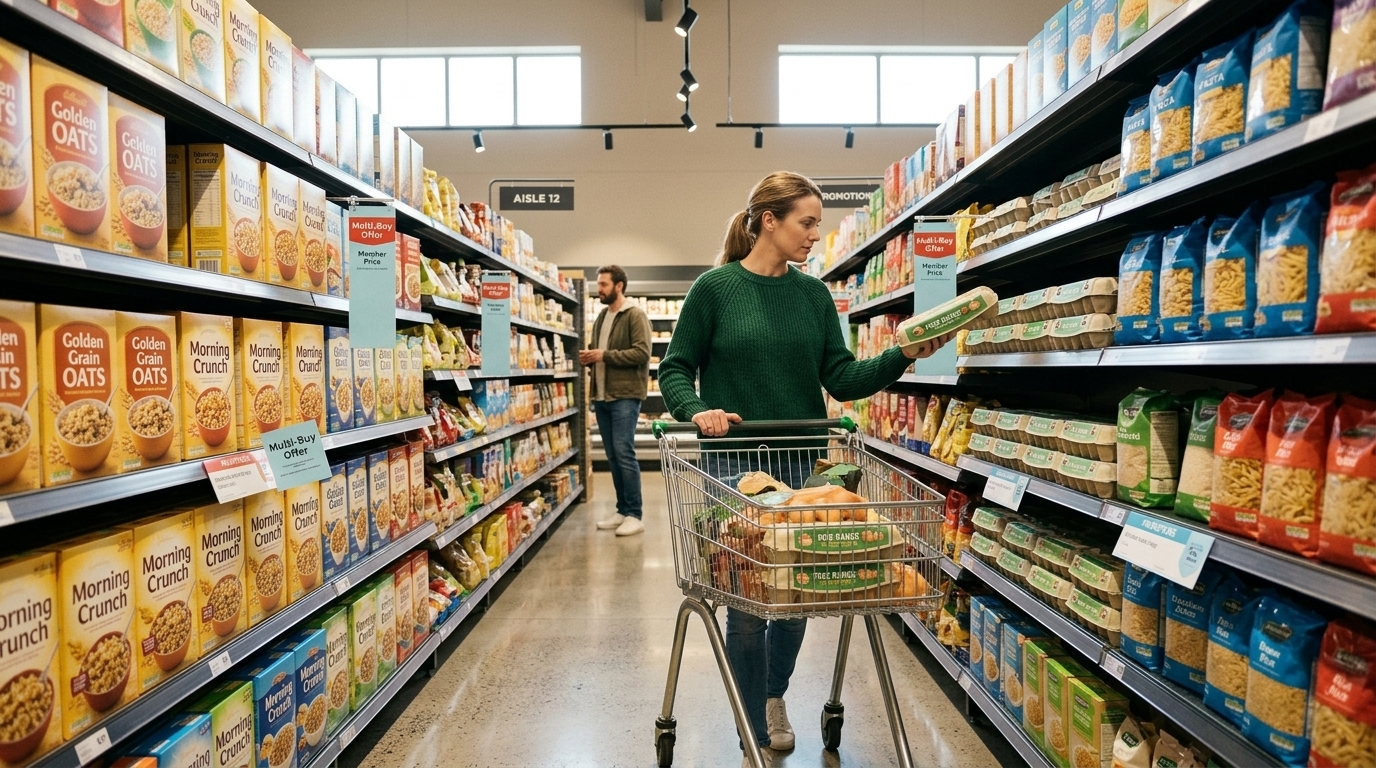
For decades, Greek consumers had grown accustomed to a regime of 'permanent offers,' where the initial shelf price was often fictitious, serving merely as a baseline for the next discount. This model, while attractive on the surface, created confusion and eroded trust. NielsenIQ's analysis shows that while the total number of Stock Keeping Units (SKUs) under promotion has slightly decreased, the penetration and effectiveness of these actions have increased. Companies are now opting for fewer, but more substantial and targeted price reductions.
This trend is largely driven by the restriction of so-called 'virtual' offers. With the tightening of the framework, businesses are required to keep prices stable for a specific period before and after a promotional activity, preventing the phenomenon of artificial price inflation followed by an 'impressive' discount. The result is a 'cleaner' image on the shelf, allowing consumers to compare real value rather than percentages on paper.
Streamlining FMCG and Brand Strategy
Major multinationals and powerful domestic players in the FMCG sector have been forced to rethink their marketing mix. Promotion is no longer seen as a simple volume-driving tool, but as an investment that must yield a specific Return on Investment (ROI). According to the data, categories that traditionally relied heavily on promotions, such as detergents and personal hygiene products, are now seeing a shift toward more stable, Everyday Low Price (EDLP) strategies instead of the sharp fluctuations of the past.
- Reduction of 'noise' in promotional activities, focusing on periods of high demand.
- Increased use of loyalty cards to provide personalized offers instead of generalized discounts.
- Strengthening the communication of 'value for money' beyond mere price points.
This strategy allows companies to better manage their supply chains. Sudden spikes in demand caused by aggressive promotions often led to shelf shortages and increased logistics costs. By smoothing out promotional activities, product flow becomes more predictable and cost-effective.
Consumer Response to the 'New Normal'
Despite the improvement in the quality of offers, Greek consumers remain under extreme pressure from the cost of living. 'Inflation' remains the number one topic of concern, and distrust towards supermarket chains has not been entirely eliminated. However, there is a noticeable maturation in shopper behavior. Consumers are becoming more selective, comparing prices per unit of measurement (kilogram or liter), and are not easily swayed by large '-50%' signs if the final price is not competitive.
'Transparency is the new currency in retail. Companies that manage to convince consumers that the price they see is fair and stable will win the loyalty bet in the long run,' market analysts note.
In conclusion, the new Code of Ethics has acted as a catalyst for a necessary market self-cleansing. Although promotions are fewer in absolute numbers, their intrinsic value for the household is greater, as they are accompanied by a broader effort to contain base prices. 2026 is expected to be the year when this balance solidifies, leading to a healthier and more sustainable retail model in Greece.