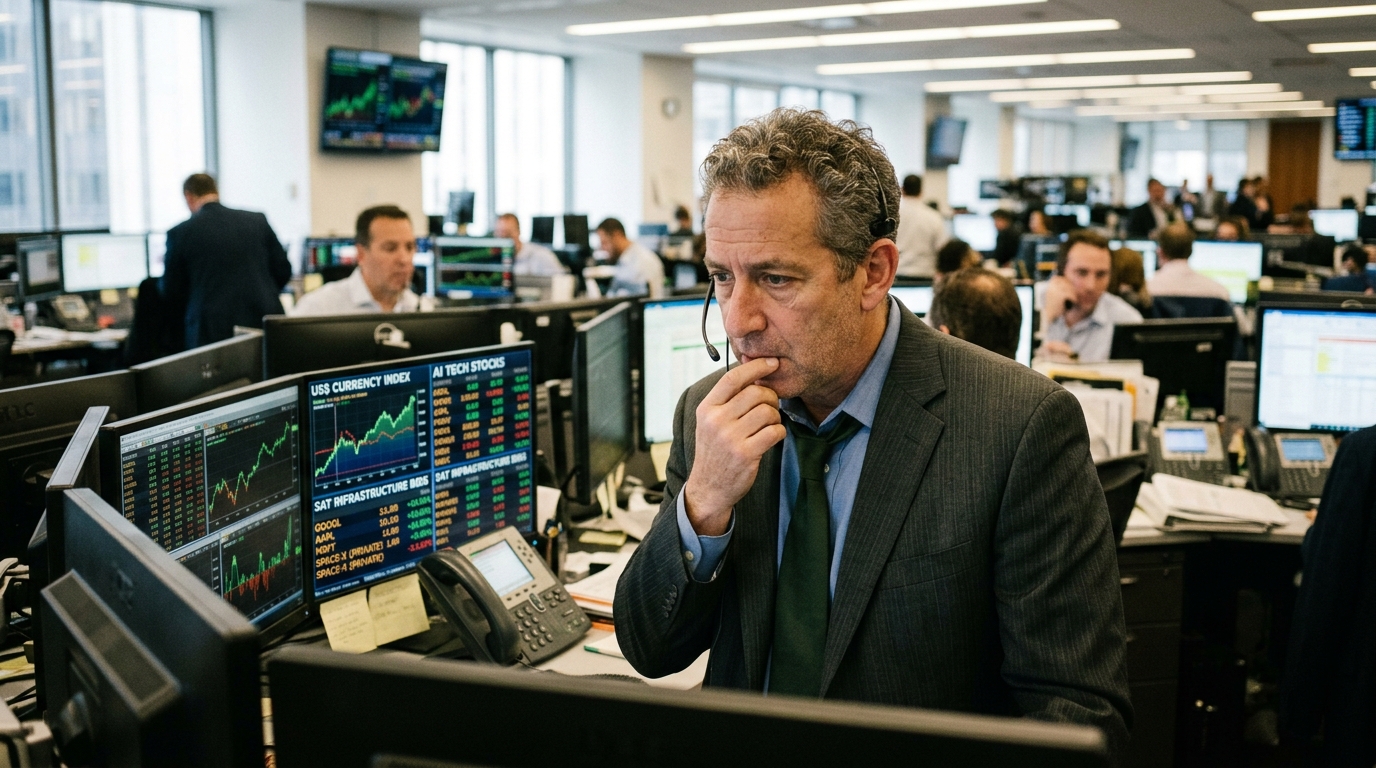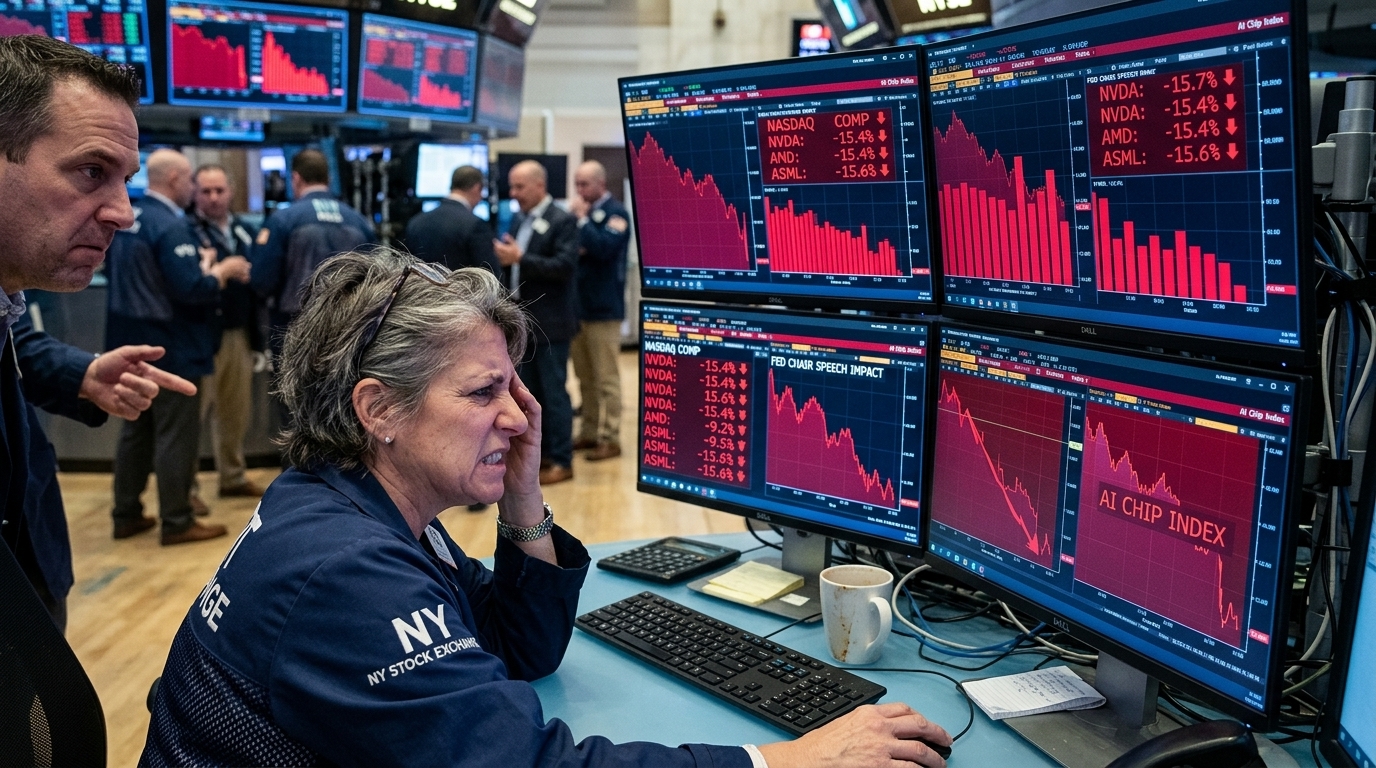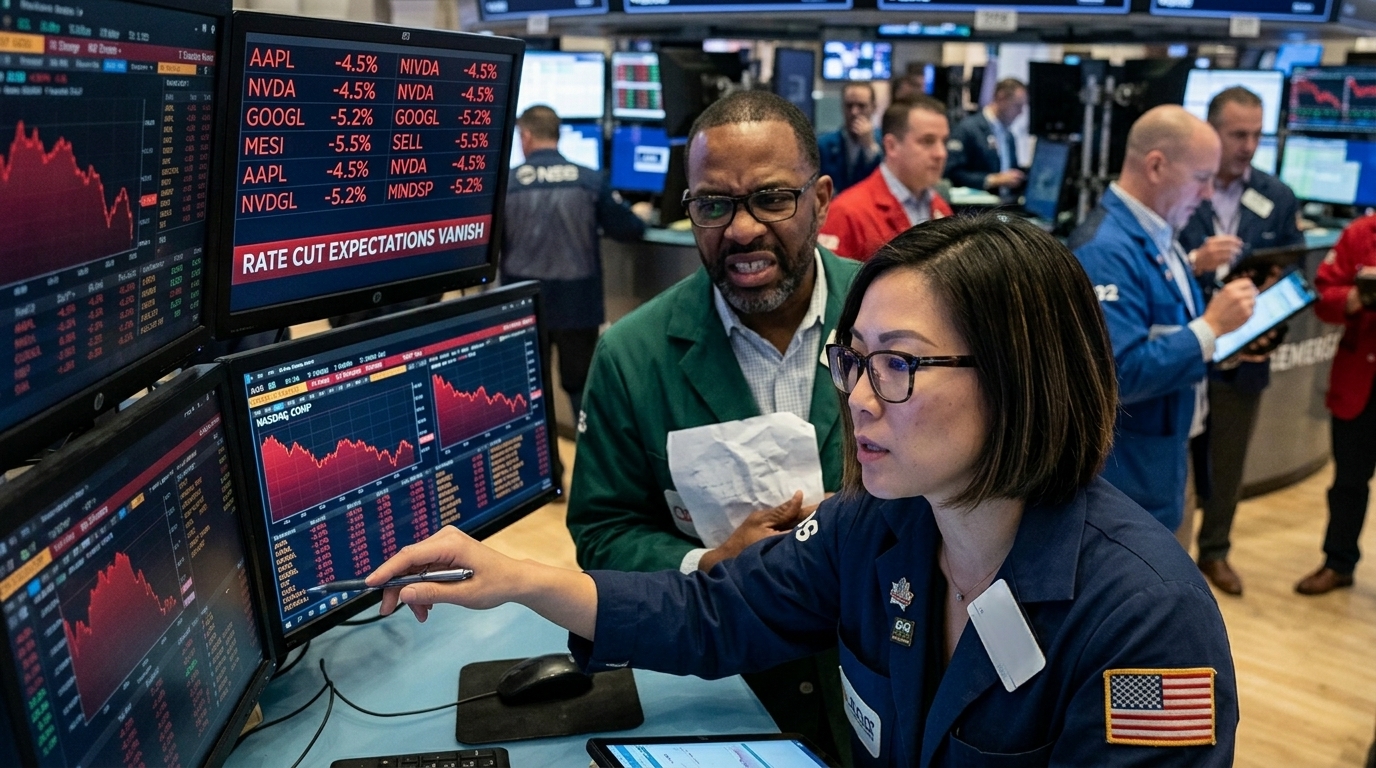
June 5, 2026, will be remembered by investors as the day the "golden age" of semiconductors received its most violent shock. The tech-heavy Nasdaq index experienced a freefall of over 4%, dragging the broader US market down with it, as chip giants saw their valuations evaporate within hours. What began as a corrective move quickly morphed into a wave of panic, raising urgent questions about whether the Artificial Intelligence bubble has finally begun to burst.
The Semiconductor Collapse and the 'AI Fatigue' Phenomenon
The semiconductor sector, which has been the engine of Wall Street's ascent over the past three years, found itself at the epicenter of the storm. Nvidia, AMD, and Intel saw their shares slide by double digits as analysts began to question the ability of these firms to sustain the stratospheric growth rates promised to shareholders. The market appears to be entering a phase of "AI fatigue," where investors are no longer satisfied with future promises but are demanding tangible profits and sustainable business models.
According to Goldman Sachs analysts, the plunge was driven by a combination of factors: extreme capital concentration in a few tech stocks, rising bond yields, and concerns over the saturation of the data center market. "We saw a classic case of 'sell the news'," said one investment bank executive. "Expectations were so high that even solid earnings were deemed insufficient by a market looking for an excuse to lock in profits."
Geopolitical Instability and the Shadow of Taiwan
Beyond the financial metrics, geopolitical tensions played a pivotal role in today's rout. Recent statements from Washington regarding further restrictions on technology exports to China sent shivers through chipmakers. The global supply chain's dependence on TSMC and the Taiwan region remains the industry's "Achilles' heel," and any hint of instability in the area leads to immediate risk aversion.
"The market is realizing that AI infrastructure is not just code and algorithms, but physical hardware subject to the laws of geopolitics and finite resources," notes market analyst Marcus Papadopoulos.
The decline was not limited to the US. European markets, led by ASML in Amsterdam, followed Wall Street's lead, confirming that the tech sector is now entirely interconnected globally. Jitters also spread to cryptocurrencies, which often serve as a high-risk sentiment indicator, with Bitcoin also recording significant losses.
The Aftermath: Correction or Paradigm Shift?
The big question looming over the New York Stock Exchange is whether this drop represents a healthy correction that will allow new buyers to enter the market, or if it marks the beginning of a prolonged downturn. Optimists argue that demand for computing power remains at historic highs and that the companies leading the AI revolution possess robust balance sheets. However, bears warn that valuations remain excessive compared to historical benchmarks.
The Federal Reserve's moves in the coming weeks will be critical. If inflation remains stubborn and interest rates do not decline as the market expects, borrowing costs for tech firms will remain high, further squeezing profit margins. Investors are now being called upon to exercise greater selectivity, perhaps turning to more traditional sectors of the economy that were neglected during the tech rally.
- Semiconductor stocks lost over $500 billion in market capitalization in a single day.
- The VIX volatility index (the "fear gauge") surged by 25%.
- Nvidia recorded its largest single-day drop in history.
- Investors are pivoting toward treasury bonds and gold for safety.
In conclusion, today serves as a loud wake-up call regarding the excessive dependence of stock indices on a single sector. Technology remains the future, but the path toward that future appears to be fraught with turbulence and sharp reality checks.