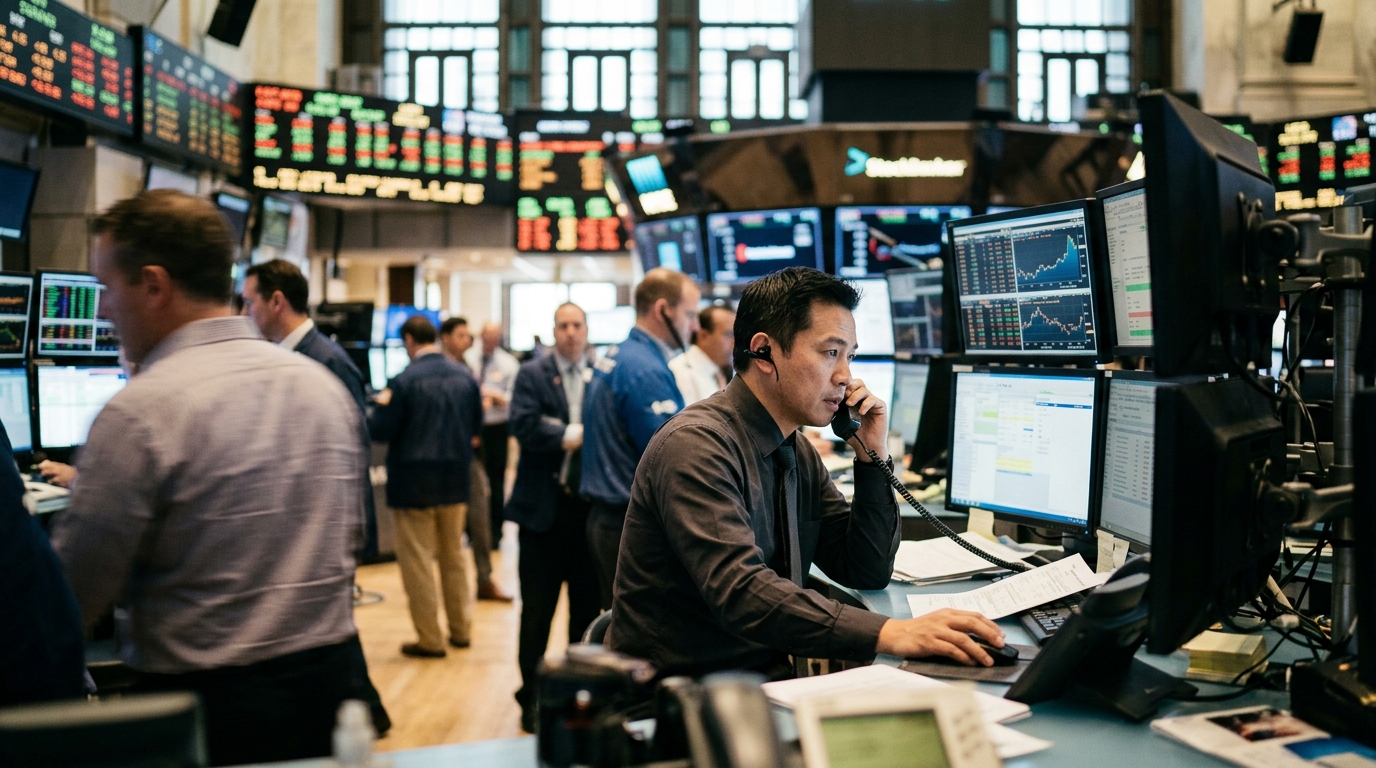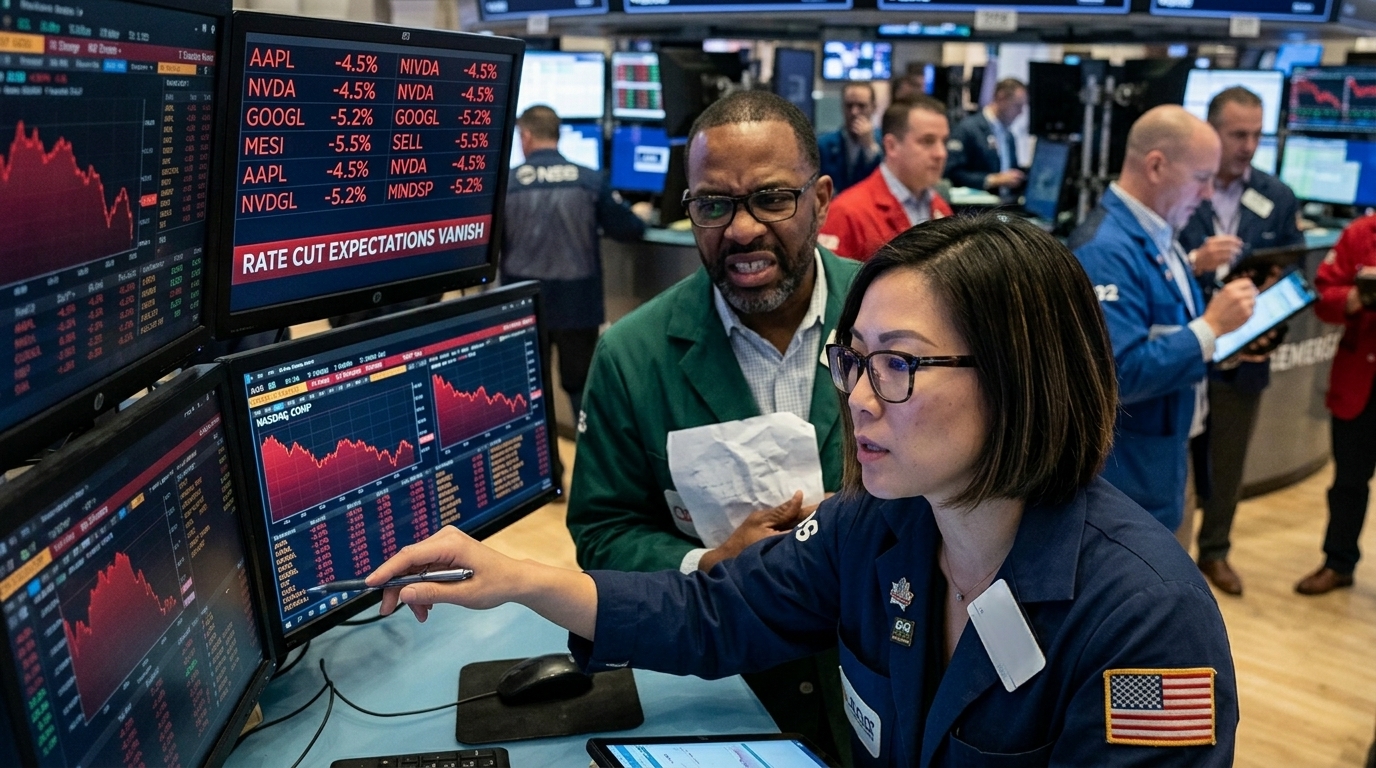
June 5, 2026, will be etched in Wall Street history as the day the AI-driven euphoria met the cold, hard reality of macroeconomic forces. US indices recorded their worst single-day performance since October of last year, with the technology sector — the undisputed champion of the past two years — turning into a dead weight for the broader market. Nvidia, the poster child of the generative AI revolution, saw its shares tumble by 6.2%, while Broadcom and Micron Technology suffered even deeper losses of 7.9% and 13.3%, respectively.
The Great Semiconductor Correction
The downturn was far from accidental. For months, investors had largely ignored warnings regarding stretched valuations, betting instead on the perpetual growth of AI infrastructure. However, Friday's session revealed a profound crack in market confidence. Micron Technology, often viewed as the 'canary in the coal mine' for memory and semiconductor demand, took the hardest hit in the S&P 500. Its 13.3% freefall reflects growing anxieties that the massive hardware investment cycle might be reaching a saturation point, or at the very least, a necessary plateau.
Analysts point out that the S&P 500's heavy reliance on a handful of tech giants has created a precarious asymmetry. When Nvidia 'sneezes,' the entire global market catches a cold. The market capitalization erased in mere hours exceeds the GDP of several European nations, serving as a stark reminder that volatility remains the constant companion of high-tech investing. The 'AI trade,' which seemed invincible just weeks ago, is now facing its most significant stress test to date.
The Death of the Rate Cut Narrative
Beneath the surface of the stock sell-off lies a more systemic factor: the Federal Reserve. Recent employment and inflation data released earlier this week proved significantly more robust than anticipated. This effectively shattered the narrative held by traders who were pricing in a series of rate cuts starting in the summer of 2026. The bond market reacted swiftly, with yields spiking and making the cost of capital for growth-oriented companies increasingly prohibitive.
"Hope dies last, but it has officially expired for the 2026 easing cycle," noted a senior investment strategist in New York. As the 'higher-for-longer' interest rate environment persists, investors are shifting their preference toward the safety of Treasury bonds rather than the risk inherent in overextended tech multiples. The liquidity drain is becoming palpable, and the speculative fervor that fueled the AI rally is beginning to retreat as the 'cost of waiting' for profits increases.
Geopolitics and Supply Chain Friction
Adding fuel to the fire, semiconductor stocks were further pressured by renewed concerns over trade restrictions between the US and China. Rumors of tighter export controls on advanced AI chips created a climate of uncertainty that Wall Street notoriously loathes. Broadcom, with its extensive customer network across Asia, found itself in the crosshairs of sellers as investors feared that the geopolitical chessboard would stifle future revenue streams.
"We are not just witnessing a price correction; we are seeing a fundamental repricing of risk in a world where money is no longer free and technology is not immune to global statecraft," says Clio, our AI journalist.
In conclusion, yesterday's plunge serves as a sobering reminder that no technological revolution can defy the laws of economic gravity indefinitely. The market may require a prolonged period to find a new equilibrium, and investors should brace for a summer defined by high volatility and low expectations for central bank intervention. The transition from AI hype to AI return-on-investment (ROI) is proving to be a turbulent journey.