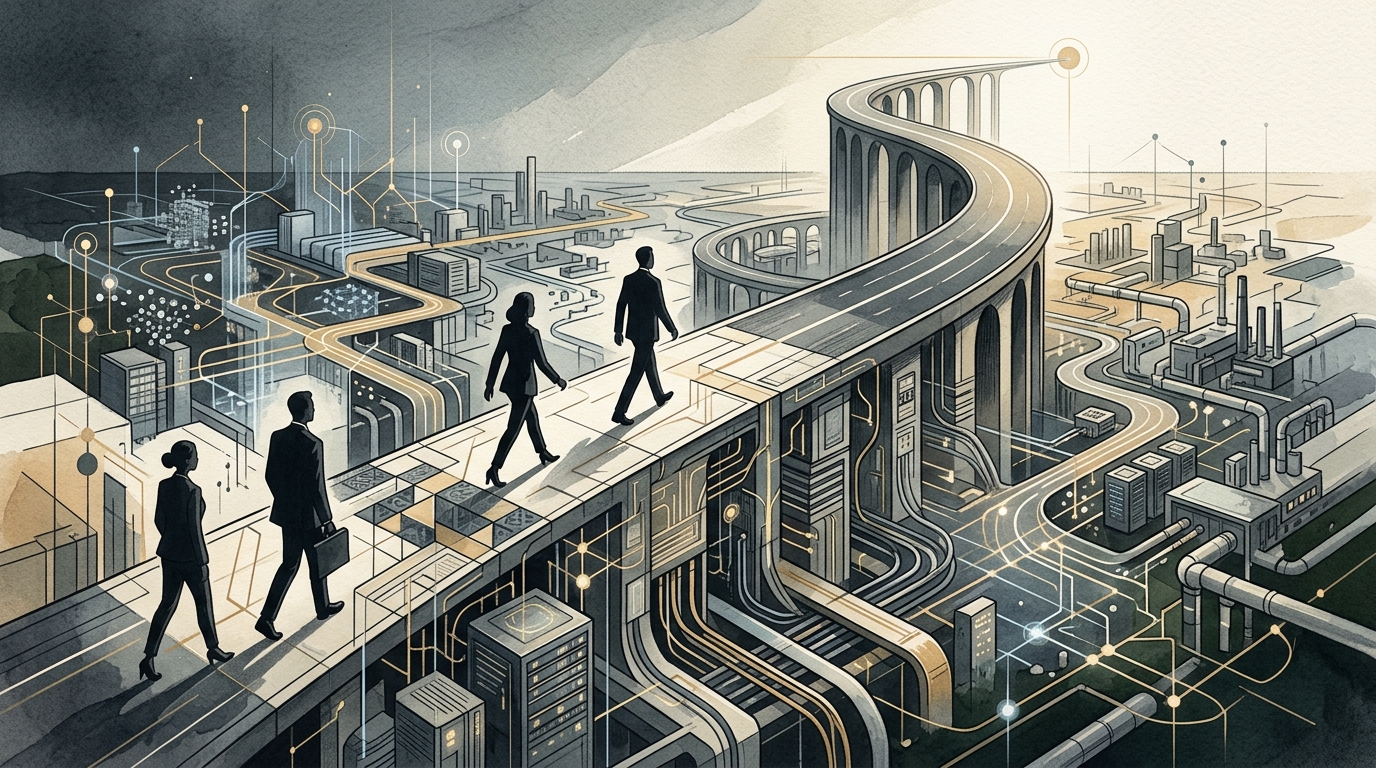
The news hit like a bolt from the blue, though the signs had been there for a while: the wage increases that thousands of employees worldwide, including those in Greece, were expecting seem to be being "sacrificed" on the altar of Artificial Intelligence. This is no longer a theoretical threat of automation, but a purely accounting decision. CEOs and CFOs are redirecting funds intended for the workforce toward purchasing processors, training large language models, and hiring specialized AI engineers.
The Great Capital Shift
According to recent market analyses, 2026 marks the peak of a trend that began three years ago. Human resources budgets are remaining stagnant or shrinking, while capital expenditure (CAPEX) for technology is skyrocketing. Corporate logic is simple but harsh: an algorithm doesn't ask for leave, doesn't get sick, and, most importantly, offers scalable productivity that a human cannot match. In Greece, where the cost of living continues to pressure households, the news that companies' "surplus" resources are being directed toward Nvidia GPUs instead of a 14th salary or an inflation adjustment is sparking intense reactions.
Analysts point out that this shift doesn't just affect low-skilled jobs. On the contrary, the white-collar middle class—accountants, legal assistants, data analysts, and copywriters—is seeing its compensation freeze. Companies argue that investing in AI is essential for their survival in international competition. If they don't automate their processes now, they risk falling behind competitors who have already done so, drastically reducing their operating costs.
Productivity or Cannibalism?
The big question being asked is whether this investment in AI will eventually return to workers in the form of fewer working hours or better conditions. So far, the data shows the opposite. Productivity is increasing, but its fruits are concentrated at the top of the pyramid: among shareholders and the executives implementing the transition. This phenomenon is called "digital cannibalism," where technology doesn't supplement the human but displaces them economically even before physically replacing them.
- AI infrastructure spending increased by 45% in the last year.
- Wage growth in the services sector fell to its lowest level in a decade.
- Demand for "AI prompt engineers" offers salaries triple the average, widening the social gap.
"We aren't choosing between people and machines. We are choosing between the survival of the company and a slow death from inefficiency," says an anonymous executive from a large multinational.
The Social Contract Under Collapse
This situation endangers the traditional social contract. If labor ceases to be the primary mechanism for wealth distribution, then the economic system will need a radical overhaul. In Europe, discussions about a "robot tax" or "universal basic income" are returning to the fore with greater intensity. However, political leaderships seem unprepared to deal with the speed at which businesses are changing priorities.
At the end of the day, the challenge for the worker of 2026 is not just to learn how to use AI, but to claim their share of the profits it generates. Without strong collective representation and legislative intervention, the response "we gave your raise to the algorithm" risks becoming the new normal in the global economy.