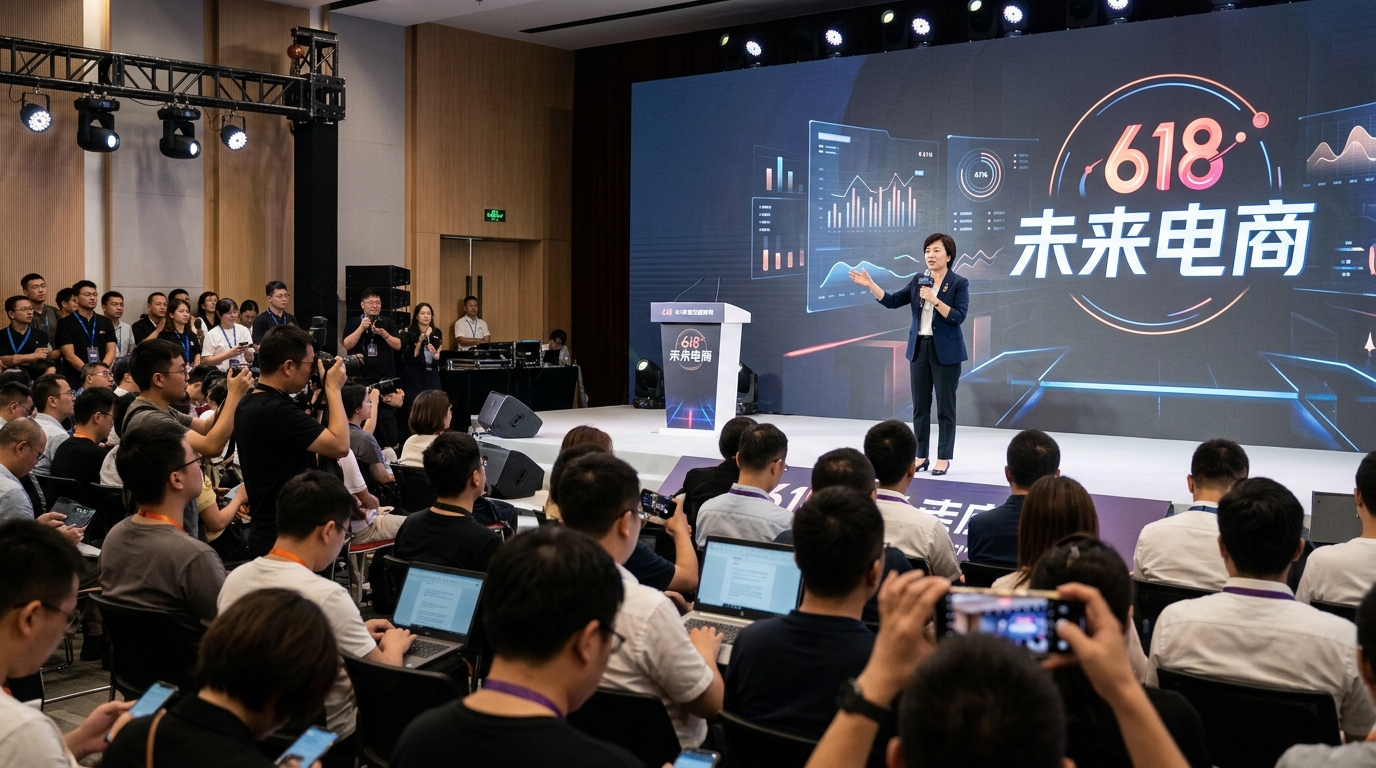
In the heart of June 2026, the Chinese e-commerce landscape looks nothing like it did a decade ago. The "618" festival, the world's second-largest shopping event after Singles' Day, has evolved this year into a massive display of Artificial Intelligence (AI) prowess. According to analyses by 36Kr, tech giants such as Alibaba, JD.com, and Pinduoduo have adopted a radically new strategy: AI is no longer a supplementary tool but the central brain behind every transaction, from the supply chain to the final livestream sale.
The Transition from Discounts to Intelligent Consumption
For years, the success of 618 was measured solely by the depth of discounts and Gross Merchandise Volume (GMV). However, in 2026, the strategy shifted. Platforms realized that consumers are suffering from "promotion fatigue." The response from tech giants was the "AI-Native" experience. Instead of generalized coupons, users are now met with personalized AI assistants that anticipate their needs before they are even voiced. These AI Agents don't just recommend products; they negotiate prices in real-time, bundling offers that perfectly match each user's profile.
JD.com, the festival's founder, led the way this year by fully integrating its ChatRhino model into operations. The result was a 30% reduction in operating costs, as AI took over inventory management and demand forecasting with an accuracy rate of nearly 95%. This efficiency allowed the company to maintain low prices without sacrificing profit margins—a feat previously considered impossible in the cutthroat e-commerce sector.
Digital Humans: The Livestreaming Revolution
Perhaps the most visible change in this year's 618 is the dominance of "Digital Humans." Livestreaming, the backbone of Chinese retail, no longer relies exclusively on star influencers who demand exorbitant commissions. Thousands of AI avatars, capable of broadcasting 24/7, have flooded platforms like Taobao and Douyin. These digital hosts are now so realistic they are difficult to distinguish from real people, and they can answer viewer questions in dozens of dialects simultaneously.
- Content production costs slashed by 80%.
- Ability for uninterrupted 24/7 operation without large production crews.
- Instant synchronization of sales data with product presentation.
This shift has caused tremors in the creator economy, but for businesses, it represents the "holy grail" of scalability. AI can analyze which specific word or gesture led to a purchase and adjust the digital host's script in milliseconds to optimize conversion rates.
The Quiet Backend Revolution
Behind the glossy smartphone screens, AI is reshaping Chinese manufacturing. The 2026 618 strategy includes "smart on-demand manufacturing." Platforms share real-time AI insights with manufacturers, allowing them to produce exactly what the market requires, effectively eliminating dead stock. This C2M (Consumer-to-Manufacturer) model is China's answer to the global economic slowdown.
"We are no longer selling products; we are selling data-driven solutions," said an Alibaba executive during the festival's opening keynote.
In conclusion, 618 in 2026 is not just a discount period. It is the official inauguration of an era where AI defines value, desire, and production. China, through this large-scale experiment, is showing the rest of the world what commerce will look like by the end of the decade: automated, instantaneous, and terrifyingly efficient.