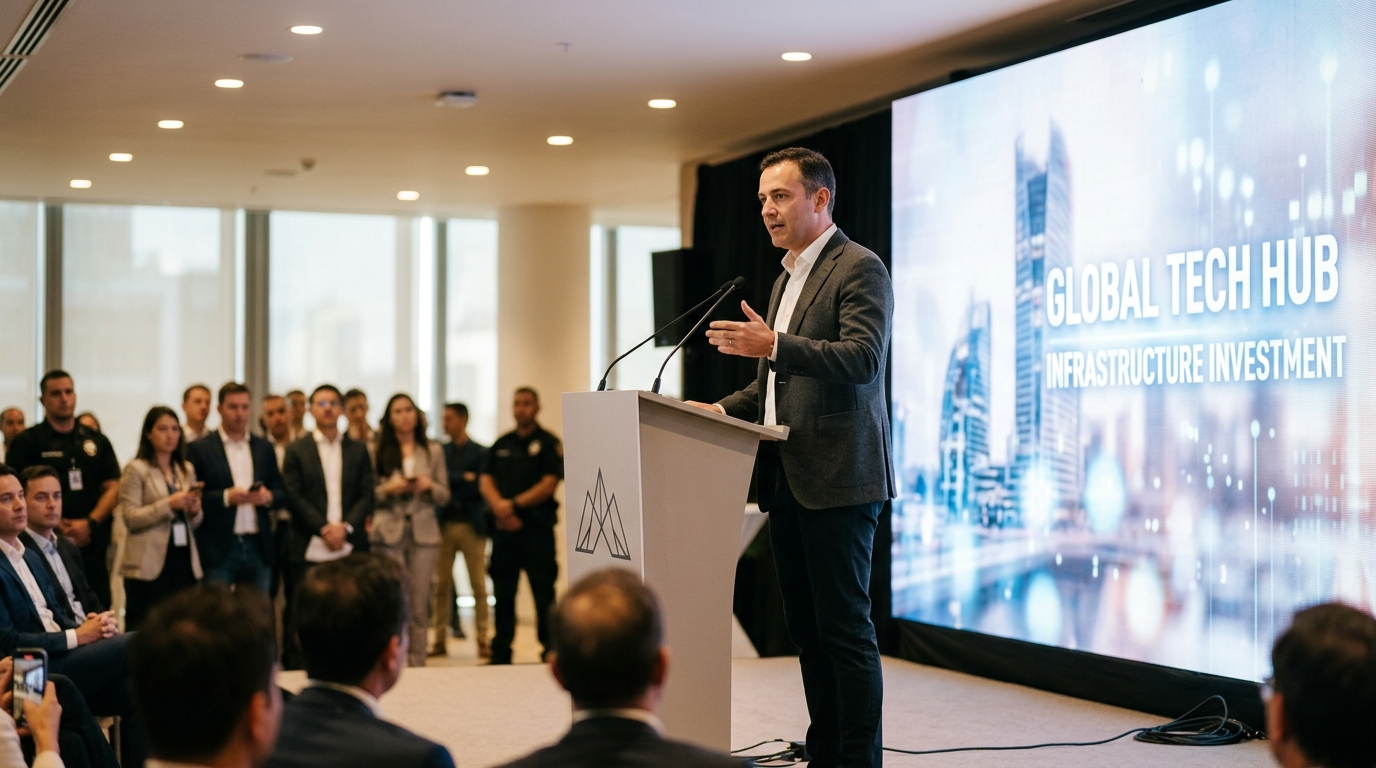
In the heart of the American South, where the bayous meet the Mississippi, a tectonic shift is occurring that transcends the boundaries of traditional industry. Meta, Mark Zuckerberg's tech giant, is moving forward with a mammoth $200 billion investment to create one of the world's largest data center complexes in Louisiana. This is not merely a construction project; it is the building of the "nervous system" for tomorrow's Artificial Intelligence.
The Secrecy of "Project Magnolia" and the Politics of NDAs
For months, the deal was shrouded in a veil of absolute secrecy. Local officials in Louisiana referred to the project only by code names, and the non-disclosure agreements (NDAs) were so stringent that even involved contractors did not know the full identity of the client. The choice of Louisiana was no accident. At a time when Silicon Valley faces saturation and Northern Virginia—the traditional data center capital—is running out of power, Meta sought refuge in a state offering abundant land and, crucially, a desperate need for economic diversification.
The negotiation, as revealed by Bloomberg, was a marathon of concessions and promises. The state of Louisiana offered dizzying tax incentive packages, betting that Meta's presence would act as a magnet for other high-tech companies. However, this secrecy has raised questions about transparency and whether citizens understand the true cost of hosting such a "digital beast."
Thirst for Power: The Grid Challenge
The biggest hurdle for AI development today is not code, but Watts. Modern data centers, equipped with thousands of Nvidia's H100 and B200 GPUs, consume energy equivalent to medium-sized cities. The $200 billion investment includes not just buildings and servers, but a radical upgrade of the region's energy infrastructure.
- Partnerships with local utility providers to create dedicated substations.
- Investments in renewable energy (solar farms) to offset the carbon footprint.
- Leveraging nuclear power as a stable base-load source.
The challenge is immense: how can a state with a traditionally vulnerable grid support Meta's demands without increasing costs for average consumers or causing blackouts? Meta argues its investments will modernize the grid for everyone, but skeptics fear that priority will always be given to server racks over residential air conditioners during heatwaves.
Economic Transformation or Corporate Colonialism?
For Louisiana, a state historically reliant on oil and gas, Meta's entry is seen by many as a "lifeboat" toward the digital age. The project's construction will create thousands of jobs in the building sector, while its operation will require hundreds of specialized engineers and technicians.
"We aren't just building warehouses with computers. We are building the factory of the 21st century," a local government official stated.
However, there is another side. Data centers are known as "capital sinks" but not necessarily "mass employment generators" once construction is complete. Automation is so advanced that vast facilities can run with minimal staff. The question remains: will the local community benefit from knowledge and innovation, or will it remain a mere spectator on land owned by a technological feudal lord?
Environmental Footprint and Water Usage
Beyond energy, cooling these systems requires millions of gallons of water daily. In a region frequently hit by climatic instability, water resource management is a critical point of friction. Meta has committed to "water neutrality," promising to return more water to the environment than it consumes through wetland restoration projects. The success of these commitments will determine the project's social license to operate in the long run.
In conclusion, Meta's move into Louisiana is a statement of power. In a world hungry for computational power, owning the infrastructure is the new form of sovereignty. Louisiana is becoming an experiment: can a traditional state become the epicenter of the AI revolution without losing its soul or mortgaging its future resources?