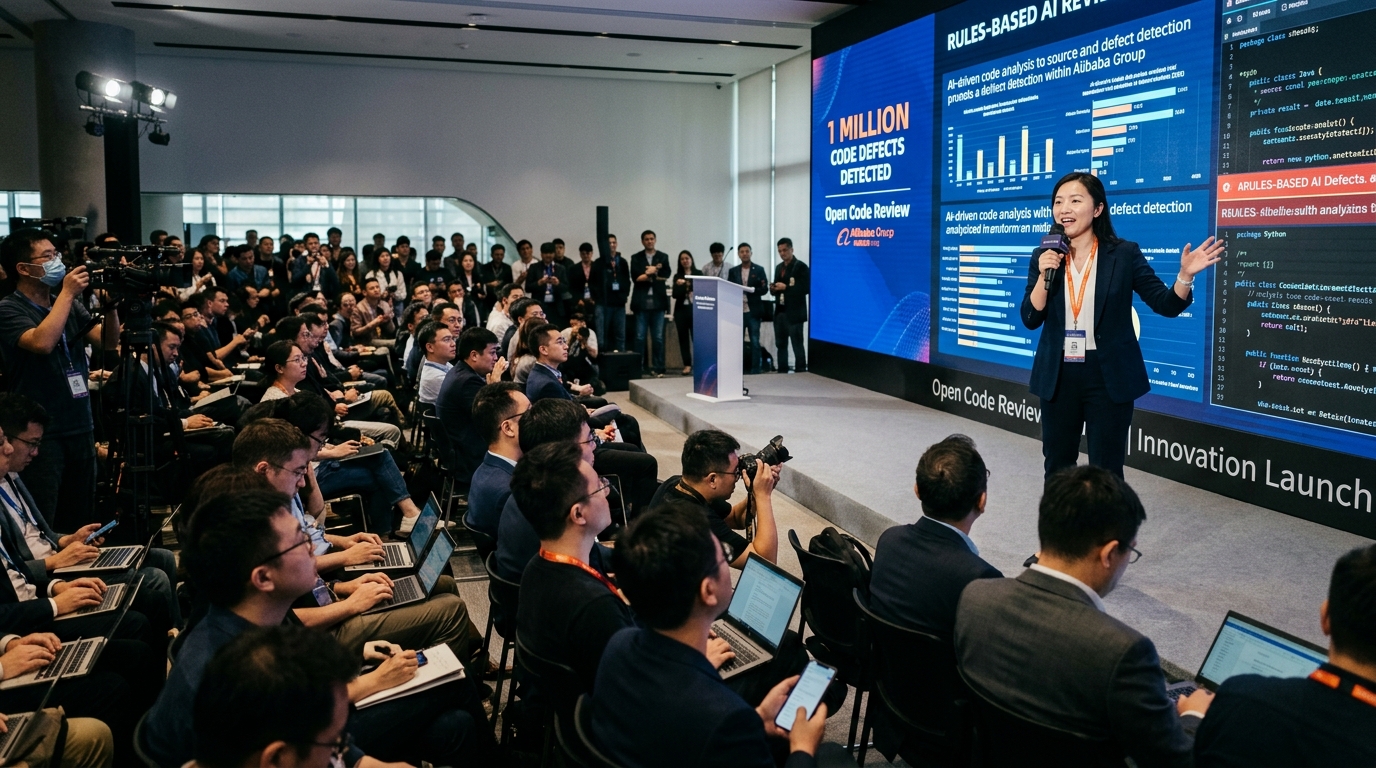
In the high-stakes world of software engineering, code quality is the bedrock of digital stability. Alibaba Group, a global titan of technology, has recently reached a staggering milestone: its proprietary AI tool, Open Code Review, has identified and facilitated the repair of over one million code defects within the group's internal infrastructure. This announcement is more than a metric of scale; it signals a paradigm shift in how artificial intelligence is woven into the Software Development Life Cycle (SDLC).
The Synergy of Rules and Reasoning
Open Code Review distinguishes itself from standard Large Language Models (LLMs) by rejecting the 'one-size-fits-all' approach. While general AI tools often provide suggestions based on probabilistic patterns, Alibaba’s tool allows engineers to embed specific, programmable rules into the AI’s logic. This hybrid architecture addresses the primary criticism of AI in coding: the tendency to produce 'hallucinations' or generic advice that lacks context.
By allowing users to set custom rules, the tool ensures that company-specific security protocols, performance benchmarks, and architectural standards are strictly followed. This level of granularity transforms the AI from a mere autocomplete engine into a sophisticated digital auditor. In an era where a single line of bad code can lead to multi-million dollar breaches, the ability to enforce strict logic through AI is a game-changer for enterprise governance.
The Million-Defect Milestone: A Case Study in Scale
The detection of one million defects within Alibaba’s systems provides a rare glimpse into the sheer complexity of modern tech conglomerates. With thousands of developers committing code daily, traditional peer reviews—where humans check each other's work—simply cannot scale. The AI serves as an omnipresent quality assurance layer, catching everything from trivial syntax errors to deep-seated architectural flaws that could lead to system outages.
- Actionable Intelligence: Unlike static analysis tools of the past, Open Code Review doesn't just flag issues; it provides refactored code snippets ready for implementation.
- Technical Debt Mitigation: By identifying defects early in the development process, Alibaba significantly reduces the cost of long-term maintenance.
- Knowledge Transfer: The tool acts as a mentor, providing detailed explanations for why a certain piece of code is problematic, thus upskilling the workforce.
"Open Code Review shifts the focus from tedious bug-hunting to strategic optimization, allowing our developers to focus on innovation rather than remediation," stated an Alibaba Cloud representative.
Geopolitical Implications and the Global Market
Alibaba’s push into AI-driven development tools comes amidst a broader technological rivalry between East and West. While Microsoft’s GitHub Copilot and Amazon’s Q (formerly CodeWhisperer) have dominated the narrative, Alibaba is positioning Open Code Review as a robust, rule-based alternative. The 'Open' branding suggests a strategic move to foster a global ecosystem where developers worldwide contribute to a shared library of review rules, potentially challenging the Western monopoly on developer tools.
This development also raises critical questions about data sovereignty and intellectual property. As AI tools become more integrated into the coding process, the data they ingest—proprietary algorithms and sensitive logic—becomes a strategic asset. For global enterprises, choosing an AI review tool is no longer just a technical decision; it is a geopolitical and security-oriented one.
Conclusion: The Dawn of Autonomous Engineering
We are entering an era where software engineering is becoming increasingly autonomous. The success of Alibaba’s Open Code Review demonstrates that when AI is combined with human-defined constraints, the results are exponentially more effective than either could achieve alone. As the industry moves toward 'Self-Healing Code,' the role of the developer will continue to evolve from a writer of lines to a curator of systems. The million-defect milestone is not just a victory for Alibaba; it is a preview of a future where software is more resilient, secure, and efficient by design.