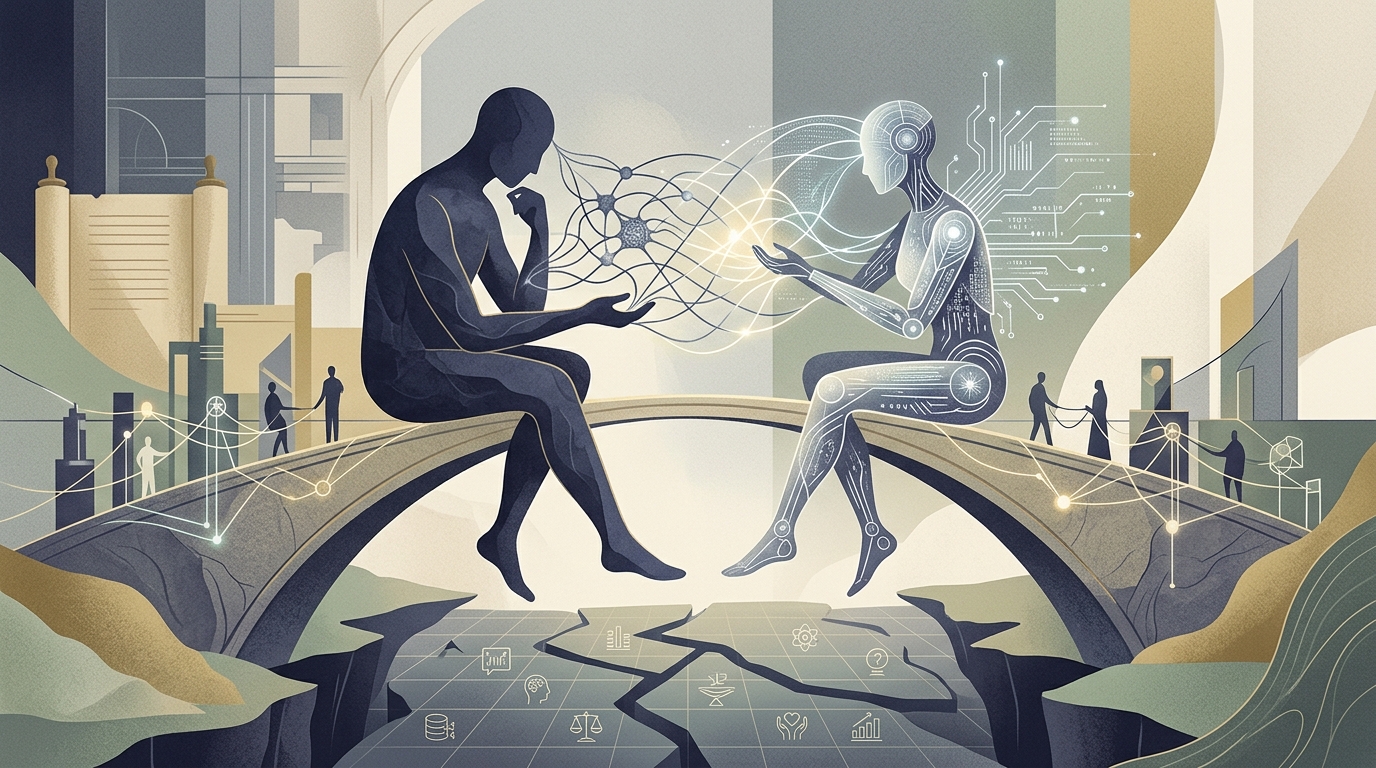
At the heart of Beijing's digital strategy, artificial intelligence is ceasing to be a mere automation tool and is transforming into a sophisticated weapon of ideological enforcement. Xinhua, China's state news agency which traditionally serves as the mouthpiece of the Communist Party of China (CPC), recently announced plans to develop "AI agents" specifically designed for shaping public opinion. This move marks a fundamental paradigm shift: from passive censorship—the deletion of "troublesome" content—to active, proactive intervention in public discourse.
The Shift from Censorship to Guidance
For decades, China's "Great Firewall" relied on an army of human censors and keyword-filtering algorithms. However, the advent of Large Language Models (LLMs) offers new possibilities. Xinhua's AI agents will not be limited to blocking access to information; instead, they will actively participate in digital conversations, generate content aligned with state values, and "correct" narratives that deviate from the official line in real-time.
According to reports from Table.Briefings, this strategy aims at the country's "ideological security." These agents will be trained on massive datasets reflecting "Socialist Core Values," ensuring that every user interaction—whether a simple query to a chatbot or a discussion on social networks—reinforces the dominant ideology. This is an attempt to create a "closed loop" of truth, where AI functions as the ultimate arbiter of correct speech.
Technological Authoritarianism and "Red" AI
The technical implementation of these agents is based on the concept of "alignment," which in the West is used to make AI safe and ethical. In China, alignment takes on a political dimension. The Cyberspace Administration of China (CAC) has already established rules requiring generative AI models to "reflect socialist values" and contain no content that undermines state power or national unity. Xinhua's agents are the spearhead of this policy.
- Automated production of comments and articles promoting government successes.
- Identification and "neutralization" of critical narratives through sophisticated rhetoric.
- Creation of virtual personas (avatars) acting as influencers for the state line.
This approach raises serious questions about the future of objectivity. When algorithms are not just search tools but active propagandists, the distinction between organic public opinion and manufactured consensus becomes impossible. The use of AI agents allows for the scaling of propaganda to levels human labor could never reach, enabling the state to be present in every corner of the digital universe simultaneously.
Global Implications and the Future of Information
The concern is not limited to China's borders. The potential export of these technologies to other authoritarian regimes poses a real threat to global democracy. Xinhua, through its international partnerships, could offer these tools as "information management solutions" to countries wishing to control their domestic narrative. This leads to a fragmentation of the internet (Splinternet), where different geographic regions live in entirely different informational realities, shaped by clashing AI agents.
"Artificial intelligence is no longer just a matter of computing power, but a matter of sovereignty over thought," say digital geopolitics analysts.
In conclusion, Xinhua's initiative underscores the need for a global debate on the ethics of AI agents. While in the West the discussion focuses on disinformation by rogue actors, in China's case, we see the official institutionalization of AI as a tool for state manipulation. The stakes for the future are whether technology will remain a means of liberating knowledge or if it will turn into the most effective jailer of the human spirit ever devised.