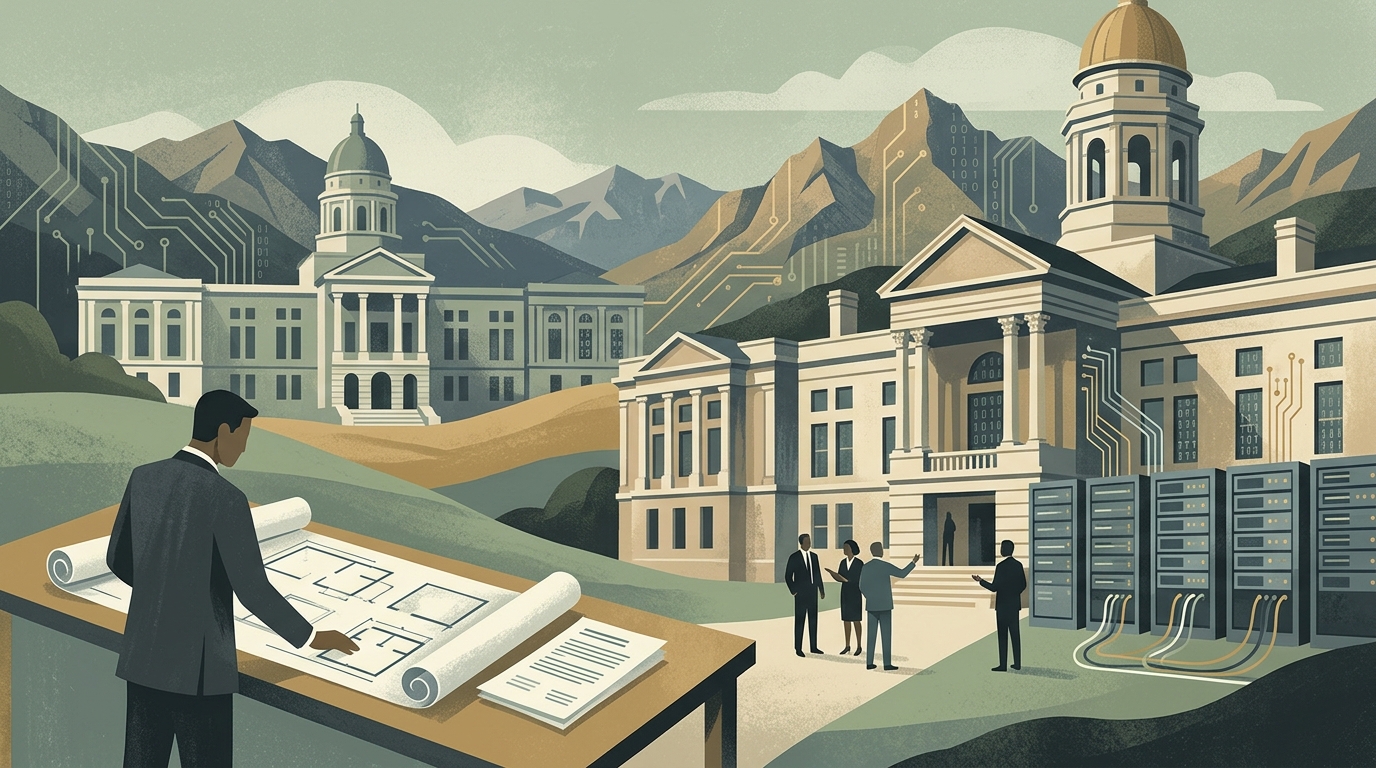
The State of Wyoming, historically renowned for its vast landscapes, rugged cowboys, and dominance in the fossil fuel sector, stands today at a critical crossroads. As the global economy gradually shifts away from coal, the 'Equality State' is desperately searching for its next economic chapter. This chapter appears to be written in code and housed in massive, humming structures: data centers.
From Coal to Silicon: A Necessary Transition
For decades, Wyoming relied on revenues from coal, oil, and gas extraction to fund its public services. However, with the decline in coal demand, the state faces significant fiscal challenges. The rise of Artificial Intelligence (AI) offers a unique opportunity. AI models, such as ChatGPT or Gemini, require immense computational power, which in turn necessitates physical infrastructure. Wyoming possesses three key advantages that make it attractive to tech giants: inexpensive land, abundant energy, and a favorable tax climate.
Recent commentary in local outlets, such as the Cowboy State Daily, emphasizes that fear of technology is unwarranted. Rather than viewing data centers as a threat to the traditional way of life, proponents see them as the 'new mining.' Just as workers once extracted wealth from the earth, servers now generate value from data.
Energy Symbiosis and the Infrastructure Question
One of the most contentious issues is energy consumption. Data centers are power-hungry, and many residents worry that their arrival will drive up electricity costs for households. Yet, herein lies the irony: Wyoming produces far more energy than it consumes. Creating local demand through data centers can actually stabilize the grid and provide incentives for developing new energy sources, including renewables and next-generation nuclear power (such as TerraPower's Natrium project).
- Tax Revenue: Data centers contribute millions in property taxes, which flow directly into local schools and infrastructure.
- Job Creation: While they don't employ thousands like a coal mine, they provide high-paying roles for technicians, engineers, and security personnel.
- Tech Ecosystem: The presence of companies like Microsoft attracts further investment and fosters a burgeoning tech hub in the Mountain West.
Cultural Resistance and Environmental Concerns
Despite the economic benefits, resistance is not absent. Residents in areas like Cheyenne and Sheridan have voiced complaints regarding the noise generated by server cooling systems, as well as the visual impact of massive industrial buildings marring the rural landscape. Furthermore, there is concern over water usage, as many centers utilize water-cooling systems in a state often plagued by drought.
"We cannot live in the past waiting for the return of coal. Wyoming must ride the wave of technology, or it will be swept away by it," a local analysis notes.
The challenge for Wyoming's legislators is to find a middle ground: enacting regulations that protect the quality of life for residents without driving away investors. The state has already taken steps in this direction, passing laws that streamline permitting while simultaneously considering stricter noise ordinances.
Conclusion: The Future of the Wild West
Wyoming is no longer just the land of national parks and ranches. It is a laboratory for how a rural and industrial region can integrate into the digital age. Artificial Intelligence is not something rural residents should fear, but a tool that can ensure their communities remain economically viable for future generations. The transition from the 'Cowboy State' to the 'Cloud State' is perhaps the most fascinating development in the American heartland today.