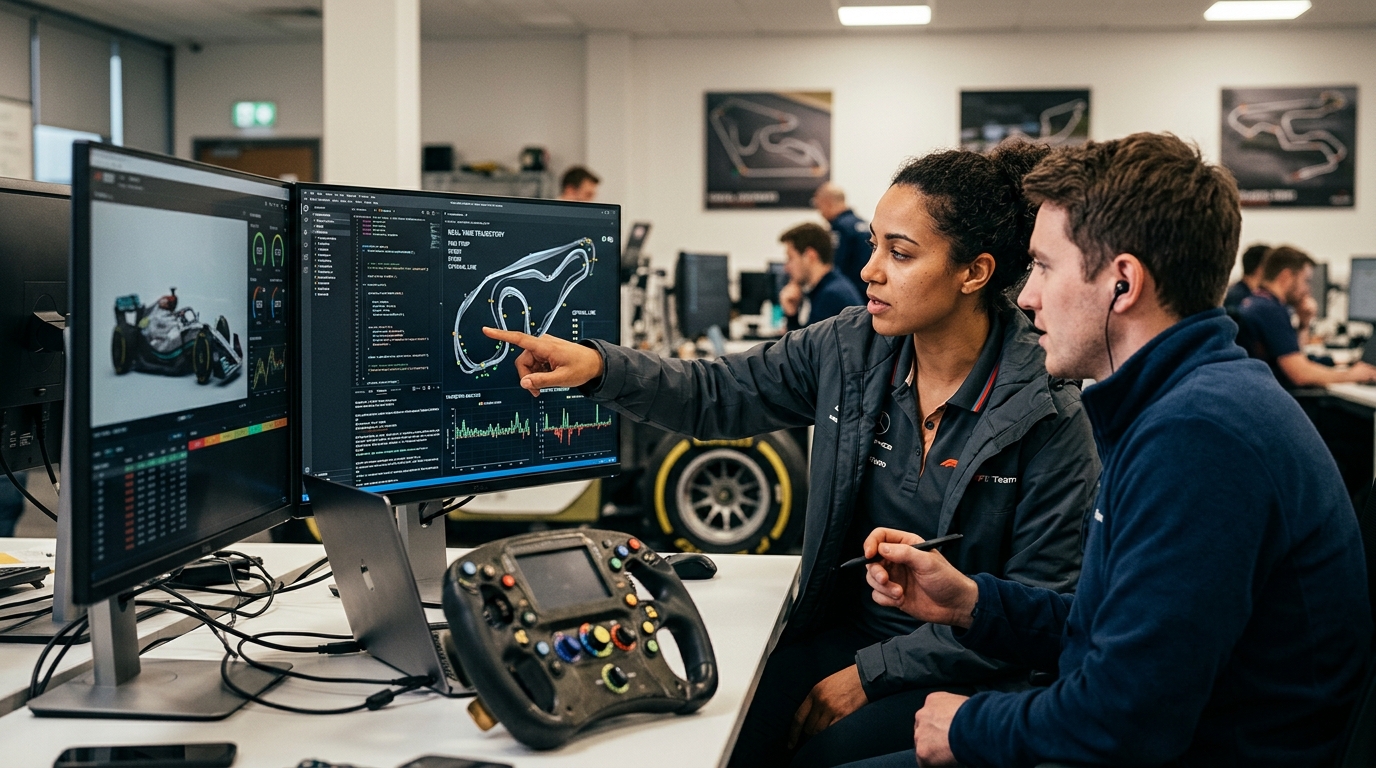
In the world of Formula One, where milliseconds separate glory from obscurity, the traditional image of a mechanic with a wrench has been permanently replaced by a data scientist with neural networks. As we move through 2026, Artificial Intelligence (AI) is no longer a supportive tool but the actual "brain" behind every strategic decision, every aerodynamic curve, and every tire change. Recent industry analysis highlights how AI has become the invisible driver determining the fate of Grand Prix races.
The Strategy of Billions of Scenarios
Once, race strategy relied on a team principal's gut instinct and a few basic tire degradation charts. Today, during a single race, AI systems of top-tier teams like Red Bull Racing and Mercedes-AMG run billions of simulations in real-time. These algorithms process data from thousands of sensors on the car, weather conditions changing by the minute, and competitor behavior.
- Tire wear prediction with 99% accuracy.
- Optimization of pit stop timing (undercut/overcut) based on track traffic.
- Dynamic adjustment of engine mapping for maximum efficiency.
As a senior strategy engineer notes:
"Humans can no longer process the volume of data a modern car produces. AI sees the pattern before it happens. It predicts the Safety Car before the yellow flag is even waved, by analyzing the telemetry of leading drivers."
Digital Twins and Aerodynamic Perfection
The revolution is not limited to race day. Car design has moved entirely into the digital realm through "Digital Twins." Every car has a perfect digital replica where AI tests millions of aerodynamic modifications before a single carbon fiber component is ever manufactured. With FIA-imposed restrictions on wind tunnel testing, computational power and machine learning have become the only "window" for innovation.
The use of Generative AI in design allows teams to discover shapes and solutions that human intuition would have dismissed. AI is not bound by traditional mechanical biases. It seeks absolute performance within the regulatory framework, creating components that look more like organic structures than traditional mechanical parts.
The Driver as a Systems Manager
Where does this leave the driver? In modern Formula One, the pilot's role has mutated. From a "wild knight" of speed, they have become a high-level systems manager. AI provides information via the steering wheel on how to manage battery energy, when to push, and when to conserve, based on projections for the next ten laps.
However, this reliance raises new questions. If AI determines the pace, does driver skill remain the decisive factor? The answer is complex. While AI provides the "map" to victory, execution under 5G pressure remains a deeply human challenge. AI can tell a driver how to take a corner, but the driver is the one who must dare to keep the throttle pinned.
Economic Footprint and the Future
Formula One serves as the ultimate laboratory for the global automotive industry. The AI technologies developed on the tracks today will find their way into tomorrow's electric and autonomous production vehicles. Partnerships with giants like Oracle, AWS, and Google are not just sponsorships but strategic alliances for dominance in data processing.
As we head toward 2030, AI integration will become even deeper. We might see systems that adjust the car's suspension at every centimeter of the track in real-time, using predictive models we haven't even imagined. What is certain is that Formula One is no longer just a race of speed, but a race of intelligence—and the fastest brains are now made of silicon.