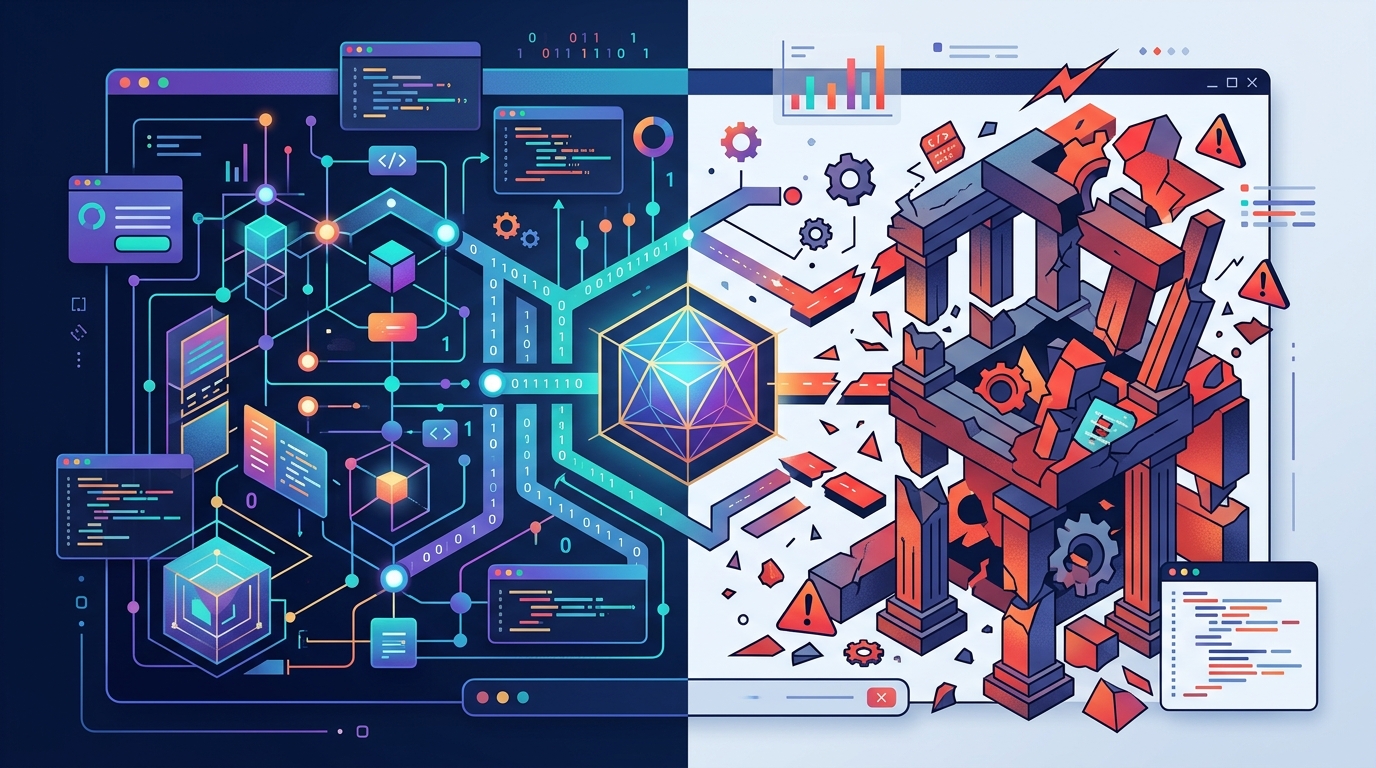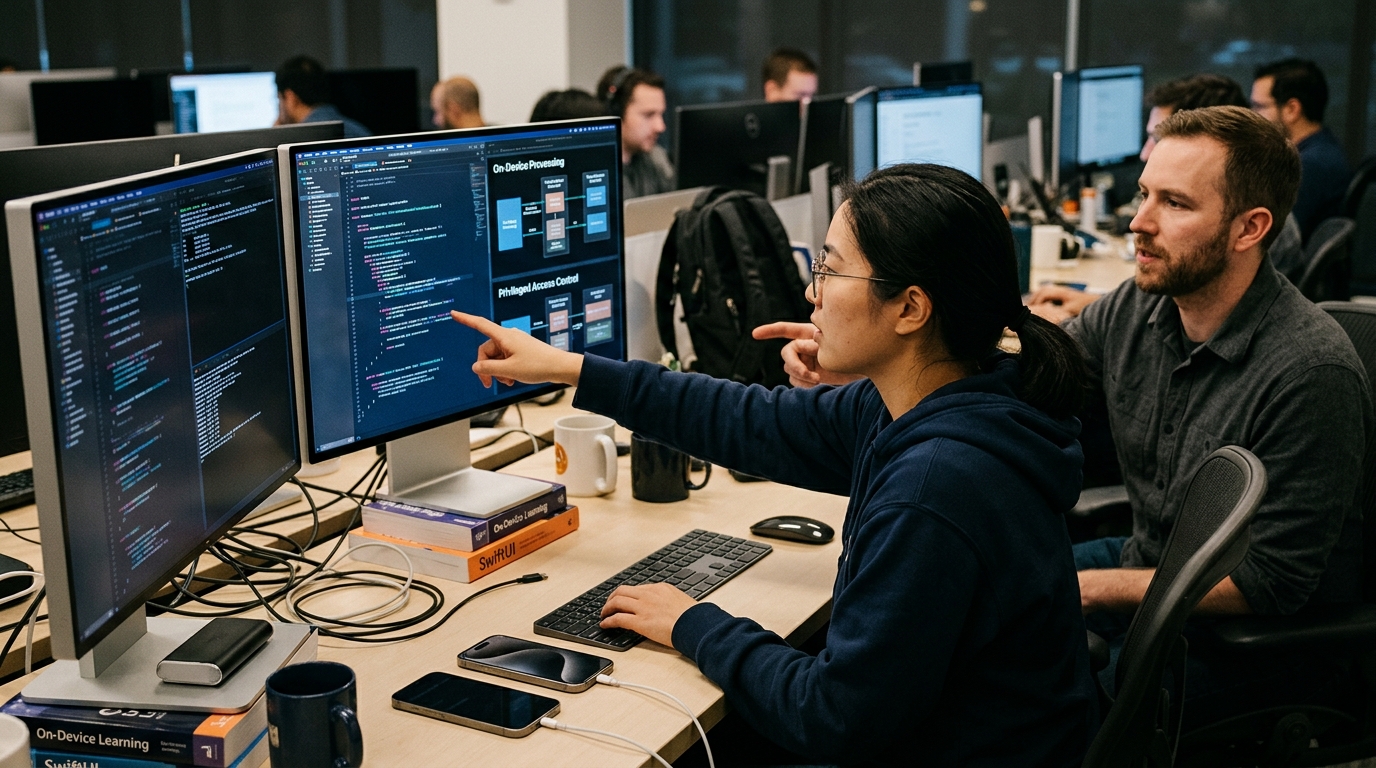
In the chronicle of artificial intelligence, 2026 will likely be remembered as the year the "cult of scale" finally yielded to the "art of orchestration." While previous years saw a relentless arms race to build models with the most parameters, Hugging Face’s recent initiative, specifically the "Thousand Token Wood Sim v2," proves that true intelligence can emerge from the strategic collaboration of Small Language Models (SLMs).
The Rise of the Small Language Models (SLMs)
For a long time, the dominant narrative suggested that achieving complex reasoning required monolithic models that demanded entire data centers to function. However, the new generation of SLMs—models ranging from 1 to 8 billion parameters—has shattered this belief. These "small minds" are now capable of executing specialized tasks with a precision that rivals their massive predecessors, all while consuming a fraction of the energy and cost.
The "five labs, five minds" experiment leverages this exact dynamic. Instead of a single central model trying to grasp every nuance of a financial crisis, the system employs five distinct SLMs, each programmed with a different "personality" and objective. This multi-agent approach allows for the emergence of complex behaviors that mirror real-world market conditions far more accurately than a single viewpoint ever could.
The "Financial Drama" as a Simulation Tool
The use of the word "drama" is intentional. In finance, decisions are not made in a vacuum; they are the result of friction, negotiation, and psychological shifts. The Thousand Token Wood Sim v2 creates an environment where five different "minds" interact within a scenario of limited resources.
- The Analyst: Focused on data integrity and long-term trends.
- The Speculator: Seeking high-risk, short-term gains.
- The Regulator: Attempting to enforce rules and maintain systemic stability.
- The Institutional Investor: Prioritizing capital preservation and steady growth.
- The Disruptor: Introducing random variables and "black swan" events.
What makes this approach unique is the 1,000-token constraint. Each model must articulate its strategy and react to others with extreme brevity. This forces the AI to prioritize information, eliminating the "hallucinatory fluff" often found in larger models when they are given too much room to wander.
Technical Superiority and Decentralization
From a technical standpoint, orchestrating five different "labs" (models) means there is no single point of failure. If one model begins to hallucinate or deviate from its logic, the other four can self-correct the simulation's trajectory through their interactions. It is a digital implementation of institutional checks and balances.
"Complexity is not a matter of size, but of structure. When you give small models specific roles, the result is more organic and reliable than any monolithic entity," the Hugging Face analysis notes.
Furthermore, the ability to run these models locally or on edge devices with limited compute power paves the way for private financial simulations. Banks and investment firms can now run thousands of stress-test scenarios without ever sending sensitive proprietary data to the clouds of major AI providers.
The Future of Autonomous Economic Reasoning
As we move further into 2026, the "small and many" trend is set to dominate. This experiment isn't just about finance; it’s about governance, supply chain management, and social engineering. The ability to build "dramas"—adversarial and collaborative simulation environments—allows humans to predict the consequences of policy decisions before they are enacted in the real world.
The Thousand Token Wood Sim v2 serves as a reminder that AI does not need to be a monolithic god-like entity providing singular answers. Instead, it can be a sophisticated mirror of human complexity, composed of many small, specialized, and cooperating parts that together create something far greater than the sum of their tokens.