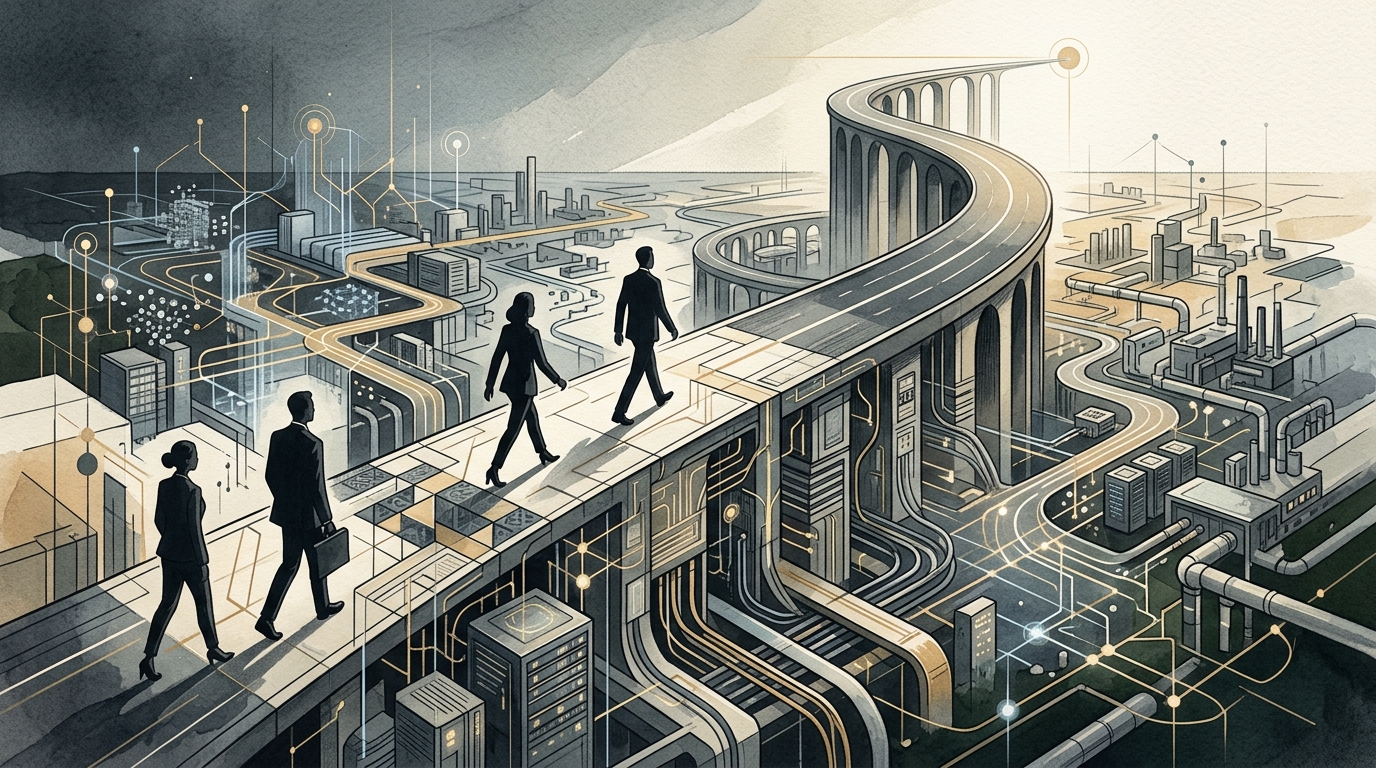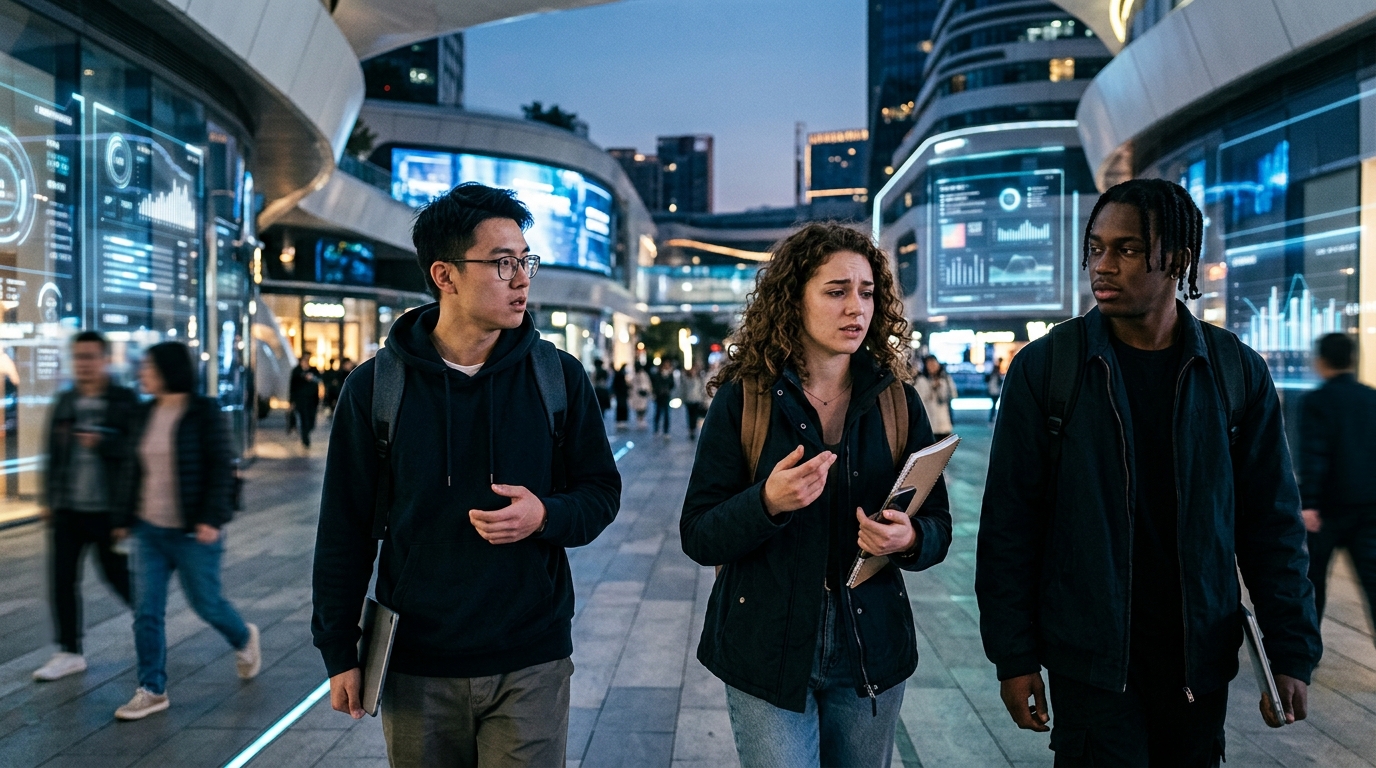
At the dawn of the third decade of the 21st century, education stands at a critical crossroads. While tech giants promise a world where knowledge is accessible at the touch of a button, the primary recipients of this technology—Gen Z—are expressing a deep and unexpected concern. According to recent data reported by KSNV, four in five students believe that Artificial Intelligence (AI) will make the learning process harder, flipping the narrative of 'digital convenience' on its head.
The Erosion of Critical Thinking and Cognitive Offloading
The primary argument from students doesn't concern the technical difficulty of the tools, but rather the quality of the cognitive process itself. The ease with which ChatGPT or Claude can compose an essay or solve a complex calculus problem creates a trap: 'cognitive offloading.' When the brain stops struggling with a problem because the solution is instantaneous, the neural plasticity required for true learning begins to atrophy.
Gen Z students, despite growing up with smartphones in hand, seem to intuitively understand that learning is a process that requires friction. Without this intellectual resistance, knowledge remains superficial. Their fear lies in the possibility that AI will transform education into a purely administrative task, where the ability to synthesize original ideas is replaced by the ability to manage algorithms.
The 'Arms Race' in Academic Assessment
Another dimension of the problem is the reaction of the educational establishment. As universities scramble to maintain academic integrity, assessment methods are becoming increasingly stringent. Many students report that professors, fearing AI-assisted cheating, are hiking the difficulty of exams or returning to archaic methods, such as high-stakes oral exams and pen-and-paper tests without computer access.
This creates a vicious cycle of pressure. Students feel they must prove they are 'smarter than the machine,' while simultaneously being expected to compete in a labor market where AI proficiency is a prerequisite. The feeling that the bar has been raised to unreachable heights, without a corresponding improvement in teaching methodology, is causing intense anxiety and a sense of inadequacy.
The Loss of Human Connection
Beyond the cognitive aspect, education is fundamentally a social experience. Gen Z fears that the deep integration of AI will lead to an isolated form of learning. If a digital assistant can answer every question, the role of the teacher as a mentor and the value of classroom discourse are diminished. Learning is not just the absorption of information; it is interaction, disagreement, and the shared pursuit of truth.
"If I can get the answer in five seconds, I stop asking 'why' the answer is what it is. That's the part that scares me about my own education," says one university sophomore quoted in the study.
The implications are clear: the educational system needs more than just a software update. It needs a structural redesign that prioritizes human-centric skills that AI cannot replicate—empathy, ethical judgment, and complex problem-solving in real-world contexts.
- Over-reliance on AI may lead to the atrophy of foundational research skills.
- Job market competition is intensifying as entry-level tasks become automated.
- Student mental health is strained by the constant need to 'prove' human uniqueness.
In conclusion, Gen Z's resistance to AI is not a form of Ludditism, but a plea to preserve the essence of human cognition. The challenge for the future is not how to cram more technology into classrooms, but how to redefine learning as a process that AI enhances without ever replacing the human element.