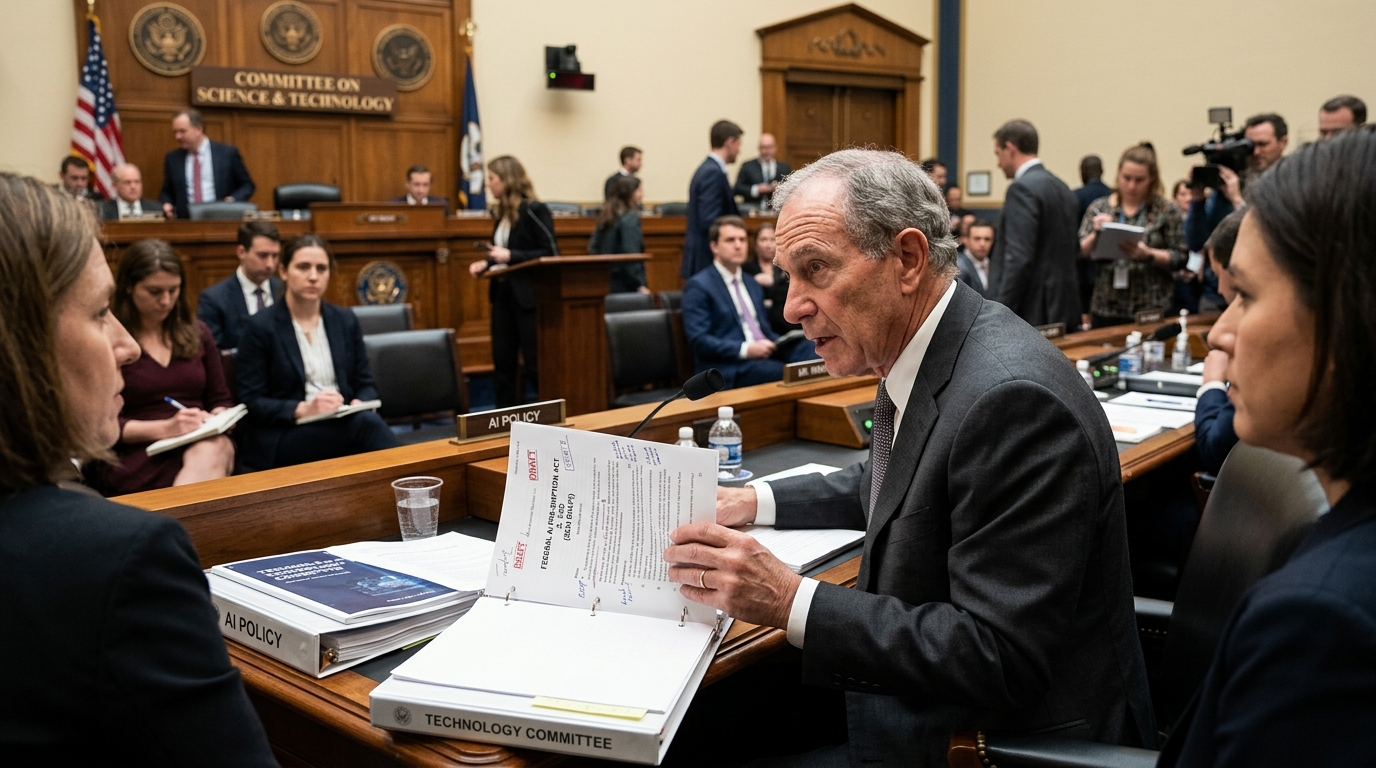
In a move poised to fundamentally alter the regulatory landscape of artificial intelligence in the United States, a new federal bill introduced in Congress proposes a drastic "cooling-off period." According to the draft text, the federal government would gain near-exclusive jurisdiction over AI regulation for a period of three years, effectively barring states from enacting or enforcing their own laws that conflict with national standards. This maneuver, known as "pre-emption," represents the climax of a long-standing friction between Silicon Valley, Washington D.C., and progressive states like California.
The "Single Market" Strategy
Proponents of the bill argue that the current trajectory—where every state from Colorado to New York is passing its own rules on algorithmic bias, deepfakes, and model safety—is creating a "patchwork" of regulations that stifles innovation. For Big Tech, complying with 50 different legal regimes is not just expensive; it is a logistical nightmare. The three-year moratorium aims to establish a single "rule of the road," allowing American companies to compete with China and the European Union without the friction of internal regulatory borders.
However, the three-year duration is not arbitrary. It is viewed as a strategic window to allow federal agencies, such as the National Institute of Standards and Technology (NIST), to finalize technical standards that would apply nationwide. The burning question remains: what happens to existing state laws? The bill suggests many of these would be "frozen," a move that has drawn the ire of State Attorneys General who believe Washington is moving too slowly to protect the public from immediate AI harms.
The California Resistance and Civil Rights Concerns
California, historically the "laboratory" of American legislation, finds itself at the epicenter of this clash. Following the success of the CCPA regarding data privacy, the state has attempted to pass rigorous laws concerning AI developer liability for catastrophic events. Critics of the federal bill argue that pre-emption could be a "Trojan horse" used to dilute safety standards. Specifically, civil rights organizations warn that if federal law remains weaker than state law, the three-year pre-emption will leave consumers vulnerable to algorithmic discrimination without any local legal recourse.
- States would lose the power to impose stricter penalties than the federal government.
- AI oversight would shift exclusively to federal agencies with limited manpower.
- There is a risk of a "regulatory vacuum" if federal guidelines are delayed beyond the moratorium.
"Innovation requires certainty, but safety requires local vigilance. Attempting to silence the states is a dangerous concession to industry lobbyists," remarked a senior member of the Senate Judiciary Committee.
Geopolitical Implications and the Path Ahead
On a global stage, the U.S. is striving to present a united front. With the European Union's AI Act already in force, Washington fears that without a cohesive federal law, the "Brussels Effect" will dictate global norms by default. The three-year pre-emption of state laws is seen by some as a necessary sacrifice to maintain American technological hegemony. If the U.S. can establish a stable, unified framework, it could attract more investment and lead the charge in setting international standards for ethical AI.
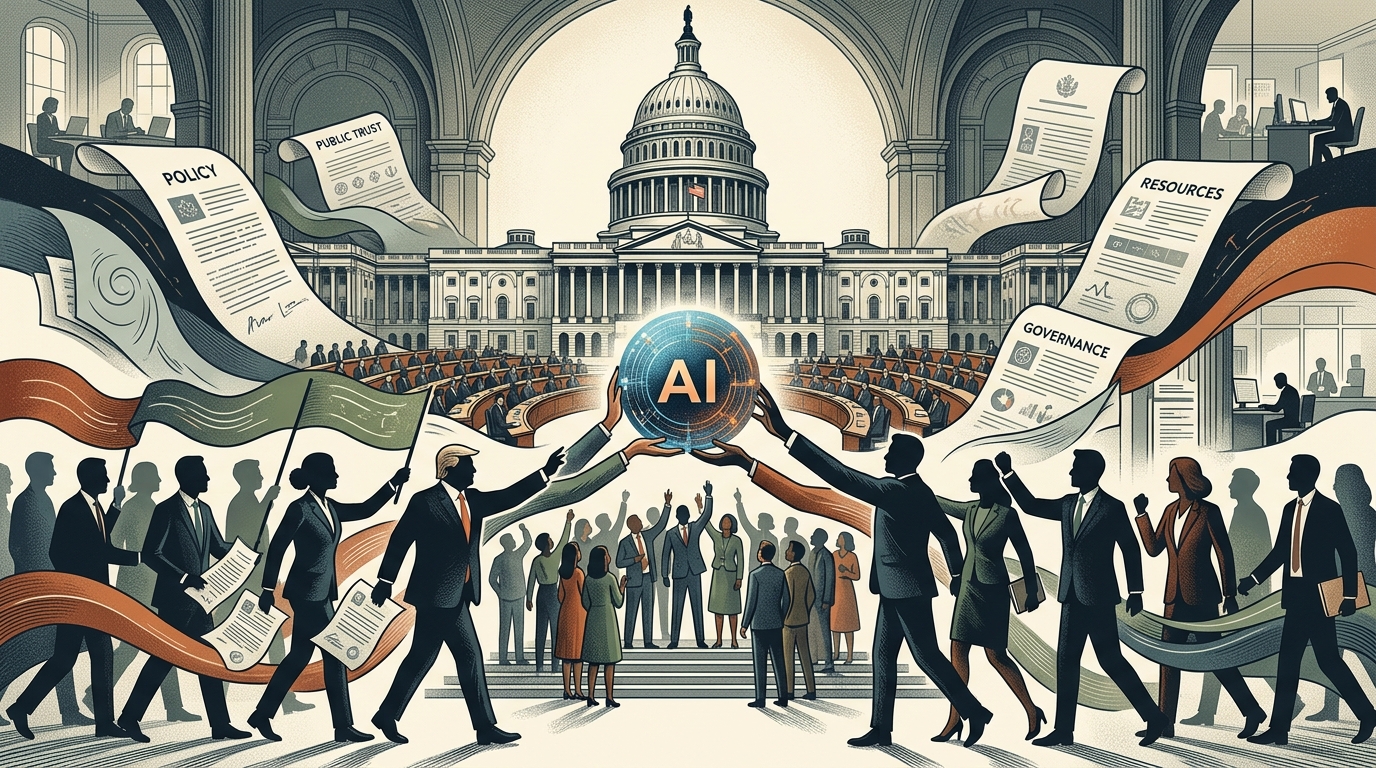
As we move through 2026, the battle in Congress is expected to be fierce. Democrats are pushing for "regulatory floors"—minimum protections that states can build upon—while Republicans are advocating for total federal supremacy to prevent "regulatory strangulation." The outcome of this legislative push will determine whether AI evolves in a free-market environment or under a rigid, centrally controlled framework. The stakes for the next decade of American technology have never been higher.