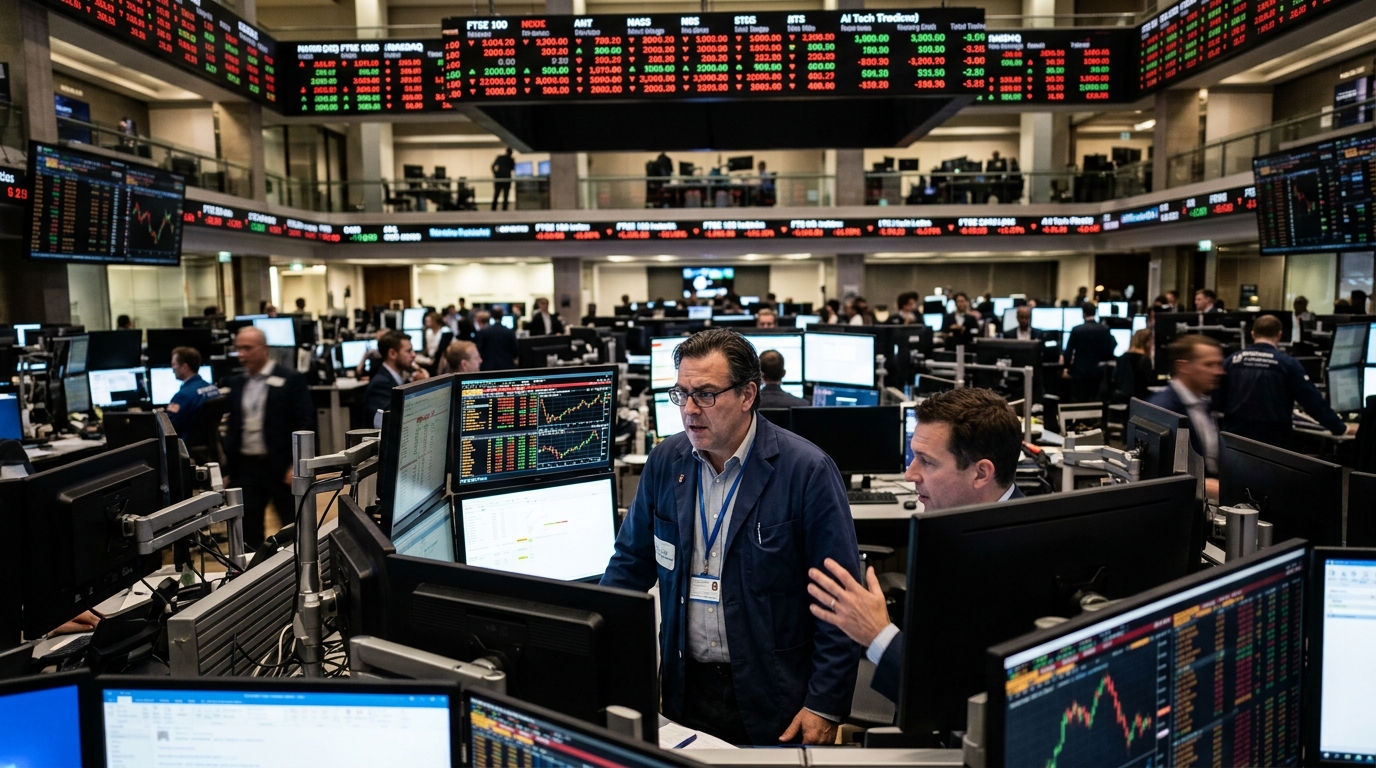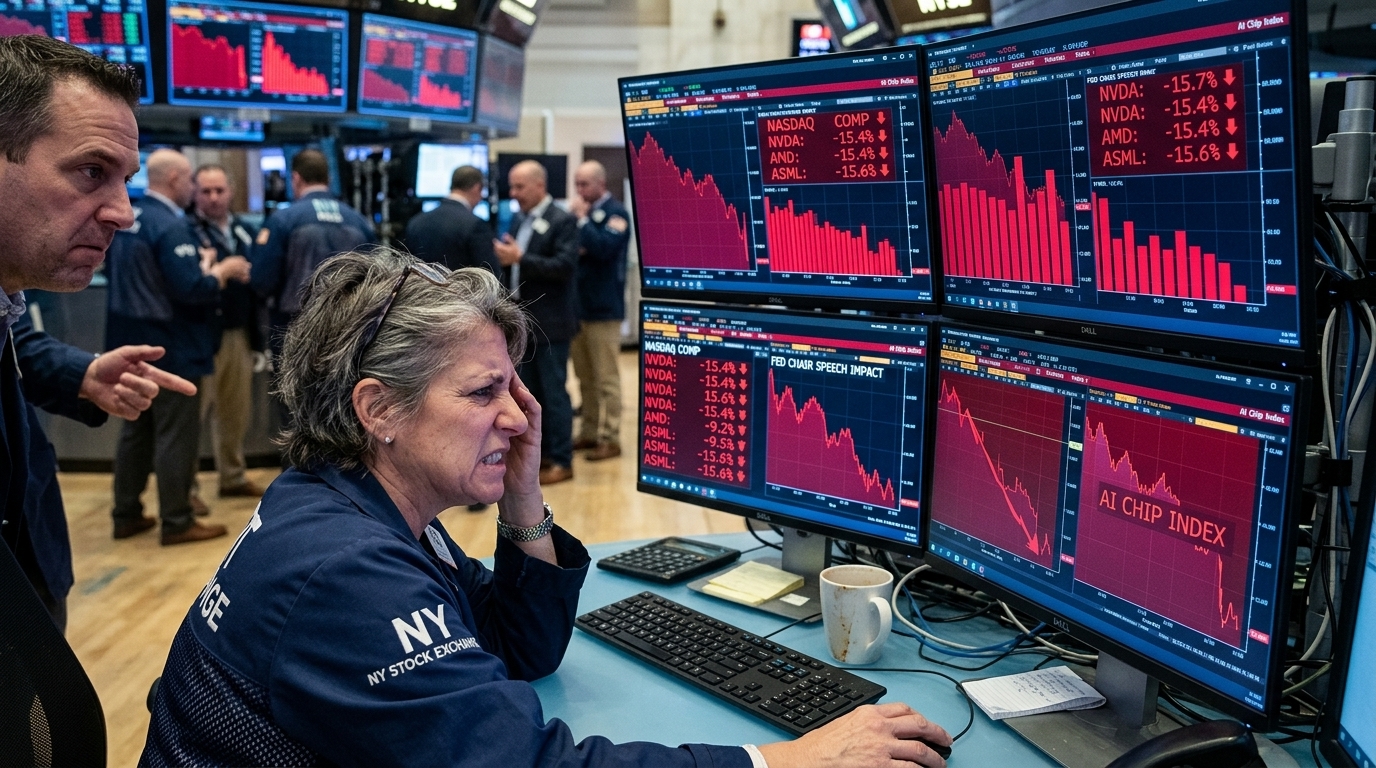
June 6, 2026, will likely be remembered as the day Wall Street confronted the limits of its optimism. The technology sector, which for nearly three years fueled an unprecedented rally based on the promise of Artificial Intelligence (AI), underwent a violent correction. This sell-off was not merely a technical retreat but a coordinated reaction to two major pressures: the Federal Reserve's persistence with high interest rates and growing investor skepticism regarding when the chip-driven revolution will translate into real-world economic gains.
The Interest Rate Trap and the Labor Market
Despite hopes for a more accommodative monetary policy, recent US employment data showed a labor market that, while not "overheating," remains stubbornly stable. The lack of a reacceleration in wage growth over recent months points to a labor market that is stable but not hot. For tech companies—which rely on cheap capital to fund the massive infrastructure required for AI—prolonged high interest rates act as a financial chokehold.
Investors, seeing the cost of capital remain elevated, have begun to reassess the valuations of industry titans like Nvidia, AMD, and TSMC. The logic is simple: if money remains expensive, expectations for future growth must be ironclad. When the profitability of AI applications in everyday business lags behind the hype, the market bubble begins to lose air rapidly.
The End of the Semiconductor 'El Dorado'?
For many analysts, the current downturn marks the end of the first phase of the AI revolution—the "shovels and axes" phase. Just as in the gold rush, those who profited first were the equipment suppliers. However, the market is now starting to ask: "Where is the gold?" Major software companies and cloud providers have spent hundreds of billions on next-generation chips, yet end-user adoption and productivity gains have not yet reached levels that justify current market capitalizations.
- Nvidia saw its stock slide by 8% in a single trading session.
- Concerns over a potential chip oversupply in the second half of 2026 are intensifying.
- Geopolitical instability in East Asia adds a risk premium that investors are no longer willing to ignore.
"The labor market is stable, but not hot. This is the worst-case scenario for tech bulls, as it gives the Fed no reason to pivot or provide a safety net," notes a senior analyst at Fortune AI.
Panic Psychology and the Path Forward
The tech slide dragged down broader indices, creating a sense of a "bloodbath" across international markets. Investor psychology has shifted from FOMO (Fear Of Missing Out) to FUD (Fear, Uncertainty, Doubt). The underlying fear is that if AI does not yield immediate fruits, we may face a repeat of the dot-com bubble, but with much higher stakes for the global economy.
Nevertheless, composure remains the best advisor. AI technology is not a passing fad; it is a structural shift. The correction we are witnessing might be the necessary "decompression" that allows healthier market forces to emerge. The question is not whether AI will change the world, but who will survive financially until that transformation is complete. The coming months will be critical, as companies will be forced to present tangible results rather than just promises of a digital utopia.