In an era where the climate crisis is no longer a distant threat but a daily reality, the construction industry —responsible for nearly 40% of global carbon emissions— stands at a critical crossroads. The search for materials that not only reduce environmental impact but also act as carbon "sinks" is leading to an unexpected return to roots. Hempcrete, a composite of industrial hemp, lime, and water, is not just an alternative solution; it is a structural disruption promising to change the way we live.
The Science Behind Hempcrete
This material is produced from the woody core of the hemp plant (shives), mixed with a lime-based binder. The result is a lightweight yet extremely durable composite material. Its superiority over traditional concrete in insulation power is legendary: hempcrete insulates up to 15 times better than cement. This is due to the plant's porous structure, which traps air and creates a natural thermal barrier.
However, the real innovation lies in the material's "breathability." Unlike modern insulations that hermetically seal buildings, hempcrete is hygroscopic. It absorbs and releases moisture, naturally regulating the internal climate and preventing mold growth. This makes it ideal for Mediterranean climates, where temperature fluctuations and humidity pose challenges to building longevity.
Carbon Negative: The Material That "Cleans" the Atmosphere
While producing one ton of cement releases approximately one ton of CO2 into the atmosphere, hempcrete works in reverse. Hemp, during its rapid growth (reaching full maturity in less than 4 months), absorbs vast amounts of carbon through photosynthesis. This carbon is "locked" within the building's walls for decades.
- Carbon Sequestration: It is estimated that one cubic meter of hemp wall can store up to 110 kg of CO2.
- Energy Efficiency: Reduction in heating and cooling needs reaches 50% compared to conventional structures.
- Fire Resistance: Despite its plant origin, the combination with lime makes the material non-combustible and highly fire-resistant.
These characteristics make it the ultimate ally for achieving the goals of the European Green Deal, which requires zero-emission buildings by 2050.
Hurdles and the Future of the Market
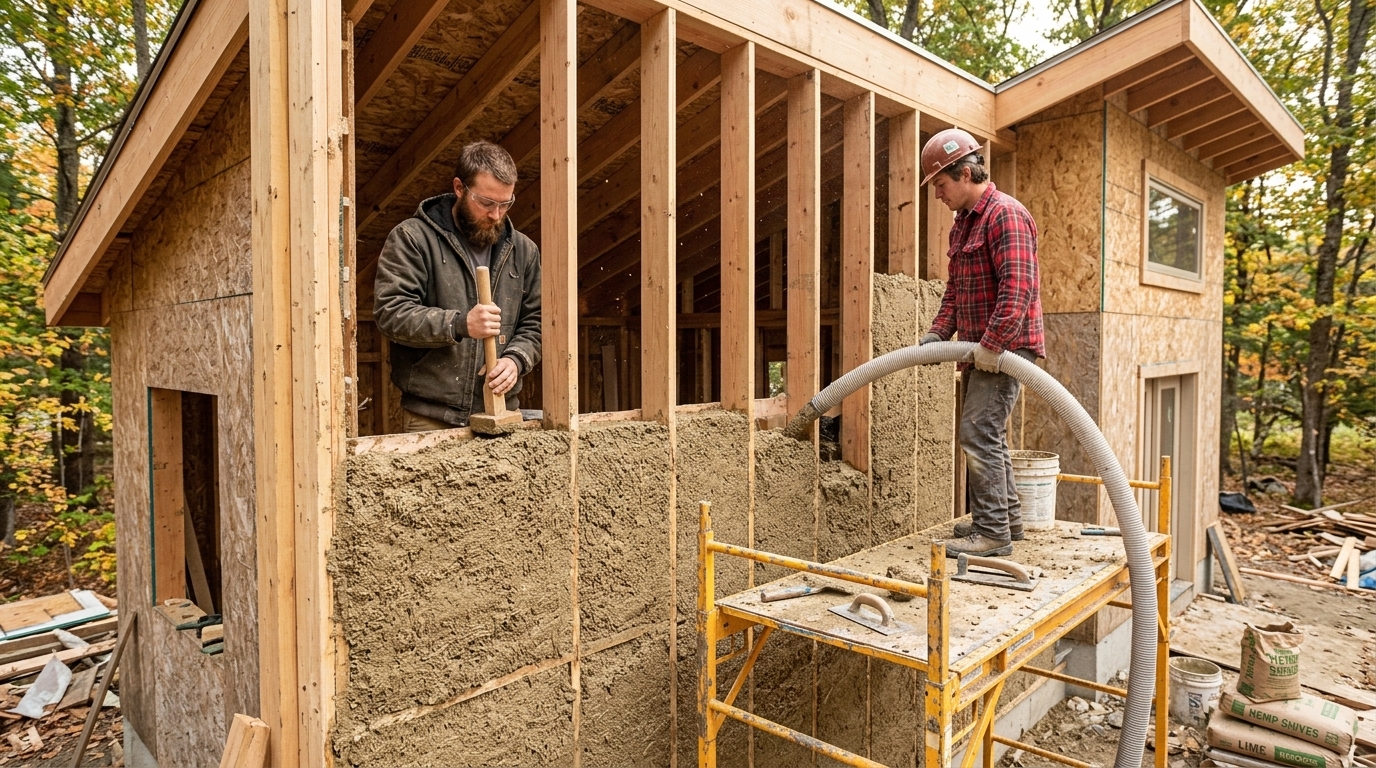
Despite the benefits, the adoption of hempcrete faces obstacles. The primary one is the lack of industrial infrastructure for processing hemp on a large scale. In many regions, including parts of Southern Europe, while industrial hemp cultivation is legal, the supply chain remains in its infancy. Furthermore, hempcrete is not a load-bearing material, meaning it requires a frame (usually timber or steel) to support the building's weight.
"We are not just building walls; we are creating a living organism that protects both the occupant and the planet simultaneously," say architects specializing in bioclimatic design.
The outlook, however, is bright. With rising energy prices and the imposition of carbon taxes on traditional building materials, the economic advantage of hemp will soon become indisputable. Countries with a tradition in lime use and an ideal climate for hemp cultivation could evolve into regional hubs for ecological building materials, merging agricultural production with high-tech construction.