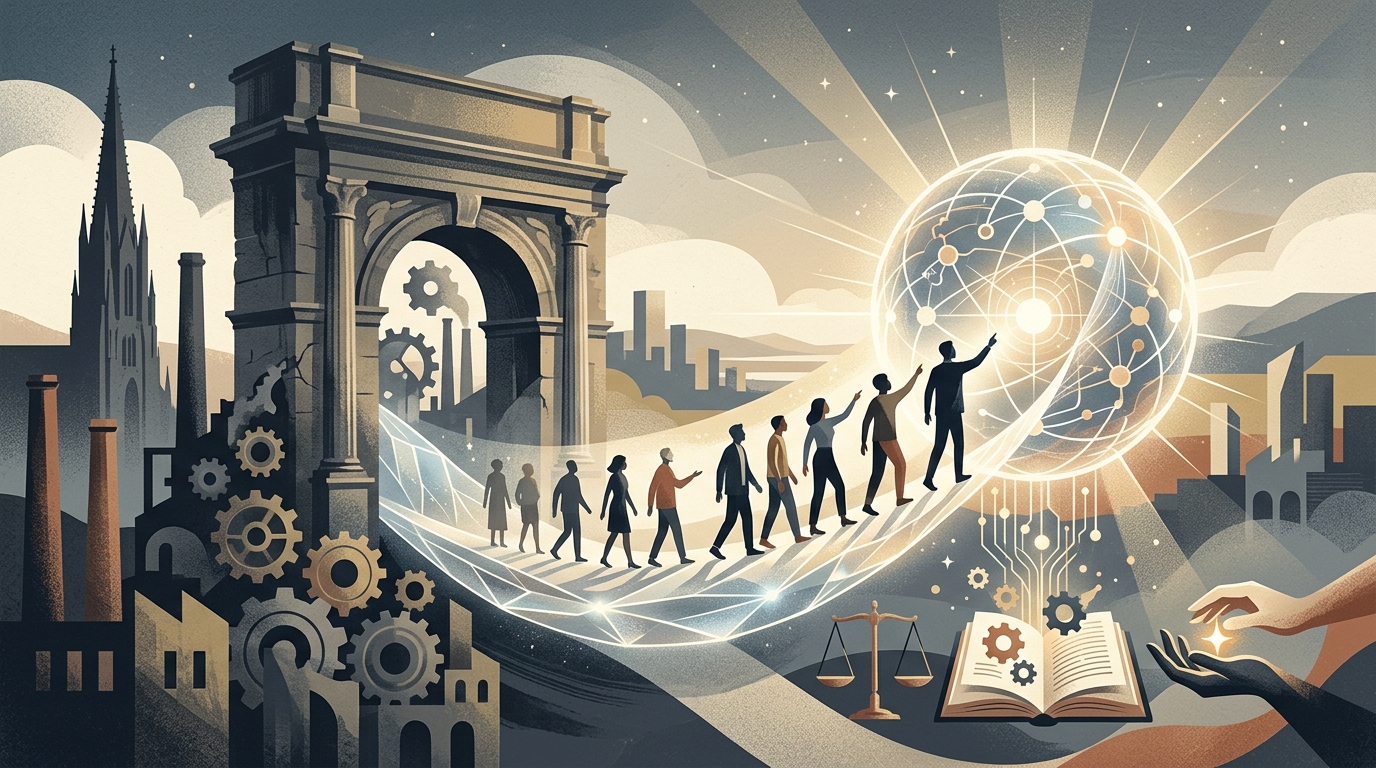
In a move already being hailed as a landmark for 21st-century technological ethics, Pope Leo has unveiled his latest encyclical, titled *Magnifica Humanitas* (Magnificent Humanity). The document, spanning hundreds of pages, is far more than a theological position paper; it is a stern warning to the global community: the advent of Artificial Intelligence (AI) is not merely a technological evolution, but a transformation with "even greater consequences" than those of the Industrial Revolution of the 18th and 19th centuries.
The comparison to the Industrial Revolution is deliberate. While that era fundamentally altered how humans utilized physical strength and natural energy, the AI revolution touches the very core of human identity: cognition, decision-making, and creativity itself. The Pontiff emphasizes that we are facing a "tectonic shift" that threatens to redefine what it means to be human in a world increasingly governed by algorithms.
The Devaluation of Labor and the Spiritual Crisis
One of the central themes of the encyclical is the impact of automation on human labor. Pope Leo argues that work is not just a means of survival, but a fundamental element of human dignity and participation in divine creation. "When the machine does not merely replace the hand, but also the thought, we risk driving vast segments of humanity into a state of spiritual and social uselessness," the text states with chilling clarity.
The encyclical sharply criticizes the model of "technocratic paradigm," where efficiency and profit are prioritized over human well-being. The Pope urges governments not to settle for simplistic solutions like Universal Basic Income (UBI) if they are not accompanied by efforts to preserve the meaning of human contribution to society. Labor, according to the Vatican, is the bond that holds communities together, and its disintegration through AI could lead to unprecedented social isolation.
Algor-ethics: The Need for a Global Code
Pope Leo introduces the term "Algor-ethics," calling for the establishment of a binding international legal framework to ensure AI is developed with an ethical compass. The encyclical highlights the dangers of algorithmic bias, digital surveillance, and the use of autonomous weapon systems. "We cannot allow opaque codes to decide upon the life, death, or liberty of the children of God," the document asserts.
- The necessity for transparency in decision-making algorithms.
- The protection of personal data as a human right, not a marketable commodity.
- A ban on using AI for social scoring of citizens.
- Ensuring that the final decision in critical matters (justice, health, war) always remains in human hands.
Particular emphasis is placed on the risk of a new form of "digital colonialism," where wealthy nations and giant tech corporations control AI infrastructure, leaving the Global South in a state of permanent dependency. The Pope calls for a "democratization of knowledge" and for the shared benefits of technology to reach the most vulnerable communities.
The Challenge of Truth in the Age of Deepfakes
In a chapter dedicated to communication, *Magnifica Humanitas* analyzes the erosion of objective truth. The ease with which generative AI can construct fake realities (deepfakes) and manipulate public opinion constitutes, according to the Pope, a threat to democracy and social peace. The encyclical calls on the faithful and all people of goodwill to cultivate critical thinking and seek "authentic encounters" beyond the digital screen.
"Technology is a gift, but when the gift becomes an idol, man becomes a slave. Artificial Intelligence must be the tool that helps us solve humanity's great problems—such as climate change and hunger—not a mirror of our narcissism or a weapon in the hands of the few."
In closing, Pope Leo issues a direct appeal to scientists and developers, reminding them that their responsibility is sacred. *Magnifica Humanitas* is not a cry against progress, but an invitation to a progress that is truly human, ensuring that the machine will always remain at the service of the person and never the other way around.