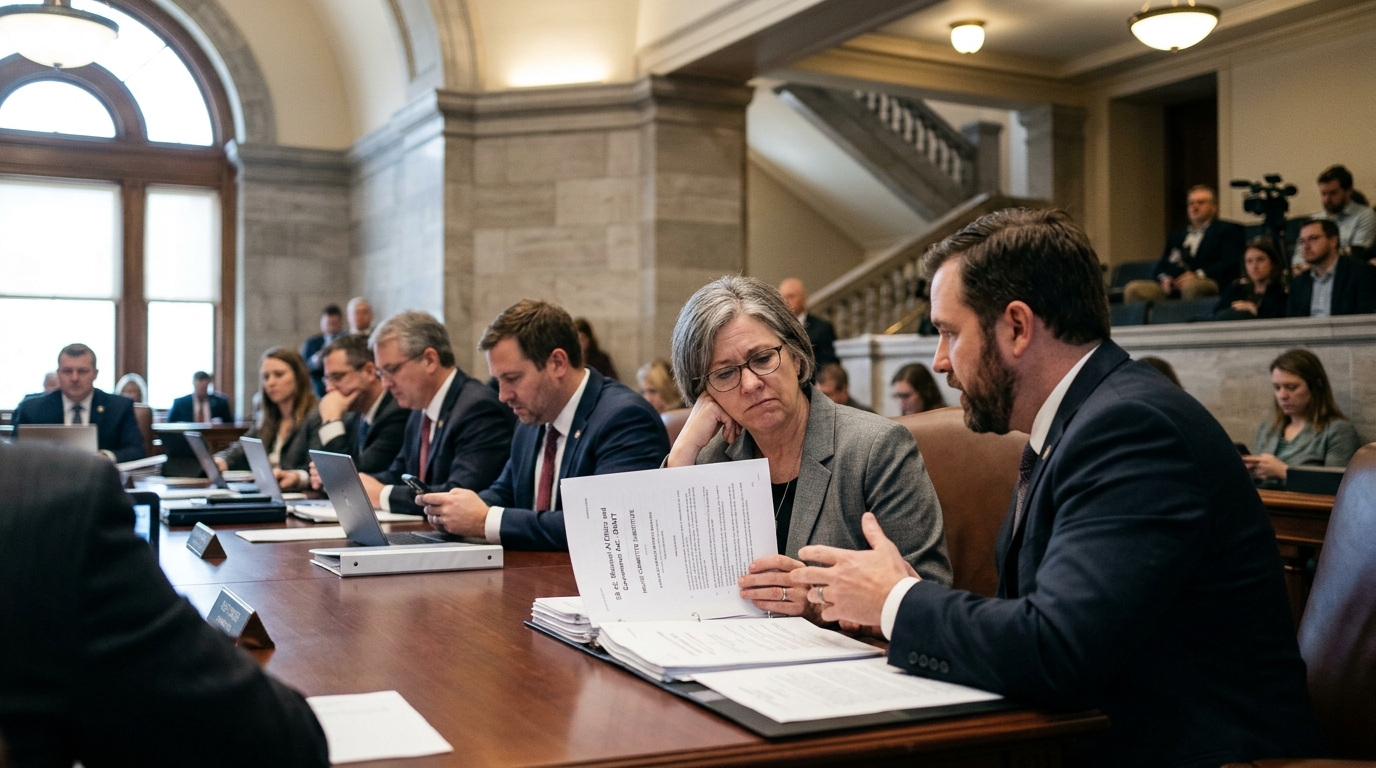
As the gavel fell on the 2026 legislative session in Jefferson City, Missouri found itself in a familiar yet precarious position: a complete legislative void regarding Artificial Intelligence. Despite months of heated debate, expert testimony, and mounting public pressure, none of the proposed AI regulations managed to clear the final hurdles to reach the Governor’s desk. This failure leaves Missouri exposed at a time when technology is evolving significantly faster than the bureaucracy meant to oversee it.
The Anatomy of Legislative Paralysis
The failure was not due to a lack of proposals. Throughout the session, lawmakers introduced bills covering a wide spectrum of concerns, from banning deepfakes in political campaigns to mandating transparency in algorithms used for credit scoring and hiring. However, a clash of interests between Big Tech lobbyists, local business interests, and civil liberties advocates created an insurmountable wall of gridlock.
Critics of the inaction argue that Missouri is missing a crucial opportunity to lead, as states like Colorado and California have attempted to do. Instead, the "Show Me State" has opted for a "wait and see" approach. This stance, however, is fraught with risk. Without a clear framework, citizens remain unprotected against malicious uses of AI, while businesses operate in a state of uncertainty that could ultimately stifle long-term investment.
Deepfakes and the Integrity of the 2026 Elections
The most contentious issue of the session was the deployment of AI in the electoral process. With the 2026 midterms looming, there was an urgent push to regulate digitally altered content. One specific bill, which would have required clear disclosure labels on any political advertisement featuring AI-generated likenesses, stalled in committee due to concerns over First Amendment rights. Lawmakers could not reach a consensus on where creative expression ends and voter deception begins.
- The lack of deepfake regulation leaves the door wide open for sophisticated disinformation campaigns.
- Candidates lack immediate legal recourse to combat digital character assassination.
- Public trust in the authenticity of political discourse faces further erosion.
The Tech Lobby and the Economic Argument
It is no secret that major technology firms exerted significant lobbying pressure. Their argument was straightforward: state-level regulation creates a "patchwork" of inconsistent laws that are impossible for companies to navigate, thereby stifling innovation. They advocated for a federal solution from Congress, likely aware that federal action is historically much slower and often more diluted.
"If we regulate AI in a way that punishes local development, we are simply exporting high-tech jobs to neighboring states," a representative from the Missouri Chamber of Commerce noted during a hearing.
This "economy first" approach seemingly won the day in the 2026 session. However, the victory may be pyrrhic. The demand for privacy protections and algorithmic accountability is only expected to grow as AI misuse becomes more prevalent in the daily lives of Missourians.
Conclusion: A Missed Opportunity for Safety
Missouri's failure to act in 2026 is a microcosm of a broader national struggle. Technological progress does not wait for the political system to find its footing. As we move into the latter half of 2026, Missouri citizens will have to navigate an increasingly AI-driven world without the safety net their lawmakers promised but failed to deliver. The next session will likely face even higher stakes as the consequences of this year's inaction begin to manifest.