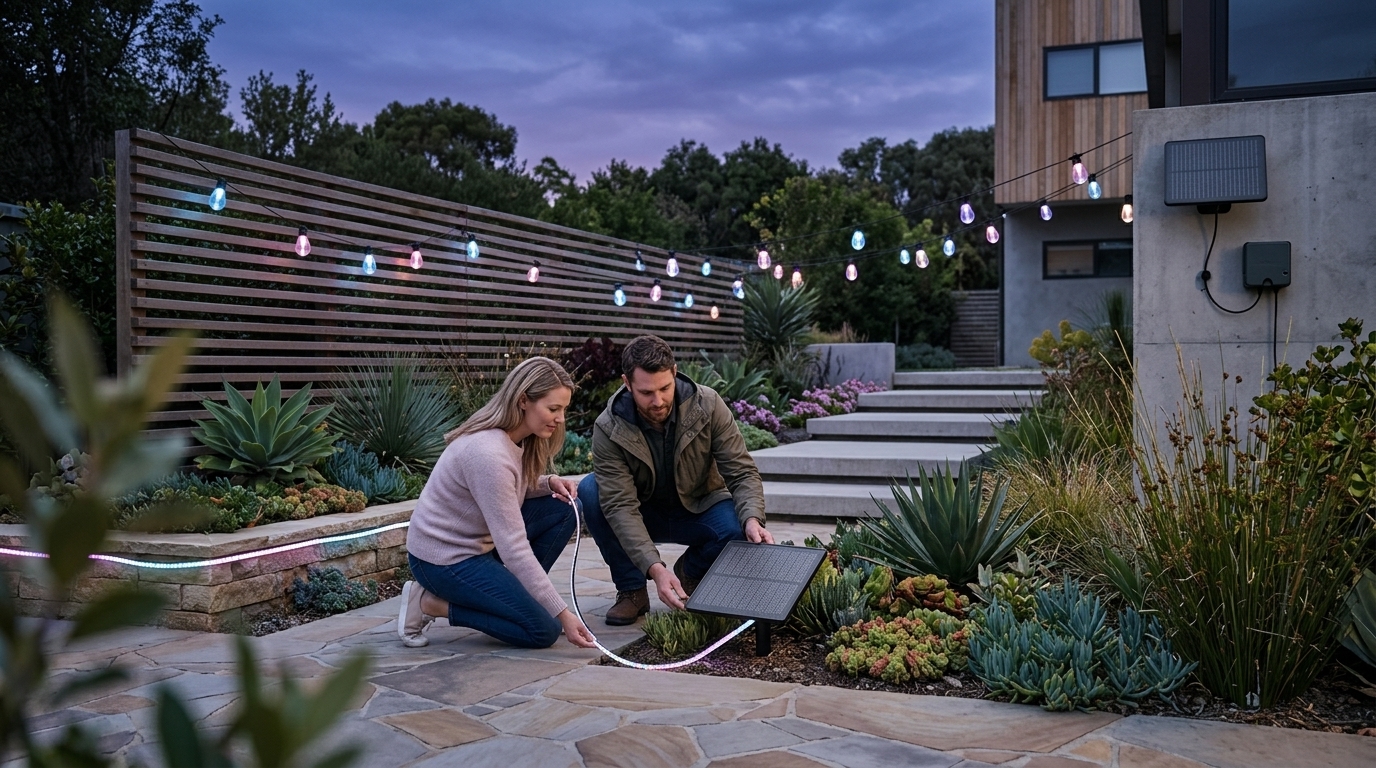
The smart home market is entering a phase of maturity where innovation is no longer just about what a device can do, but how it is powered. Govee, a company that has established itself as the primary challenger to Philips Hue in the decorative lighting space, has taken the next logical step: harnessing solar energy. The new Govee Outdoor Solar String Lights are not just another set of fairy lights; they represent a significant shift toward infrastructure-free lighting, lowering the barrier to entry for landscape beautification.
Technical Prowess and Energy Autonomy
The primary feature distinguishing Govee’s new offering is the 6W solar panel. Paired with an integrated 4,800mAh battery, the system promises a full charge with just a single day of sunlight. However, the true brilliance of the design lies in the admission that the sun is not always reliable. Govee has included a USB-C port, allowing users to manually charge the lights during the winter months or extended periods of overcast weather. This hybrid approach solves the biggest pain point of traditional solar lights: their inherent unreliability in less-than-ideal climates.
From a technical standpoint, the lights utilize the company’s proprietary RGBIC technology. Unlike standard RGB lights, where every LED displays the same color simultaneously, RGBIC allows each bulb in the string to display a different color. This opens the door to complex motion effects, gradients, and scenes that can be synchronized with music via the Govee Home app. Durability is also a key factor, with an IP65 rating for both the lights and the panel, ensuring that rain, snow, and dust will not compromise their operation.
The Strategic Importance of Wire-Free Installation
For the average homeowner, installing outdoor lighting has always been a logistical headache, often requiring an electrician. The need for outdoor outlets and the labor of hiding cables limited creativity. Govee’s solar lights eliminate these constraints. They can be placed in remote corners of a garden, on fences, or on pergolas where power access is non-existent. This "democratization" of landscape lighting is a trend we are seeing gain momentum as consumers seek DIY (Do-It-Yourself) solutions that deliver professional-grade results.
"The transition to solar energy is no longer an ecological luxury but a practical necessity for the modern household seeking autonomy and flexibility," say market analysts.
Furthermore, the integration into the smart home ecosystem remains robust. The lights support Wi-Fi and Bluetooth control and are compatible with Alexa and Google Assistant. While Govee has not yet confirmed full Matter protocol support for this specific model, the company’s recent history suggests a move in that direction, aiming for seamless interoperability across different platforms.
Economics and Environmental Footprint
In an era where energy costs remain volatile, using solar power for decorative purposes is a savvy financial move. Although the initial purchase cost may be higher than a standard set of plug-in lights, the return on investment comes through zero operating costs. Additionally, reducing reliance on the grid contributes to lowering a household’s carbon footprint, a factor becoming increasingly important to Millennial and Gen Z homeowners.
However, challenges remain. The longevity of lithium batteries in extreme temperatures (excessive heat or cold) is an issue Govee must address through thermal management within the solar panel housing. Furthermore, the efficiency of solar cells tends to degrade over years, meaning the device has a finite lifespan compared to traditional wired systems. Despite these hurdles, the convenience and aesthetic appeal offered by Govee’s new lights make them a compelling choice for those looking to upgrade their outdoor living space with minimal effort and maximum visual impact.