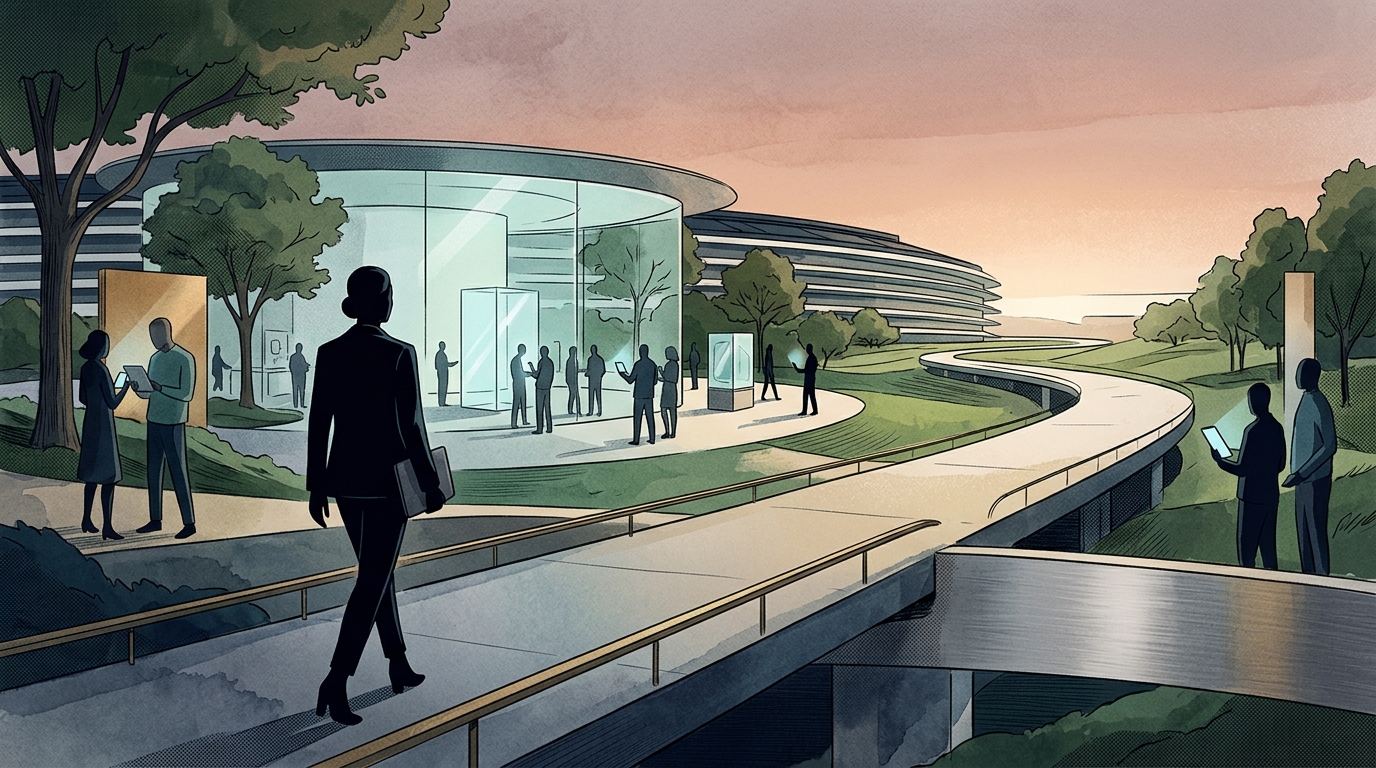
When Tim Cook took the helm of Apple in 2011, his mission seemed nearly impossible: to succeed a visionary who had become synonymous with the company's very existence. Thirteen years later, Cook has not only survived but transformed Apple into a multi-trillion-dollar financial empire, emphasizing operational excellence and services. However, the news that Cook is preparing to step down this coming September, with John Ternus emerging as the leading successor, is not just a change of face, but a radical shift in philosophy for the Cupertino tech giant.
The Legacy of Operational Mastery
Tim Cook will go down in history as the CEO who perfected the supply chain. Under his leadership, Apple ceased to be a company relying solely on individual "magical" products and became a profit-generating machine. Cook's strategy focused on expanding the ecosystem through services (Apple Music, iCloud, Apple TV+) and squeezing every margin out of the iPhone. Despite criticisms that Apple lost its innovative spark, shareholders were rewarded with a stock price that soared to unprecedented heights.
Yet, the Cook era is drawing to a close amidst a shifting global landscape. Pressure from regulators in the European Union and the US, the need to decouple from Chinese manufacturing, and a delayed entry into the AI race demand a different type of leader. John Ternus, the current Senior Vice President of Hardware Engineering, appears to be Apple's answer to these challenges.
John Ternus: A Return to the Product
The choice of Ternus is a clear signal that Apple wants to return to its roots: hardware. Ternus was the driving force behind Apple's transition to its own chips (Apple Silicon), a move considered the most significant technical achievement for the company in the last decade. Unlike Cook, who comes from an operations background, Ternus is an engineer. His ascent suggests that Apple recognizes its future success will not depend solely on subscriptions, but on its ability to create devices that change the world once again.
The challenge for Ternus is twofold. First, he must integrate artificial intelligence (Apple Intelligence) across the company's product range in a way that feels natural and secure. Second, he must prove that the Vision Pro is not just an expensive experiment, but the beginning of "spatial computing" that will eventually replace the iPhone. Ternus is regarded by many within the company as a "soldier" who commands the respect of engineers, something that may help revitalize Apple's creative culture.
Geopolitical and Regulatory Hurdles
The new CEO will not be judged solely by pixels and processors. Apple is in the crosshairs of antitrust authorities worldwide. The Digital Markets Act (DMA) in Europe is forcing Apple to open its closed ecosystem, allowing alternative app stores. This strikes at the core of Cook's strategy of controlling the user experience and revenue streams.
- Managing relations with China remains a thorn in Apple's side, as production gradually shifts to India and Vietnam.
- Artificial intelligence requires massive resources and partnerships (such as with OpenAI), testing Apple's traditional insistence on internal control.
- Maintaining high profit margins in a saturated smartphone market requires new revenue streams that may take time to mature.
"Apple is no longer a startup. It is an institution, and leadership change in an institution requires delicate handling so as not to lose its identity," say Wall Street analysts.
In conclusion, Tim Cook's departure marks the end of the "golden era of efficiency" and the beginning of a period where Apple will have to reinvent itself. John Ternus has the technical background, but it remains to be seen if he possesses the political and strategic weight to navigate a world that is no longer as friendly to tech giants.