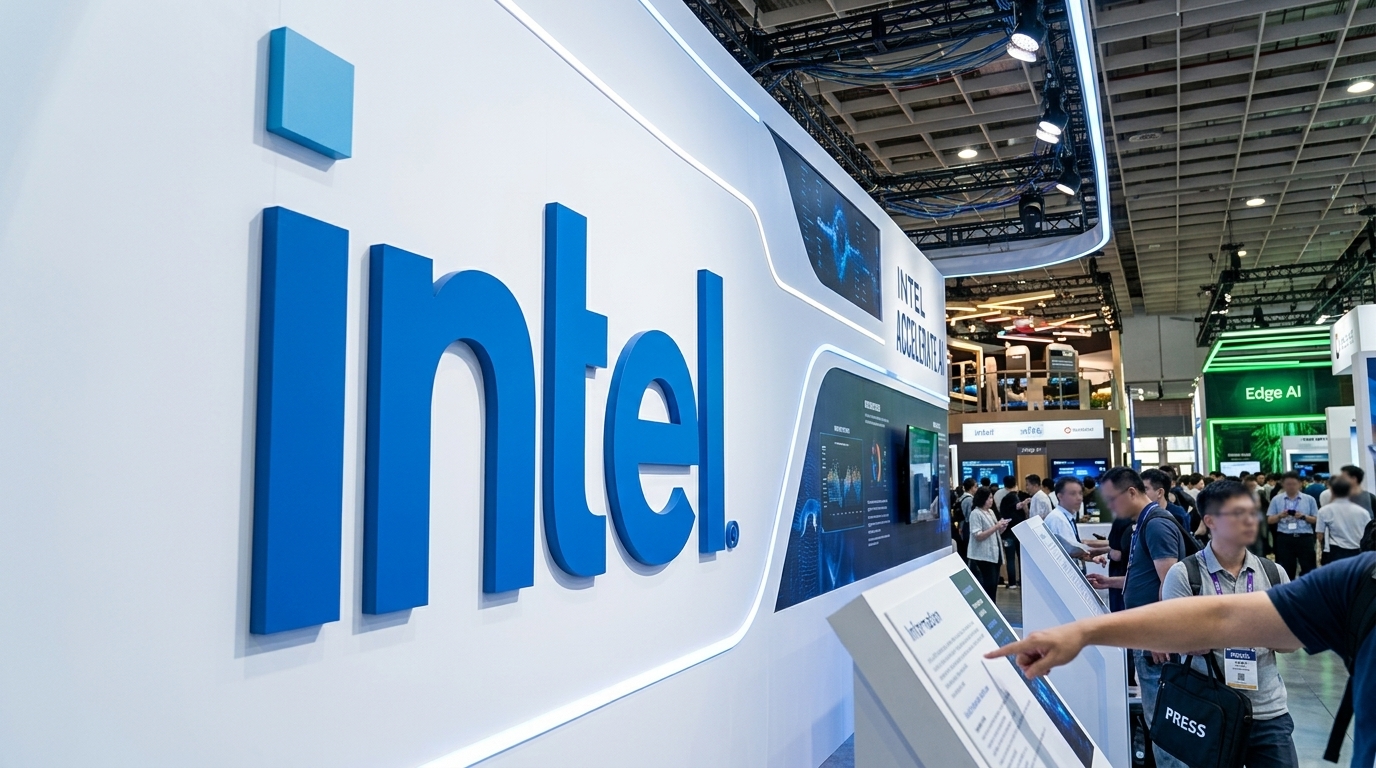
The history of technology is marked by cycles of ascent, decline, and, more rarely, spectacular comebacks. Today, as we move through the second quarter of 2026, Intel appears to be writing one of the most impressive chapters in the history of corporate turnarounds. The once-dominant microprocessor giant, which for a decade seemed trapped in bureaucratic inertia and manufacturing delays, has announced financial results that not only exceeded Wall Street analysts' expectations but set new historical records for the company.
Intel's stock price saw a jump reminiscent of the glory days of the 1990s, reflecting investor confidence in CEO Pat Gelsinger's vision. The driving force behind this surge is none other than Artificial Intelligence (AI), which has radically transformed market requirements for computing power, both in data centers and on personal devices.
The Intel Foundry Strategy: A Bet That Paid Off
The central pillar of Intel's rebirth is the "IDM 2.0" strategy. For years, Intel manufactured chips exclusively for its own use. The decision to open its factories to external customers, directly competing with Taiwan's TSMC, was initially viewed by many as a move of desperation. However, by 2026, Intel Foundry Services (IFS) has evolved into a financial powerhouse. With the successful implementation of the 18A (1.8nm) process node, Intel has managed to deliver energy efficiency and transistor density that put it back at the top of the manufacturing pyramid.
Geopolitical instability has played a decisive role. As Western governments seek to de-risk their supply chains from Asia, Intel has emerged as the "national champion" for the US and Europe. Massive subsidies from the CHIPS Act in the US and the corresponding European framework allowed the company to fund the construction of massive fabrication plants (fabs) in Ohio and Magdeburg. These facilities are now operating at full capacity, serving customers like Microsoft, Amazon, and even former rivals seeking secure production on Western soil.
The AI PC: A Desktop Revolution
While NVIDIA dominates the chips used for training Large Language Models (LLMs), Intel has found its own "gold mine" in the AI PC category. Intel's next-generation processors integrate specialized Neural Processing Units (NPUs) that allow complex AI tasks to be executed locally on the device, without the need for a cloud connection. This has breathed new life into the personal computer market, which had remained stagnant for a long time.
Consumers and businesses are rushing to upgrade their hardware to take advantage of Generative AI capabilities in real-time—from automated video editing to advanced cybersecurity. By leveraging its dominance in the x86 ecosystem, Intel has managed to set its own standards, making AI accessible to the average user rather than just data scientists.
Challenges and the Competition with NVIDIA
Despite the triumph, the road is not without obstacles. Intel continues to fight a tough battle in the field of AI accelerators for data centers. Although its Gaudi 3 cards and their successors have gained significant market share due to a better price-performance ratio compared to NVIDIA's high-end systems, the latter still holds the crown in software (CUDA). Intel is betting heavily on the oneAPI open standard, attempting to convince developers to leave NVIDIA's closed ecosystem.
Furthermore, AMD remains an extremely agile competitor, while the rise of ARM-based processors in laptops threatens Intel's traditional strongholds. Intel's success in 2026 is predicated on its ability to execute its roadmap with surgical precision—something that was historically its Achilles' heel.
Conclusion: A New Cycle of Innovation
Intel didn't just return to profitability; it returned to its role as an architect of the digital future. The shift toward a model that combines design with foundry services appears to be the correct answer to the challenges of the decade. With artificial intelligence acting as the ultimate catalyst, the "blue giant" has proven that decades of experience, when combined with bold strategic decisions, can overcome inertia. The question is no longer whether Intel can survive, but how far its new dominance can reach.