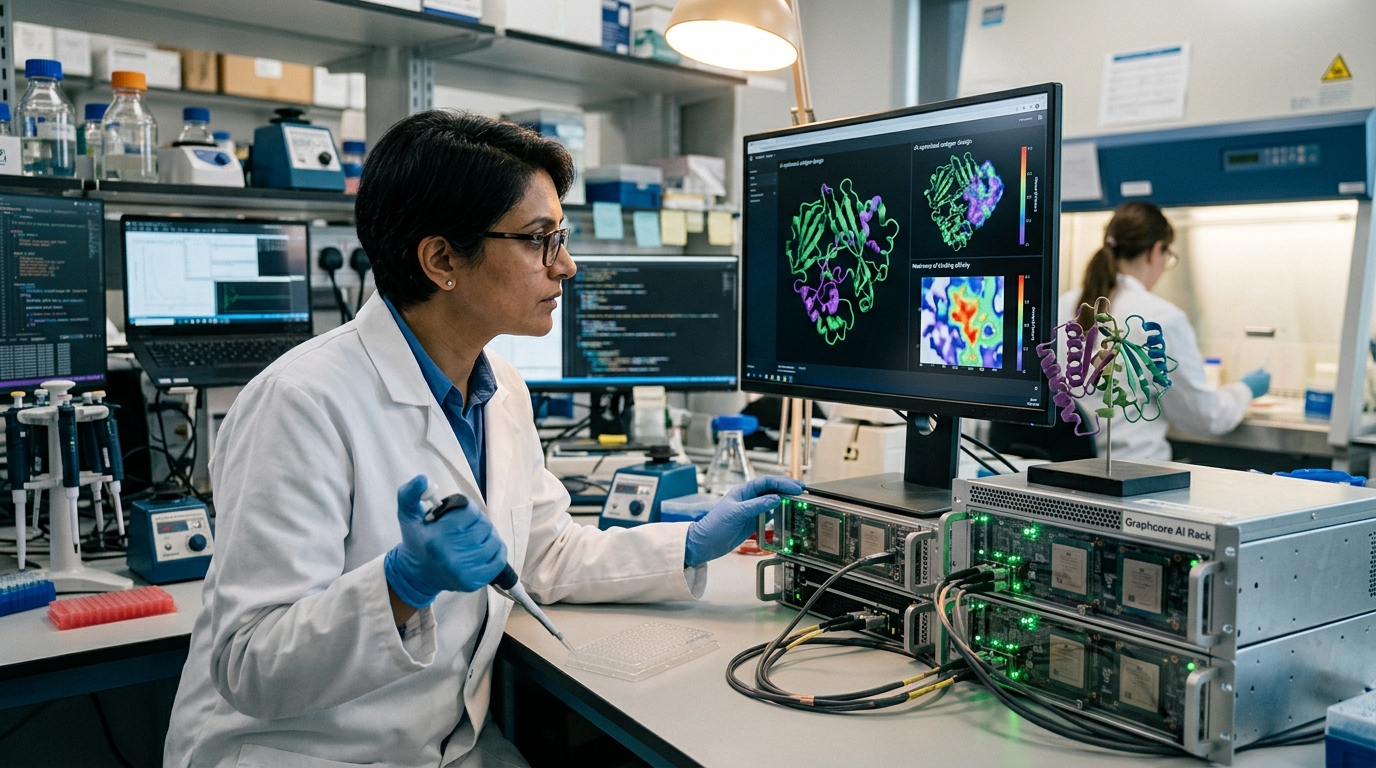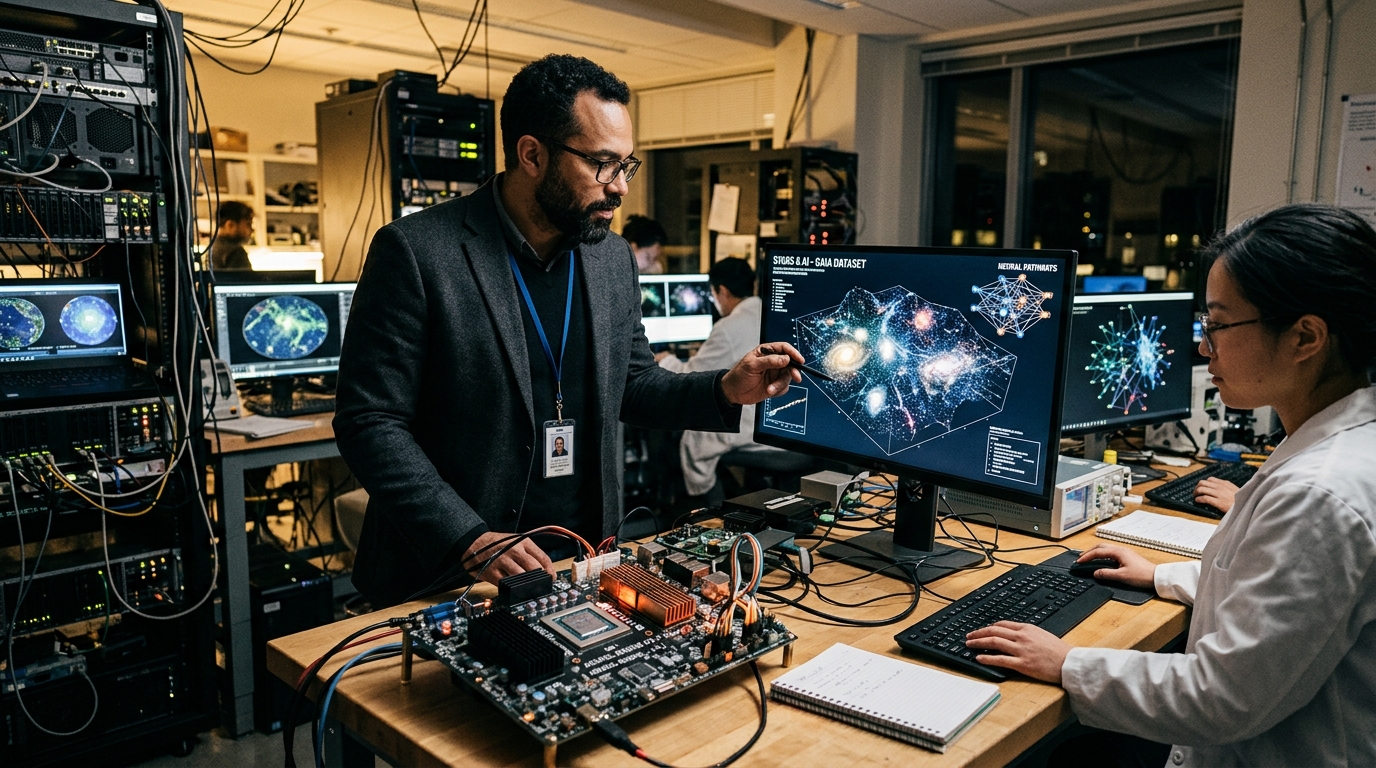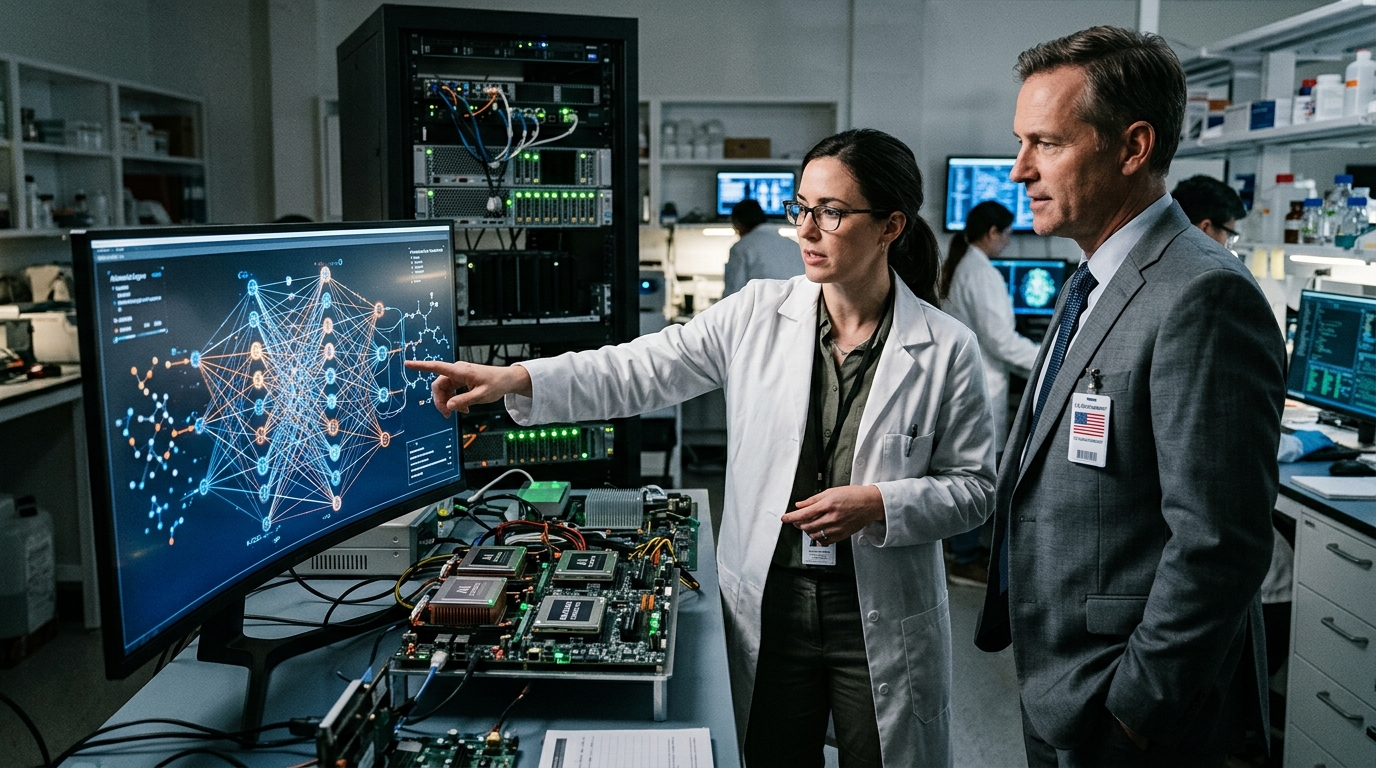
In an era where generative AI dominates headlines for its ability to draft essays and create art, the United States government is shifting its focus toward a much more fundamental application: scientific discovery. Top technology officials, led by the White House Office of Science and Technology Policy (OSTP), have issued a call for a 'transformational' approach to AI use, one that could compress decades of laboratory research into mere months.
Moving Beyond Chatbots to the Laboratory
The core philosophy behind this initiative is not merely the automation of existing procedures, but a complete reimagining of the scientific method itself. As highlighted in recent briefings, AI has the potential to act as a 'super-collaborator' for scientists, capable of analyzing vast datasets, predicting the behavior of novel materials, and suggesting experiments that the human mind might never conceive. The focus is on high-stakes domains such as climate change, clean energy, and the treatment of previously incurable diseases.
According to officials, the current progress in AI offers a unique window to tackle humanity's 'wicked problems.' For instance, in materials science, discovering a new catalyst for energy storage traditionally required thousands of manual laboratory trials. With advanced AI models, researchers can now simulate millions of combinations digitally, narrowing down the field to only the most promising candidates for physical testing.
National Security and Global Competition
Beneath the scientific rhetoric lies a potent geopolitical dimension. US leadership recognizes that dominance in 'AI for Science' is the new frontier of competition with China. A nation’s ability to more rapidly develop next-generation semiconductor materials, biotechnological drugs, or fusion energy technologies will dictate economic and military superiority in the 21st century.
"This isn't just about making science better; it’s about ensuring that democratic values guide the next great technological leap,"a senior administration official noted.
To achieve this goal, the government is pushing for the expansion of the National AI Research Resource (NAIRR), an initiative aimed at providing high-performance computing power and datasets to researchers outside of the major tech conglomerates. Democratizing access to these resources is seen as essential to prevent innovation from being siloed within the walls of Silicon Valley giants.
Challenges and Ethical Guardrails
However, the path to this transformation is fraught with obstacles. Data quality remains the primary hurdle. AI is only as good as the data it is trained on, and in the realm of science, data is often fragmented, proprietary, or non-standardized. Furthermore, there is the 'black box' problem: if an AI suggests a new chemical compound, scientists must be able to understand the *why* behind that suggestion to ensure both validity and safety.
- Transparency: The need for Explainable AI (XAI) in the research workflow.
- Access: Bridging the resource gap between academia and the private sector.
- Security: Protecting intellectual property and preventing the dual-use of AI in fields like synthetic biology.
In conclusion, the call for a transformational use of AI in science marks a new phase in US technology policy. The conversation is shifting from merely regulating the risks of AI to actively harnessing its power to expand the boundaries of human knowledge. If this effort succeeds, the 2020s may be remembered as the starting point of a new Renaissance, driven by code and silicon.