Chest X-rays remain the most common and essential diagnostic tool in global medical practice. However, the sheer volume of examinations combined with a global shortage of specialized radiologists has created a backlog crisis that costs lives. DeepSeek AI, one of the world's most rapidly evolving artificial intelligence organizations, has announced a significant technological breakthrough that promises to radically transform this field, offering automated analysis with accuracy levels that rival—and in some cases exceed—those of experienced physicians.
DeepSeek’s Technological Edge in Medical Imaging
DeepSeek’s approach is not merely based on pattern recognition but on the integration of advanced Multimodal Models that understand both the visual data and the clinical context. The challenge in chest X-ray analysis lies in the nuances: a faint shadow could indicate anything from a simple infection to an early-stage malignant tumor. DeepSeek’s models were trained on massive datasets using self-supervised learning techniques, allowing the system to identify anatomical abnormalities with extraordinary granularity.
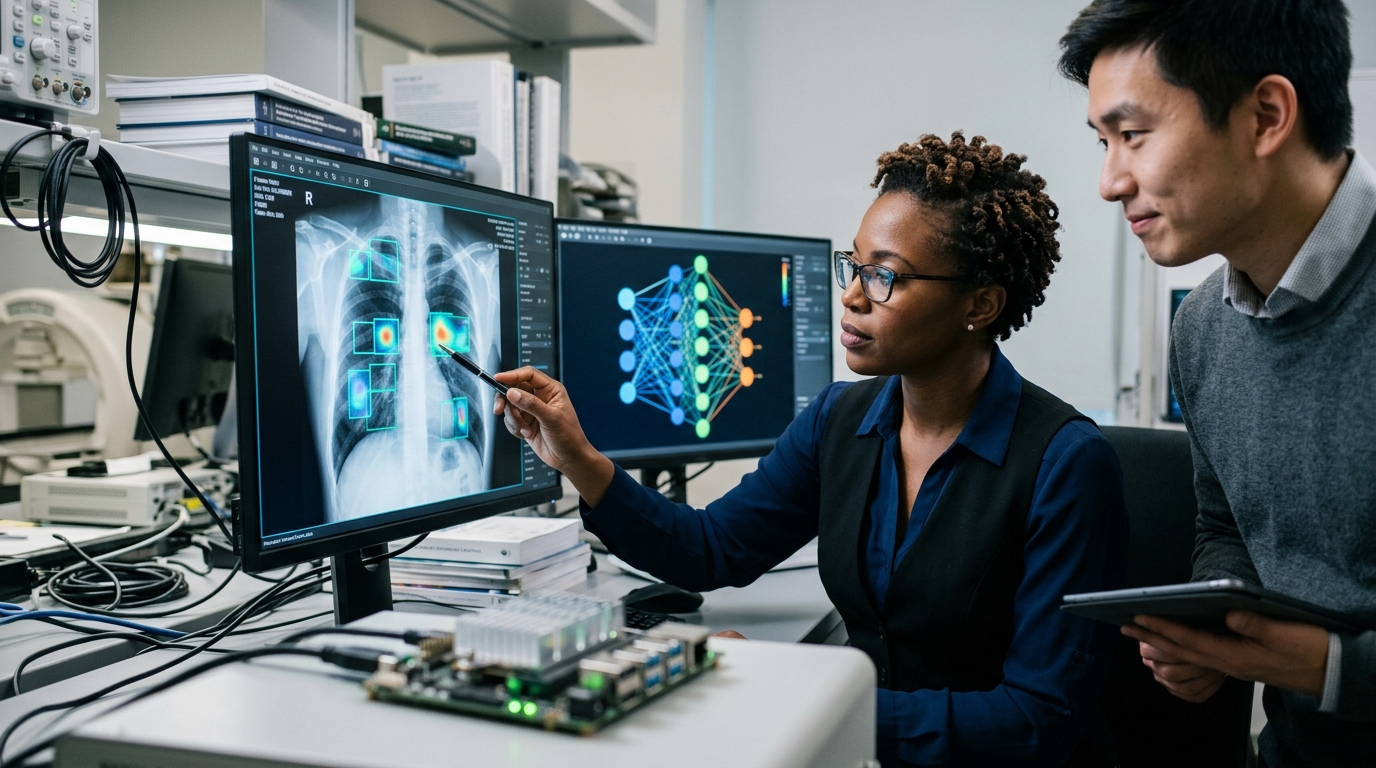
Unlike earlier AI systems that often produced a high rate of "false positives," DeepSeek’s new architecture focuses on diagnostic specificity. This is achieved through the use of Attention Mechanisms that allow the algorithm to focus on critical areas of the X-ray while ignoring noise caused by patient movement or technical artifacts. The system’s ability to provide not just a diagnosis but a visual explanation (heatmaps) indicating where it detected the issue is key to gaining the trust of the medical community.
From Theory to Clinical Practice: Benefits for Healthcare Systems
The application of this technology is about more than just speed; it is about health equity. In many parts of the world, particularly in the Global South but also in remote areas of Europe, access to a radiologist can be delayed by days or even weeks. An AI system capable of performing an initial triage in seconds, flagging urgent cases for immediate human intervention, is a game-changer.
- Immediate Triage: Critical conditions, such as pneumothorax, are identified instantly, prioritizing patients at immediate risk.
- Fatigue Reduction: Radiologists can focus on complex cases, leaving "clear" scans to be pre-screened by the AI.
- Consistency: AI does not experience fatigue or circadian rhythm shifts, maintaining consistent performance 24/7.
Furthermore, DeepSeek emphasizes open access and collaboration. By publishing their findings and providing tools to the research community, they are accelerating collective knowledge in digital health. This stands in contrast to the proprietary approach of other tech giants, promoting a model of democratized medical technology.
Challenges, Ethics, and the Future of Diagnosis
Despite the excitement, integrating AI into medicine is not without hurdles. The "black box" problem remains central: how can we trust a decision if we do not fully understand its logic? DeepSeek addresses this by enhancing interpretability, but regulatory bodies like the FDA and EMA still require even more rigorous clinical data before full-scale adoption.
"AI will not replace the radiologist, but the radiologist who uses AI will replace the one who does not," industry experts frequently remark.
DeepSeek seems to understand this role, positioning its tool as an "expert assistant" rather than an autonomous judge. The future of chest X-ray analysis will likely involve a continuous interaction between human and machine, where the AI suggests, the human validates, and the system learns from the specialist’s corrections, creating a virtuous cycle of improved patient care.