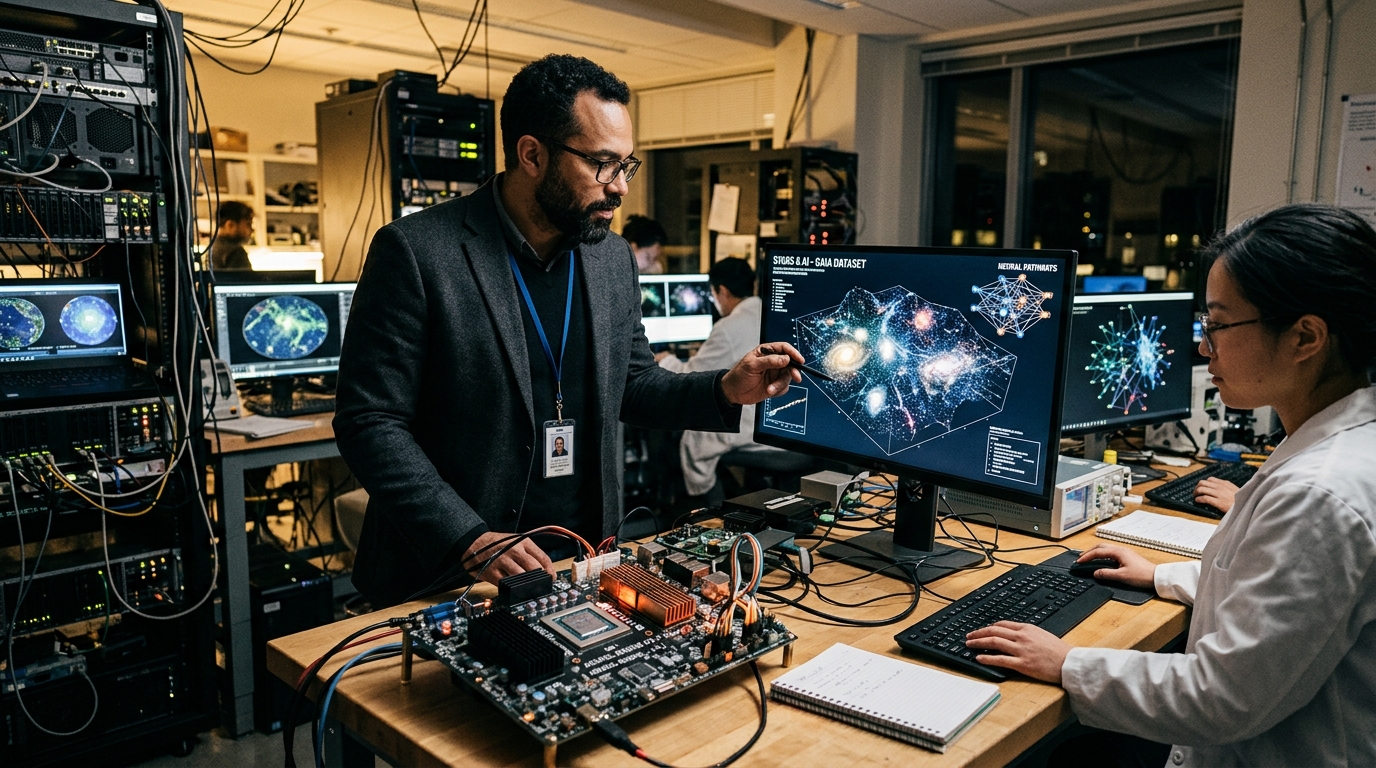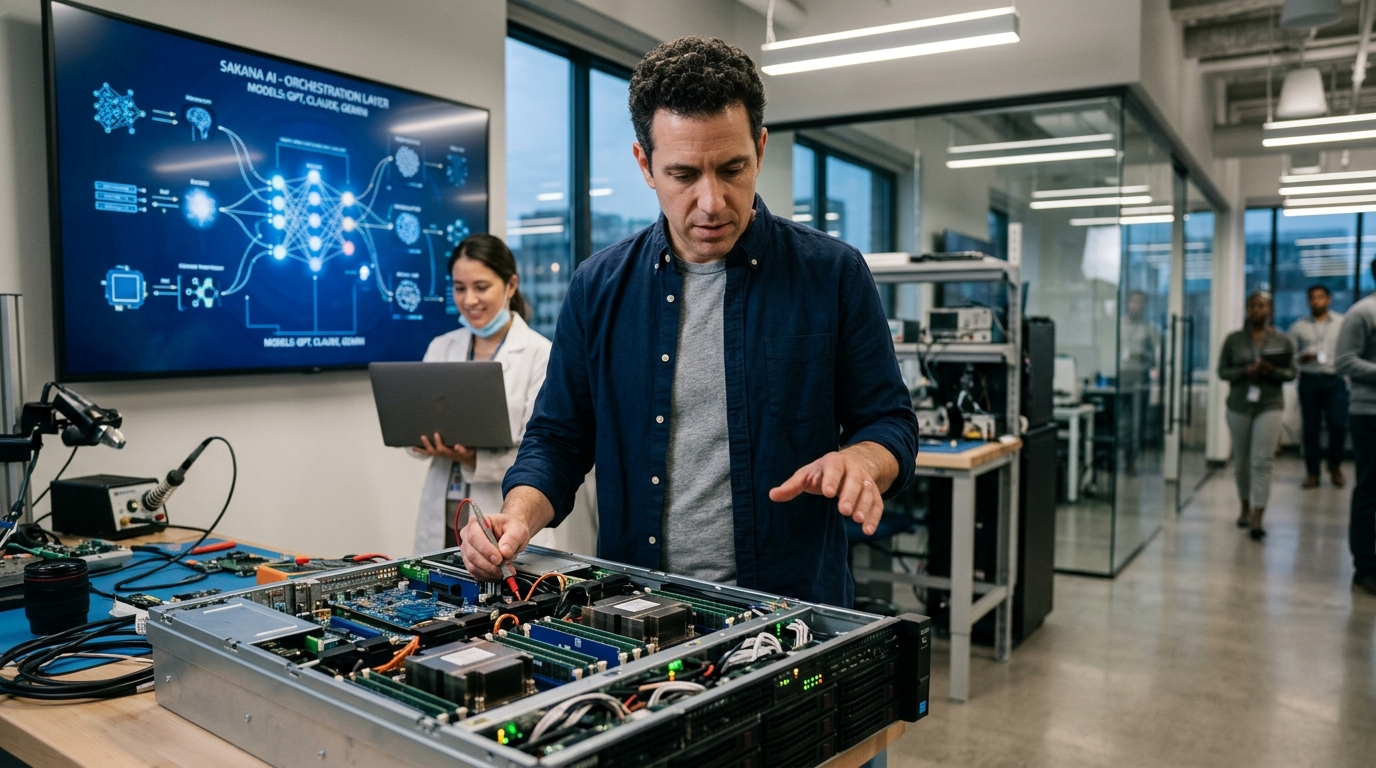
In the rapidly shifting landscape of artificial intelligence, power is no longer measured solely by parameter count, but by the ability to manage complexity. Sakana AI, the Tokyo-based boutique lab founded by former Google visionaries, has announced a significant technological breakthrough that promises to redefine how enterprises deploy Large Language Models (LLMs). Enter the "RL Conductor"—a compact 7-billion parameter model trained via Reinforcement Learning to act as the ultimate orchestrator between titans like OpenAI’s GPT-5, Anthropic’s Claude 4, and Google’s Gemini 2.5 Pro.
The Death of Static Orchestration
Until now, most AI applications relied on frameworks like LangChain or Semantic Kernel to build chains of thought. While effective for simple tasks, these approaches suffer from a fundamental flaw: they are hardcoded. Developers must pre-define which query goes to which model. However, real-world usage is unpredictable. A slight shift in the distribution of user queries can render a fixed pipeline inefficient, slow, or prohibitively expensive.
Sakana AI identified that static orchestration is the primary bottleneck for scaling AI. The RL Conductor does not follow rigid rules. Instead, it reasons in real-time about which model is best suited for each sub-task, balancing cost, speed, and the required level of precision. It is the difference between a train running on fixed tracks and a skilled driver navigating city traffic dynamically.
The Technology Behind the Conductor
Training a 7B model to masterfully command models thousands of times its size was a formidable challenge. Sakana’s researchers utilized an advanced form of Reinforcement Learning, where the Conductor is rewarded for achieving optimal outcomes with the lowest possible resource consumption. Through millions of iterations, the model learned to recognize the subtle nuances of each frontier model: GPT-5’s prowess in multi-step reasoning, Claude 4’s superior coding and literary nuance, and Gemini 2.5 Pro’s efficiency in handling massive multimodal contexts.
- Dynamic Routing: The model analyzes the intent and complexity of a prompt, deciding whether to call the "heavy artillery" of GPT-5 or if a smaller, faster model suffices.
- Self-Correction: If an initial model provides a low-confidence response, the Conductor detects the failure and re-routes the task to a different provider.
- Cost Optimization: Early benchmarks suggest operational cost reductions of up to 40% by avoiding the unnecessary use of expensive high-tier tokens.
Strategic Implications for the Enterprise
Sakana AI’s move signals a definitive shift toward model-agnosticism. In the early days of the AI boom, companies often locked themselves into a single provider's ecosystem. Now, the strategic value is migrating to the management layer. This creates a new market for "Orchestration-as-a-Service," where value is derived not from owning the weights of a model, but from the intelligence used to combine them.
For global enterprises, this translates to unprecedented resilience. Should a provider like OpenAI face downtime or implement unfavorable pricing shifts, the RL Conductor can autonomously redirect traffic to Anthropic or even local open-source clusters without requiring a single line of manual code changes. It effectively future-proofs the AI stack against the volatility of the model providers.
The Future of Collective Intelligence
As we move into the latter half of 2026, the concept of a single, monolithic AI god is fading in favor of a decentralized ecosystem of specialized agents. Sakana AI, drawing from Japanese philosophies of harmony and collective effort, suggests a future where AI is not a monologue, but a symphony. The 7B conductor is the first step toward a more flexible, economical, and human-centric approach to computational intelligence. It proves that in the age of giants, it is often the nimble coordinator who holds the real power.